

How To Care For Lily Bulbs
Things Needed
- Lily bulbs
- Vegetable bags
- Refrigerator
- Garden spade
- Hand trowel or bulb digger
- Sharp knife
- Leaf mold or peat moss
- Garden mulch
- Fungicide
- Household bleach or rubbing alcohol
Tip
Growers ship bulbs in the spring because it's more convenient for them, not the lilies; get spring-shipped bulbs in the ground immediately. Bulbs need 4 to 6 inches above the tip to anchor a stem properly and provide place for new bulblets to form. Use amended soil to bury bulbs because its lighter texture allows easier growth of roots and because it allows freer movement of oxygen in the soil. Use an open-weave vegetable bag (like the ones in which onions and potatoes are sold) to store bulbs in the refrigerator.
Warning
Never let lily bulbs dry out completely. Keep them in a cool place such as the vegetable drawer of the refrigerator if they can't be planted immediately. Discard rotted or diseased bulbs. They may spread fungus or virus infections to other plants in the garden. Avoid storing bulbs with ripening fruit. Fruits (especially apples) give off ethylene gas during the ripening process that will harm your bulbs.
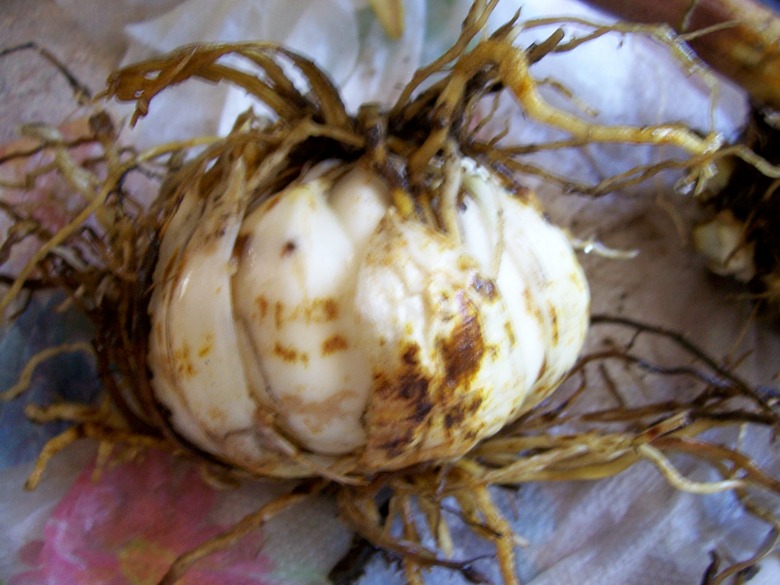
Lilies are the royalty of any perennial garden. They mark summer, from 2-foot-tall, early-blooming Asiatics to the regal 4- to 8-foot-tall midseason Trumpet and finish with the variable Oriental and tall species "Tiger" lilies in late August. Lilium, or "true" lilies, grow from bulbs, large fleshy roots that store a year's worth of nutrition and the embryo of next year's flowers. Take care of your bulbs and they'll reward you with years of reliable greenery and magnificent blooms.
Step 1
Type your bulbs accurately. North American hybrid lilium are divided into Asiatics, Aurelian (or trumpet) and Oriental lilies, all of which are hardy from zones 5 through 9 and many of which are safe even further north. Some species of lilies, like the meadow lily and Columbia lily, have very specific requirements based on their native habitats. Don't expect a bulb to survive or produce reliably in a growing zone or environment to which it is not suited.
- Lilies are the royalty of any perennial garden.
- Lilium, or "true" lilies, grow from bulbs, large fleshy roots that store a year's worth of nutrition and the embryo of next year's flowers.
Step 2
Plant bulbs in the fall–or very early spring. Resist the bulbs on the bargain shelf at the local hardware store. They are, alas, doomed, unless you're willing to make an extraordinary investment, including potting them up and bringing them in for the first few months of winter. The lily bulb begins its growth underground during the late winter.
Step 3
Plant bulbs in well-drained soil in an area with at least a half-day of sun each day. Afternoon shade keeps delicate inflorescence fresh. Use a thin summer mulch to shade the ground around lilies to keep bulbs and their roots cool.
- Plant bulbs in the fall–or very early spring.
- Use a thin summer mulch to shade the ground around lilies to keep bulbs and their roots cool.
Step 4
Dig bulbs with a garden fork when the plants become crowded, anywhere between 3 to 8 years depending on grade of bulb and lilium variety. Pull mature bulbs apart or cut them with a knife sterilized using a solution of 50 percent bleach (or 70 percent rubbing alcohol) with water. Pull baby bulbs, called bulblets, out of the jumble of roots growing on the stem above the bulb out to plant separately.
Step 5
Inspect bulbs for disease before adding to existing stock. Sometimes scales that have been injured in shipment can be removed without damaging the bulb. Dust bulbs with a fungicide before planting.
Step 6
Reset bulbs in holes at least a foot deep and three times wide as the bulb. Line each hole with a mixture of garden soil amended with peat moss, manure or compost. Set bulbs at a depth that is about three times their height and fill the planting hole with amended soil. Plant bulbs no closer than a foot apart to give new plants room to grow.
- Dig bulbs with a garden fork when the plants become crowded, anywhere between 3 to 8 years depending on grade of bulb and lilium variety.
- Set bulbs at a depth that is about three times their height and fill the planting hole with amended soil.
References
- Time-Life Gardener's Guide, Bulbs; 1988
- National Garden Association
- Fungicide recipes