

Loblolly Pine Tree Diseases
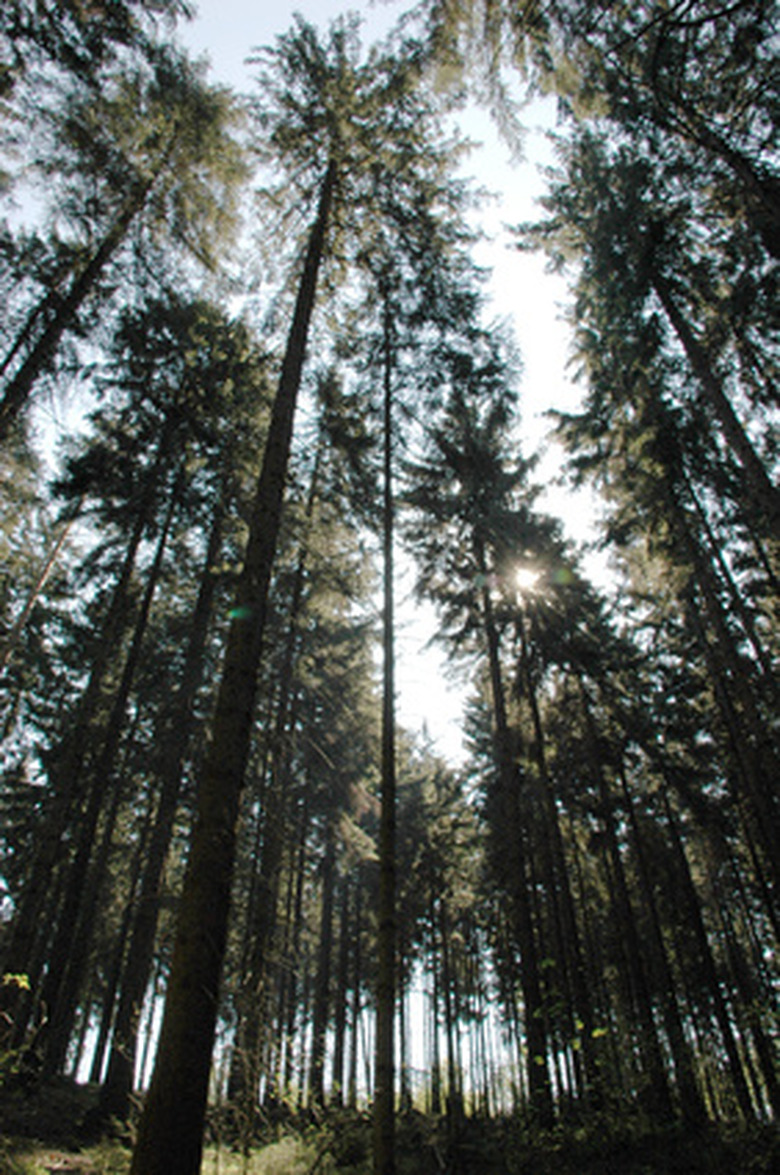
Loblolly is a fast growing pine that can reach a height of 150 feet and a width of 35 feet, with trunks up to 5 feet in diameter. Growing in USDA Plant Hardiness zones 6 through 9, the wood from this North American native evergreen is used for home and commercial construction as well as for crossties for railroad tracks. The loblolly pine tree is susceptible to some evergreen diseases.
Annosus Root Rot
Annosus root rot (Heterobasidion annosum) is a fungus along the soil line. The effects of the fungus are noticed in the thinning foliage or red needles, but by that time, up to two-thirds of the root system can be infected. Roots of adjacent trees that come in contact with the diseased tree can also become infected.
Needle Rust and Needle Cast
Needle rust (Coleosporium spp) displays as spore-filled blisters on the needles. Needle cast (Ploioderma lethale) causes prior years' needles to brown and eventually fall. Neither condition is life-threatening.
- Loblolly is a fast growing pine that can reach a height of 150 feet and a width of 35 feet, with trunks up to 5 feet in diameter.
- The effects of the fungus are noticed in the thinning foliage or red needles, but by that time, up to two-thirds of the root system can be infected.
Fusiform Rust
An orange, spore-filled fungus, fusiform rust (Cronartium quercuum f. sp. fusiforme), produces swellings on the tree. The resulting canker weakens mature trees that may topple in windy situations. Trees less than 5 years old can be killed by the fungus.
Heart Rot
Heart rot (Phellinus pini) is a fungus infection that causes the wood to decay. Heart rot is dark gold and enters the tree usually through dead branches where it will infect the heart of the tree, or the tree's interior. The fungus will cause the wood to weaken.
- An orange, spore-filled fungus, fusiform rust (Cronartium quercuum f. sp.
- Heart rot (Phellinus pini) is a fungus infection that causes the wood to decay.
Butt Rot
Butt rot (Phaeolus schweinitzii) is a yellowish fungus infection that grows from the roots of the tree. The fungus can also infect the lower trunk of the tree. Butt rot can rapidly kill young trees while older trees can live a few years before succumbing to the fungus.