

How To Grow Blackberries In Wisconsin
Things Needed
- Garden loam
- Manure
- Rototiller
- Shovel
- Blackberry bush
- Pruning shears
- Trellis
- 10-20-20 fertilizer
- Cultivator
- Garden hose
- Water source
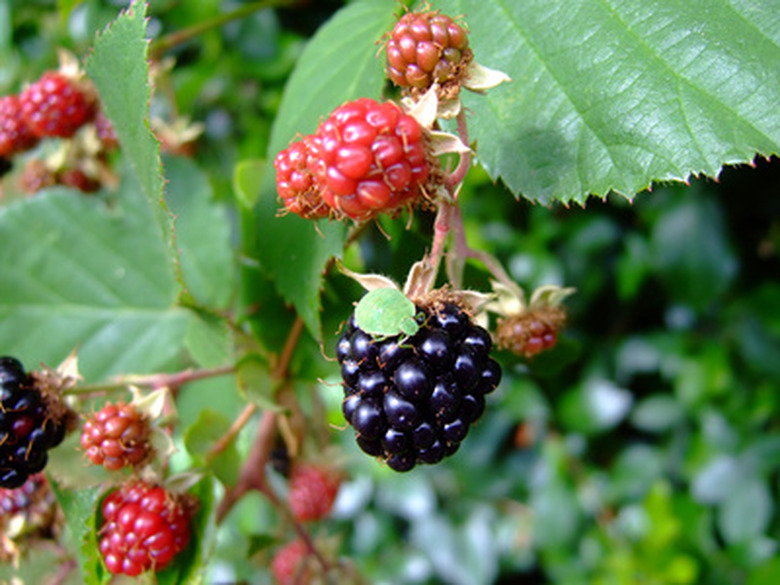
The blackberry is an edible fruit that is born on a bush. It isn't a true berry; it is actually an aggregate fruit. The blackberry bush produces flowers in late spring and fruit later in the summer. Blackberries are high in vitamin C, vitamin K and dietary fiber and also rank highly amount fruits for their antioxidants. Hardy to zone 5, it is moderately easy to grow blackberries in Wisconsin. With the right siting and proper care, they will flourish for you.
Step 1
Select a site that is ideally in full sun. Blackberries will tolerate partial shade but may produce less fruit.
- The blackberry is an edible fruit that is born on a bush.
- Hardy to zone 5, it is moderately easy to grow blackberries in Wisconsin.
Step 2
Amend the soil with well-draining, rich garden loam. Use equal parts with your existing soil to make a great soil mix.
Step 3
Apply manure at a rate of two to three bushels per 100 square feet. Rototill the soil to mix in everything.
Step 4
Plant your blackberry bush as soon as you can work the soil in the spring. Dig a shallow hole large enough to accommodate the root system and prune off damaged roots. Spread the roots in the planting hole and bury them in soil. The soil should come up to the same level on the blackberry bush as it was at the nursery.
- Amend the soil with well-draining, rich garden loam.
- Plant your blackberry bush as soon as you can work the soil in the spring.
Step 5
Tamp the soil down to remove air pockets and water the bush to settle the soil.
Step 6
Space the blackberry bushes 4 to 10 feet apart if they are trailing cultivars and 4 to 6 feet apart if they are erect cultivars. Rows should have 8 to 10 feet between them.
Step 7
Set up a trellis system for your blackberry bushes. Purchase your trellis at your local garden center or make one with two posts with wires in between the posts.
Step 8
Fertilize blackberry bushes in early spring when you notice new growth. Apply 5 to 6 pounds of 10-20-20 fertilizer per 100 feet of row.
- Tamp the soil down to remove air pockets and water the bush to settle the soil.
Step 9
Cultivate the soil during the growing season to remove weeds and to keep the soil loose. Cultivate to a depth of 1 to 2 inches to prevent root damage.
Step 10
Water your blackberry bushes with 1 inch of water per week over the entire root zone from mid-June until harvesting is finished. Water more in extremely warm and windy weather.
Step 11
Harvest your blackberries every three to six days once they begin to ripen. Ripe blackberries are black in color. Put them in a shallow container when harvesting to prevent crushing.
- Cultivate the soil during the growing season to remove weeds and to keep the soil loose.
Tip
Depending on your cultivar, you will need to prune your blackberry bush to achieve the best yield of fruit. Erect cultivars need the top 1 to 2 inches of primocanes removed in summer once they reach 3 feet in height. After harvest, you need to remove the floricanes. In winter, thin the primocanes to the best three or four per plant. For trailing cultivars, remove the floricanes after harvest. Thin the primocanes to the sturdiest six to 12 per plant.