

How To Make Wheat Grass Grow Faster
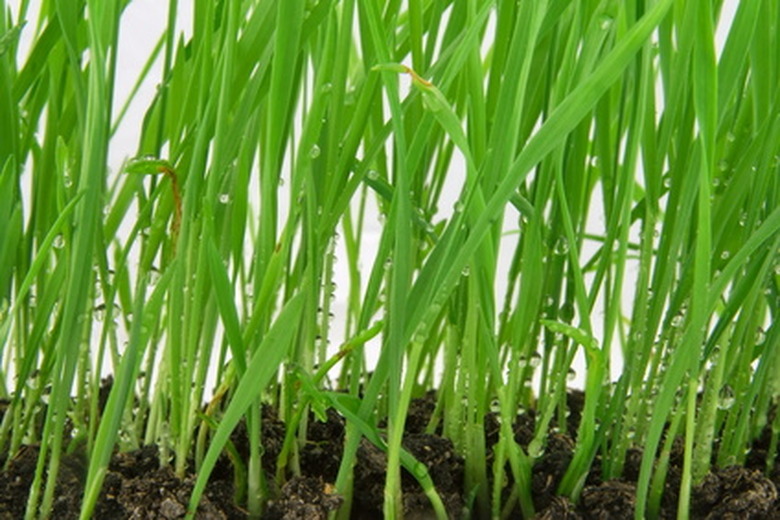
Things Needed
- Wheatgrass seeds
- Jar with lid
- Colander
- Seed tray
- Organic potting soil
- Spray bottle
- Plastic wrap
- Scissors
Wheatgrass has become widely available for purchase in many grocery stores and health food stores, but if you want to save money and have the freshest product available, consider growing your own wheatgrass at home. Packed with vitamins, minerals and chlorophyll, wheatgrass has many health benefits, such as lowering blood pressure, increasing energy levels, and boosting the immune system. Growing wheatgrass faster at home is possible by providing the optimal growing conditions, which will allow you to enjoy the health benefits much sooner.
Step 1
Place one cup of wheatgrass seed in a glass jar and fill with enough water to just cover the seeds. Place the lid on the jar and set in an area out of direct sunlight. Let the seeds set for eight to 12 hours and drain into a paper-towel-lined colander. Set aside for another eight to 12 hours, then rinse and drain. Repeat one more time. After the third time, the seeds should have sprouted tiny roots and will now grow faster once planted.
- Wheatgrass has become widely available for purchase in many grocery stores and health food stores, but if you want to save money and have the freshest product available, consider growing your own wheatgrass at home.
- Growing wheatgrass faster at home is possible by providing the optimal growing conditions, which will allow you to enjoy the health benefits much sooner.
Step 2
Fill a seed tray with organic potting soil to provide the best nutrients to help the wheatgrass produce stronger roots and grow faster. Use a seed tray that has drainage holes so the roots do not stand in water which can stunt the growth of the grass. Wet the soil clear through to the bottom.
Step 3
Sprinkle the sprouted seeds over the top of the soil, spreading out evenly with your hand. Lightly mist the seeds with the spray bottle and cover the top of the tray with plastic wrap to create a greenhouse effect which will help the seeds to grow faster. Set the seed tray in an area out of direct sunlight and keep the soil misted each day so it does not dry out.
Step 4
Remove the plastic wrap after about four days or once the seedlings are beginning to push the wrap off the tray. Set the seedlings in a sunny window to help speed the growth process and produce chlorophyll, which colors the grass green.
- Fill a seed tray with organic potting soil to provide the best nutrients to help the wheatgrass produce stronger roots and grow faster.
Step 5
Water the grass as it grows by setting the seed tray in a shallow tray filled with water. This allows the roots to receive adequate water without getting the grass wet, which can cause mold to occur.
Step 6
Harvest the wheatgrass after about seven to 10 days, or when it reaches 7 inches tall. Cut a handful of grass clear down to the soil and juice.