

How To Kill Sedge Grass
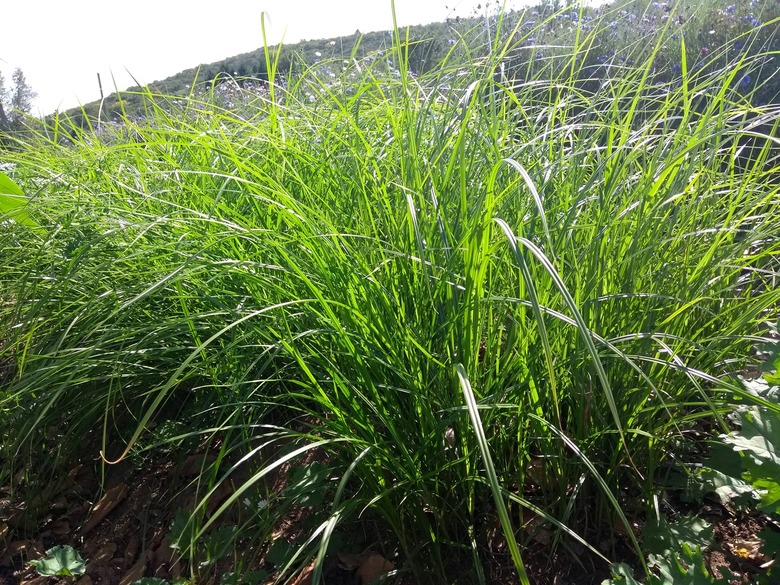
If your landscape tends toward the wet side and has poor drainage, you might have the perfect storm for the unwanted and invasive nutsedge. While these plants adore wet soil, they also tolerate dry soil or even drought conditions once they are established, making them difficult to get rid of.
Two genera contain plants commonly known as sedges: Cyperus spp. (USDA hardiness zones 6 to 12), sometimes called "flat sedges," and Carex spp. (zones 5 to 10), which includes multiple, mostly desirable, ornamental grasses as well as some that are commonly considered weeds. In general, sedges are among the most detested and persistent weeds, not only in the U.S. but also across the globe, where they invade gardens and lawns.
You may have sedges growing unwanted just about anywhere, or you may have planted ornamental varieties and no longer want them. Let's explore the best ways to eliminate sedges in a home landscape.
About Sedges
"Sedges have edges" is a phrase commonly used when discussing how to identify these grass-like plants. The stems of sedges are typically triangular and erect, adorned with basal leaves, and topped by a seed head.
The plant produces numerous flowers and its root system is fibrous — some species of sedge produce rhizomes and tubers. These plants are drought tolerant once established and usually grow best in full sun.
If your goal is to get rid of sedge, you are probably plagued by nutsedge.
 Miquel del Caño i Ferrer
Yellow and Purple Nutsedges
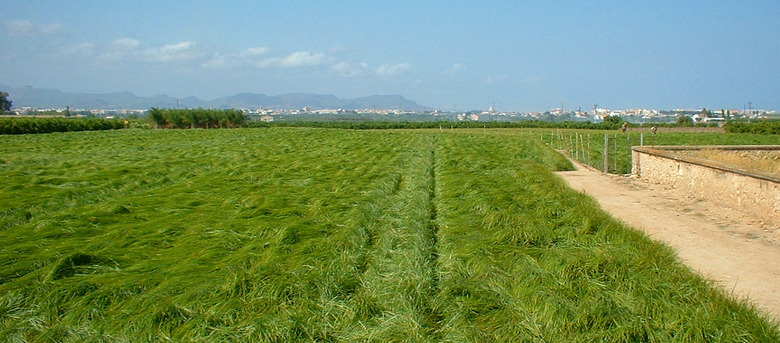
The highly aggressive and invasive nutsedge comes in two flavors: yellow nutsedge and purple nutsedge (USDA hardiness zones 8 to 10).
- Yellow nutsedge (Cyperus esculentus), a sedge plant native to North America, is the most common sedge in the U.S. and is more cold-tolerant than the purple variety. It can grow as tall as 3 feet, sporting light green leaves. It is also called nutgrass, watergrass or chufa.
- Purple nutsedge (C. rotundus) is smaller, reaching 18 inches tall. Its leaves are a darker green, so it blends into a lawn better than yellow.
Both species propagate from underground tubers and rhizomes that creep horizontally just under the soil surface.
 Daderot
Ornamental Sedges in the Genus Carex
Carex is an entirely different plant, with multiple attractive species often planted in rain gardens. Among the most popular is Oshima kan suge, also called by the common name Japanese sedge (Carex oshimensis 'Evergold,' zones 5 to 9). This plant also spreads via rhizomes, but its growth is slow, and it is not considered a weed.
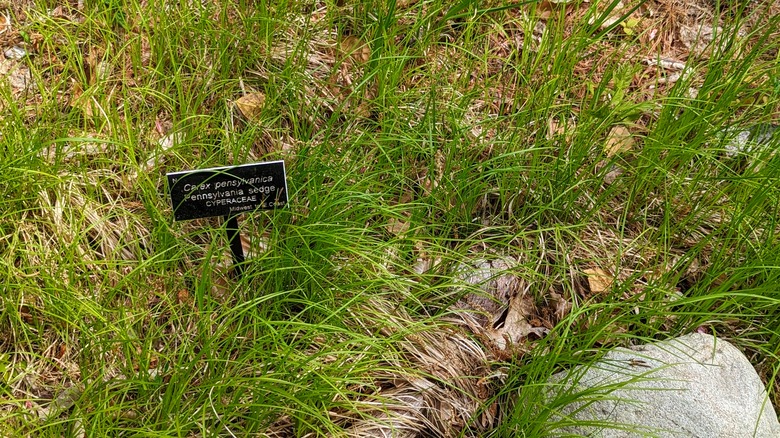
Another common ornamental sedge is Pennsylvania sedge (Carex pensylvanica, zones 3 to 8), a native plant across North America. Commonly planted as a groundcover, this plant prefers partial to full shade. This mounding sedge is sometimes planted as a grass substitute in shady areas.
Sedge Removal in the Home Landscape
Assuming that you have not planted an ornamental variety, the first line of defense is to avoid allowing sedge—usually nutsedge—to become established.
Mulch is ineffective in discouraging these plants, and covering them with black plastic doesn't work, as their erect and sharp stems pierce the plastic. Sometimes, chemical control is necessary, but use that as a last resort.
Cultural Control
Sedges thrive in wet conditions, so correct an area that remains wet for extended periods and avoid overwatering. If sedge has invaded your lawn in an area with heavy foot traffic, it is even more difficult for your turf to form its own healthy root system.
Because its tuber is the key to the plant's survival, your goal is to limit its production. Keep a lookout for this plant in your lawn or flower beds and remove them before they have five or six leaves; after this period, they will have produced a tuber.
Warning
Avoid using a tiller in an area where sedges grow, as you will spread tubers throughout a large area.
Unless your yard is overrun by multiple sedges, start by hand-pulling, using a spade or a hoe to get as much of the underground tuber and rhizomes as possible. To remove the entire plant, dig down 8 to 14 inches.
Check back every few days and remove any new growth. Continue this process throughout the summer growing season.
The University of California reports that landscape fabric made from polypropylene polymers can suppress nutsedge growth when covered with bark or gravel mulch.
Chemical Control
There is no herbicide approved for home use that completely controls nutsedge. Glyphosate (Roundup), a nonselective herbicide, kills the leaves but cannot kill mature tubers. Apply this herbicide only on young plants that are actively growing and have not been recently mowed or cut.
Warning
Because glyphosate is a nonselective herbicide, it will kill anything it comes into contact with, so it may not be a good solution for use in a lawn invaded by nutsedge.
Another chemical option is halosulfuron-methyl (sold as Sedgehammer), a selective herbicide safe for use in lawns. This herbicide can be effective against nutsedge but must be used before the fifth-leaf stage while the plant is moving nutrients from its leaves to its tubers. After this stage, halosulfuron-methyl is no longer effective against the tubers.
When using any chemical, follow all label directions and wear protective gear.
References
- University of California: Nutsedge
- Missouri Botanical Garden: Yellow Nutsedge
- IFAS Extension: Sedges
- IFAS Extension: Identification of Sedge and Sedge-Like Weeds in Florida Citrus
- Oregon Dept. of Agriculture: Yellow Nutsedge
- Missouri Botanical Garden: Carex oshimensis 'Evergold'
- Missouri Botanical Garden: Carex pensylvanica
- Purdue Extension: Sedge Control for Turf Professionals
- IFAS Extension: You Only Need Four Post-Emergent Herbicides