

What Kinds Of Fertilizer Should I Use In Vegetable Gardening?
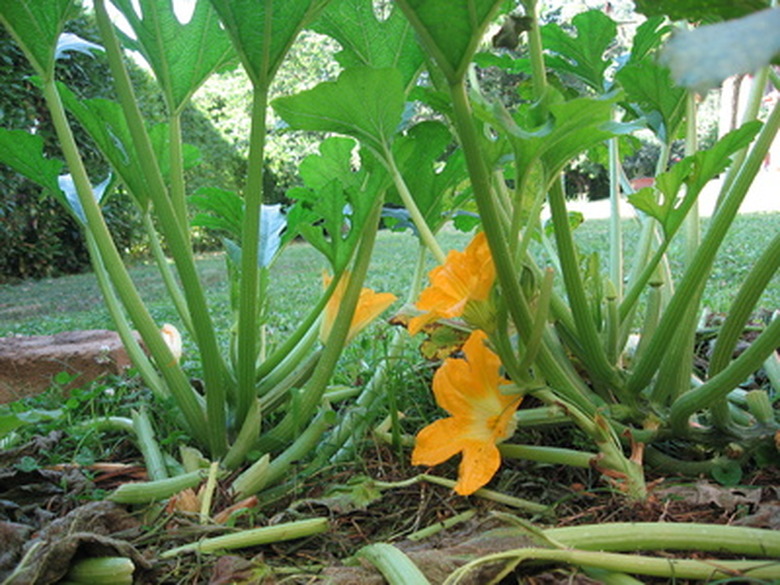
Garden vegetables can differ in their fertilization needs. Some require higher amounts of nitrogen, but others becoming damaged by too much nitrogen. Determining what kind of fertilizer to use in a vegetable garden isn't as complicated as it seems, however. The easiest principles to remember are that any leafy green vegetables, such as spinach, cabbage, collards and turnips, as well as broccoli and sweet corn, like a lot of nitrogen. Fruiting and root vegetables, such as peas, beans and squashes, like less nitrogen.
Mixed Fertilizers for Maintenance
Every year before you plant your vegetable garden, you'll need to apply a mixed fertilizer to maintain the overall fertility of the soil bed. A mixed fertilizer is a combination of nitrogen, phosphorous and potassium, indicated in the "NPK" ratio on the fertilizer bag. The "N" tells you how much nitrogen is in the fertilizer mix, the "P" number tells you the pounds of phosphorous and the "K" is how much potassium is in the fertilizer, all of which is per 100 pounds. If you have a 100-pound bag of 13-13-13 NPK fertilizer, the mix contains 13 pounds each of nitrogen, phosphorous and potassium. For standard bagged fertilizer mixes, such as 6-24-24, 12-12-12 and 13-13-13 NPK formulas, you'll apply about 6 pounds of the fertilizer per 1,000 square feet of garden area. Spread the fertilizer over the garden bed in early spring, prior to planting your seeds or vegetable plants, and mix it into the top 3 to 6 inches of soil.
- Garden vegetables can differ in their fertilization needs.
- For standard bagged fertilizer mixes, such as 6-24-24, 12-12-12 and 13-13-13 NPK formulas, you'll apply about 6 pounds of the fertilizer per 1,000 square feet of garden area.
Starter Fertilizers for Transplanting
Starter fertilizers are water-soluble feeds applied to the garden soil when you transplant vegetable seedlings or store-bought plants. Good starter fertilizers for vegetable gardens contain a higher amount of phosphorous, which helps in root development. Dilute 2 tbsp. of the starter fertilizer, such as a 10-52-17, 15-30-15 or 12-24-12 NPK formula, into 1 gallon of water. Pour about 1 cup of the diluted mixture into the soil around the vegetable plant's roots after you transplant it into your garden.
Nitrogen for Side-Dressings
Side-dressing your vegetable plants with doses of nitrogen fertilizer will help them to develop strong leaves. You can purchase nitrogen fertilizers in the form of ammonium nitrate, ammonium sulfate, calcium nitrate and urea. A side-dressing is applied by spreading the granular nitrogen fertilizer in the middle of the rows and watering it into the soil. The timing of nitrogen side-dressings depends on the type of vegetable, and whether it's leafy or fruiting. Some garden vegetables, such as sweet potatoes, shouldn't receive side-dressings of nitrogen, because the excess nitrogen can reduce crop yields. Most other garden vegetables require a side-dressing of about 1 pound of ammonium nitrate per 100 feet of row.
- Starter fertilizers are water-soluble feeds applied to the garden soil when you transplant vegetable seedlings or store-bought plants.
- Good starter fertilizers for vegetable gardens contain a higher amount of phosphorous, which helps in root development.
Organic Matter and Manures
Another important component to your vegetable garden's fertility is the amount of organic matter maintained in the soil bed. You'll want to keep at least 4 percent of your soil composition as organic matter by incorporating well-rotted animal manures, peat moss, leaf mold (humus) or compost into your garden soil each year. About one month before planting your vegetable garden, spread a 2-inch-thick layer of the organic materials onto your soil bed and work the matter down into the top 6 to 12 inches of soil.