

Types Of Drains For Yards With A High Water Table
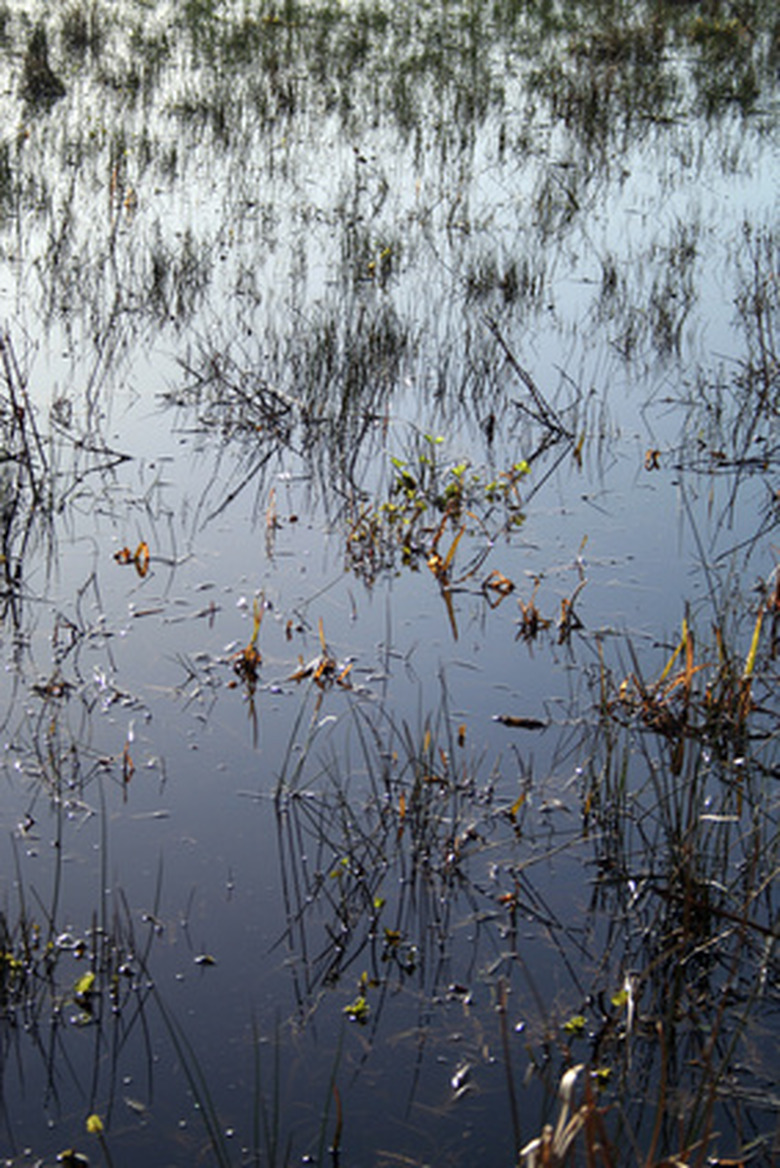
A lot with a high water table will flood during heavy rains. Flooding can occur when rain forms puddles on the lawn, when water seeps up from underground or when a lawn is part of a nearby body of water's flood plain. It is necessary to install the appropriate drainage system to keep basements from flooding, as well as to protect lawns and gardens. Appropriate drainage is also important for preventing possible health risks from breeding mosquitoes and other insects in standing water.
Diversion Ditches
Digging narrow ditches from ponding water to the driveway or street will channel the water from your lawn. You can dig diversion ditches along the edge of your property to reduce visibility. Diversion ditches need only be a few inches deep, and can be lined with gravel so you can walk over them easily.
- A lot with a high water table will flood during heavy rains.
- It is necessary to install the appropriate drainage system to keep basements from flooding, as well as to protect lawns and gardens.
Downspouts
Downspouts can be built on the corners of your roof to divert roof water to a subsurface drain or a dry well that will carry the water away from your house and lawn. Gutters that empty directly onto the lawn often cause ponding on lots with high water tables, according to Oregon State University Extension.
Soil Permeability Trenches
Poor soil permeability is a common cause of flooding because water can't filter through the soil. Sometimes a layer of clay beneath the soil will act as a barrier, resulting in ponding on the surface. To improve drainage in impermeable soil, you can dig a trench, similar to a diversion ditch but deeper. Dig under the impermeable layer and fill the trench with gravel or sand. This will both divert the water and help the soil absorb all the moisture it can, according to arborist M.D. Vaden.
- Downspouts can be built on the corners of your roof to divert roof water to a subsurface drain or a dry well that will carry the water away from your house and lawn.
- Sometimes a layer of clay beneath the soil will act as a barrier, resulting in ponding on the surface.
Excavated Pond
You can make the most of a flooding yard by building a small pond. Small ponds should be constructed in low-lying areas where water naturally pools. You can use diversion ditches to channel water to the pond from other areas. Before building a pond, be sure to check your local building codes. You may need a permit, according to Oregon State University Extension.