

How To Stake Tomato Plants

Indeterminate tomato (Solanum lycopersicum) plants produce fruit throughout the growing season on vines 6 feet tall — taller if well-fertilized. Staking them with a single stake keeps plants, and fruit, off the ground, decreasing the chance of disease and rotting fruit. To stake a tomato plant, train it onto the stake with ties and through pruning.
Step 1
Properly staking tomato vines requires matching stake height with vine height and using a material that can stand up under several pounds of fresh tomatoes. If a tomato variety grows 6 feet tall, choose a stake 7 to 10 feet long to allow 1 to 3 feet to sink into the ground. Keep in mind the deeper you sink the stake, the better it stands up to wind and the weight of tomatoes. Choose either untreated 2-inch-by-2-inch lumber or a rubber-coated metal garden stake purchased from a garden center. Lumber can be cut to the desired length, where metal stakes should be purchased at the intended length.
Space Plants
Step 1
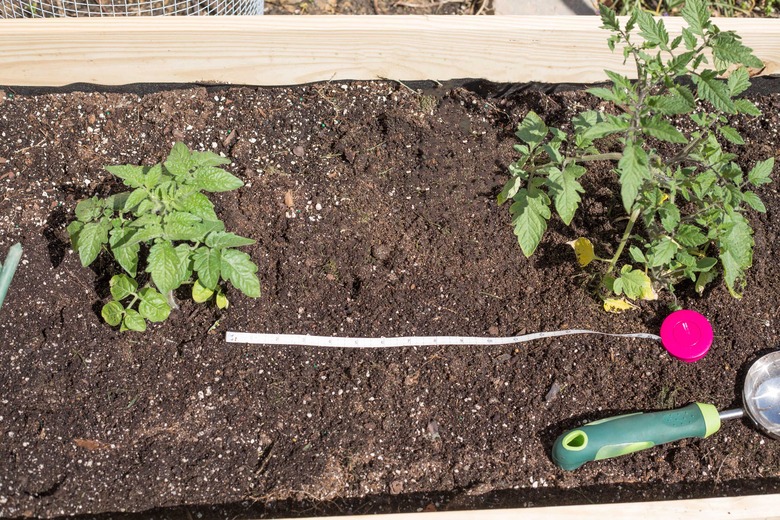
Because staked plants are pruned regularly, they are narrower and you can place them closer together than un-staked plants. How close varies by tomato variety, so experiment from one growing season to the next. You want at least 10 inches between plants to allow for good air circulation to deter disease and to allow sunlight to reach all leaves to aid in tomato production. For example, and according to Fine Gardening Magazine, space tomatoes pruned to a single stem 18 inches apart, those pruned to two main stems 24 inches apart, and plants pruned to have three or four main stems, space 36 inches apart.
Step 2
- Properly staking tomato vines requires matching stake height with vine height and using a material that can stand up under several pounds of fresh tomatoes.
Set the Stake
Step 1
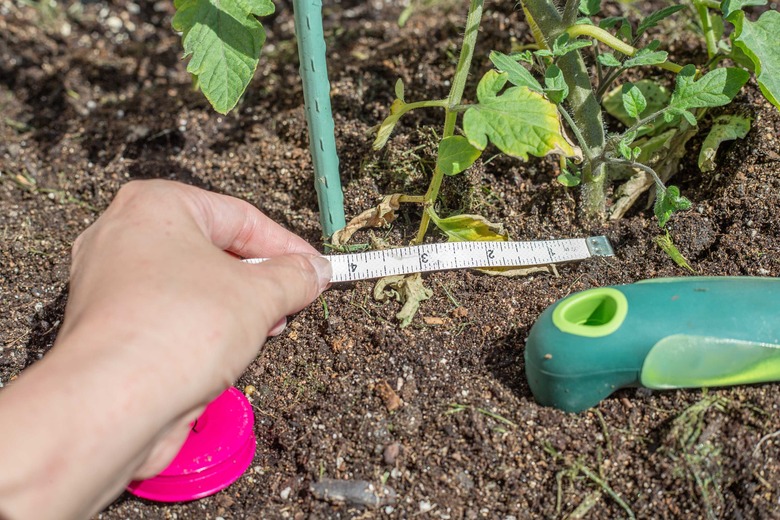
Pound the stake into the ground prior to planting tomato vines or immediately after. When setting the stake, place it about 4 inches from the plant, being careful not to damage plant roots. Site the stake so when the wind blows it pushes the tomato plant into the stake. Although the wind changes direction, most areas it blows primarily from west to east, so place the stake on the east side of the tomato plant.
Tie Up Vines
Step 1
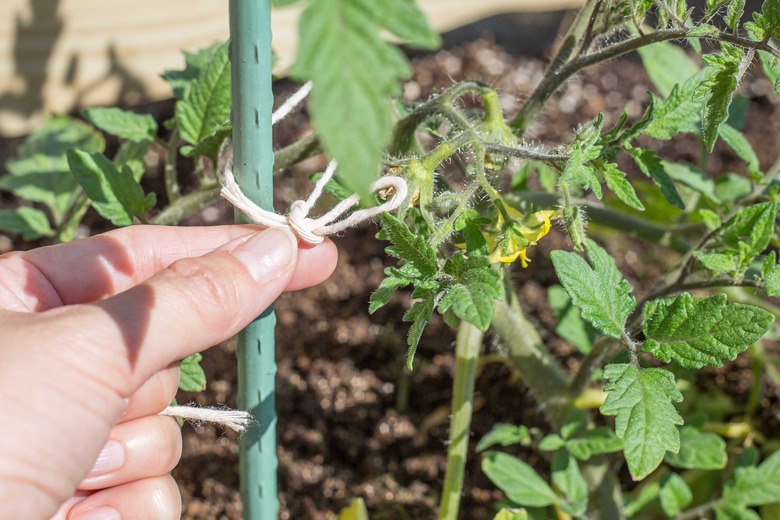
Staked plants require ongoing training to help them grow up the stake. As the vine grows, tie the tomato vine to the stake with twine by looping it around the vine, tying it loosely, then looping it around the stake and tying it off. As the vine grows, continuing tying it at 12- to 18-inch intervals and adjusting ties as needed.
Step 2
- Pound the stake into the ground prior to planting tomato vines or immediately after.
- As the vine grows, tie the tomato vine to the stake with twine by looping it around the vine, tying it loosely, then looping it around the stake and tying it off.
Prune to Increase Harvest
Step 1
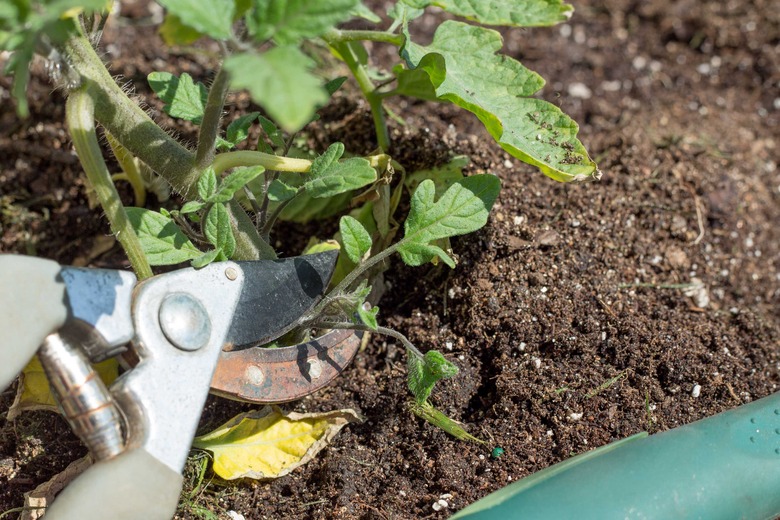
Pruning the tomato plant to two or three strong vines sends more nutrients into producing tomatoes instead of nourishing stems and leaves. When vines begin to form, prune away all of them except the most vigorous one. When fruit begins to set, allow a second stem to grow from the node just above the fruit and a third stem from the node just above the second stem. Trim all other stems back to the three main stems throughout the growing season. Pruning allows light to reach leaves and helps deter onset of disease. Before pruning, spray pruning shears with a light coating of household disinfectant to prevent spreading disease, and don't prune wet plants.