

Fast-Growing Trees In Minnesota
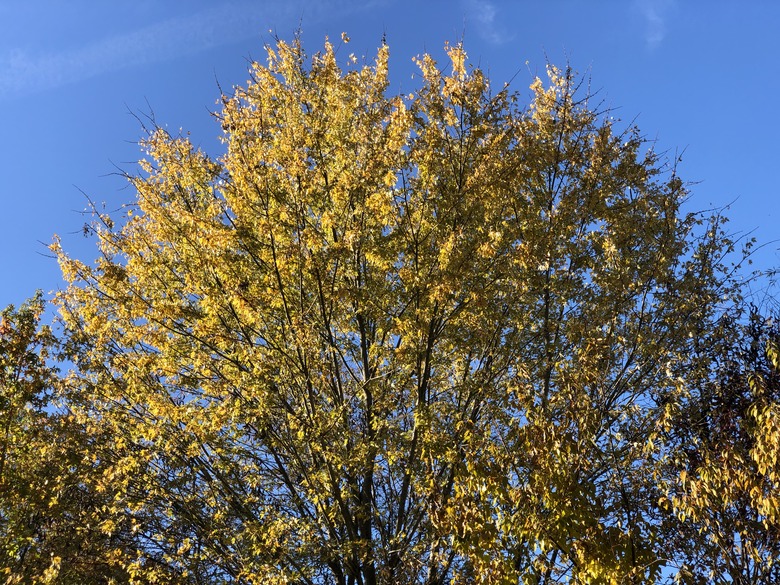
Fast-growing trees are those that add 2 feet or more of growth a year. Several species of trees that grow fast are native to Minnesota, including deciduous shade trees, evergreen trees, and fruit and nut trees.
Fast-Growing Shade Trees in Minnesota
If you're in Minnesota and looking for fast-growing shade trees, you have several common species to consider.
 AnRo0002
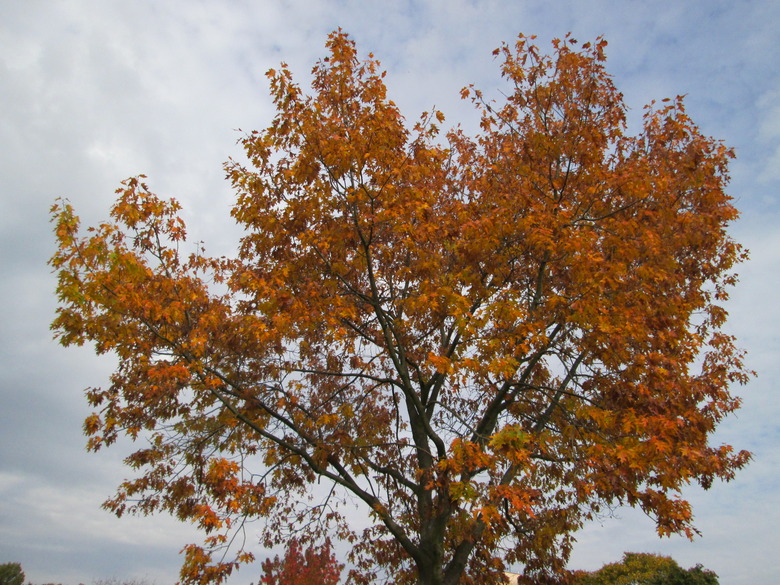
Northern Red Oak
Native trees for Minnesota that grow fast include the northern red oak (Quercus rubra, zones 3 to 8), which grows throughout the state but is most common in the southern and central regions.
This tree grows more than 2 feet a year for 10 years and is considered a medium-sized oak tree with heights between 50 and 75 feet.
 SEWilco
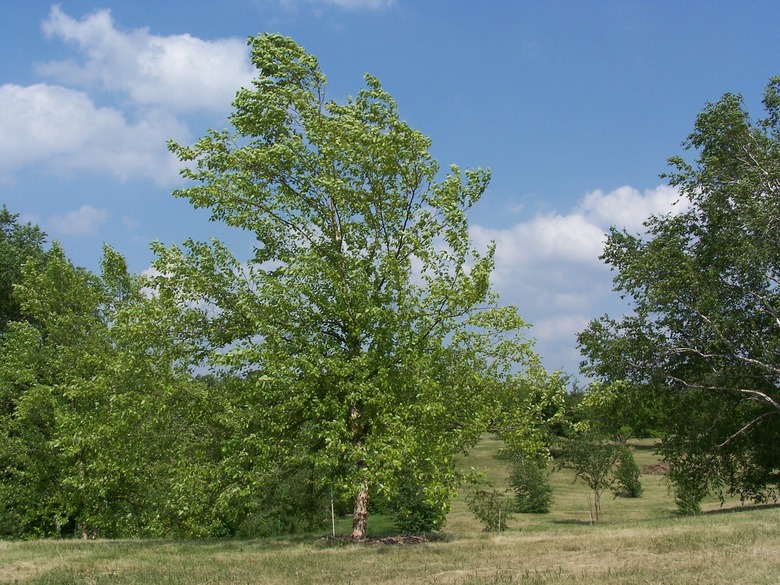
River Birch
Found primarily in wet soils of southeastern Minnesota, the river birch (Betula nigra, zones 4 to 9) is capable of growing as much as 2 feet each year and can grow to be between 40 and 70 feet tall.
The tree is prized for its peeling bark, which is ornamental.
 Famartin
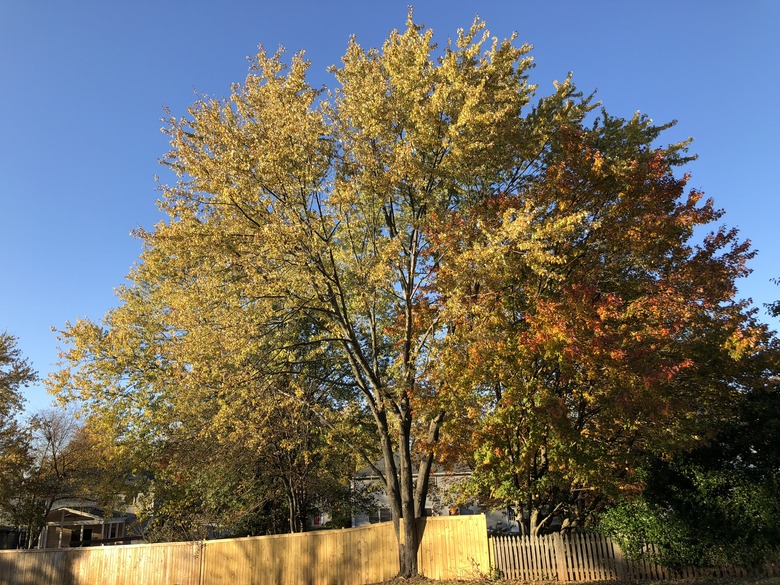
Silver Maple
The common name of the silver maple (Acer saccarinum, zones 3 to 9) refers to the silvery undersides of its leaves. This tree has a fast growth rate, as it can grow up to 80 feet tall while adding about 2 feet of height a year.
The silver maple grows primarily in southern Minnesota. While many maple trees are deciduous trees prized for their fall color, the silver maple doesn't put on much of a show in the fall.
 Matt Lavin
Eastern Cottonwood
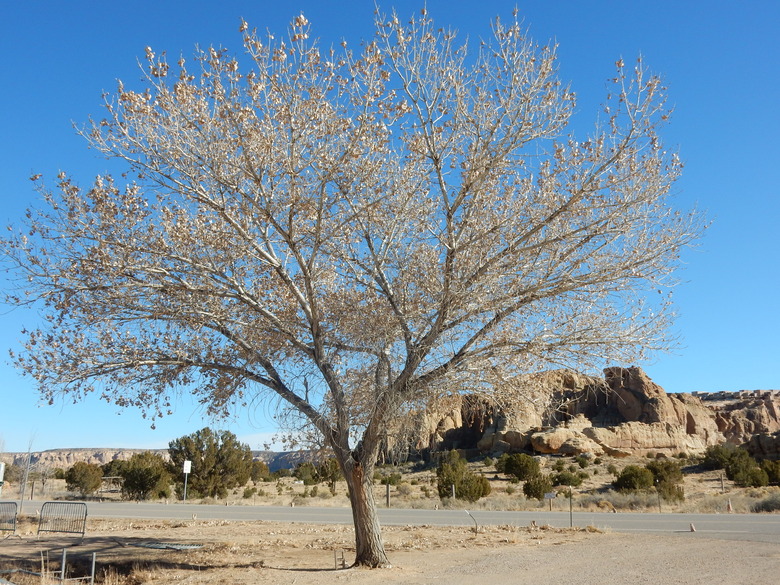
Occurring in the Minnesota flood plains, the eastern cottonwood (Populus deltoides, zones 3 to 9) is a poplar and one of the fastest growing trees in Minnesota, adding as much as 3 feet a year and reaching heights of 80 feet.
Due to the tree's weak wood, eastern cottonwoods are not the best trees for ornamental use by homeowners.
Tip
The eastern cottonwood is one of the fastest-growing trees in Minnesota.
Fruit and Nut Trees
At least two fruit and nut trees native to Minnesota are fast-growing: the black walnut tree and the black cherry tree.
 Public Domain
Black Walnut Tree
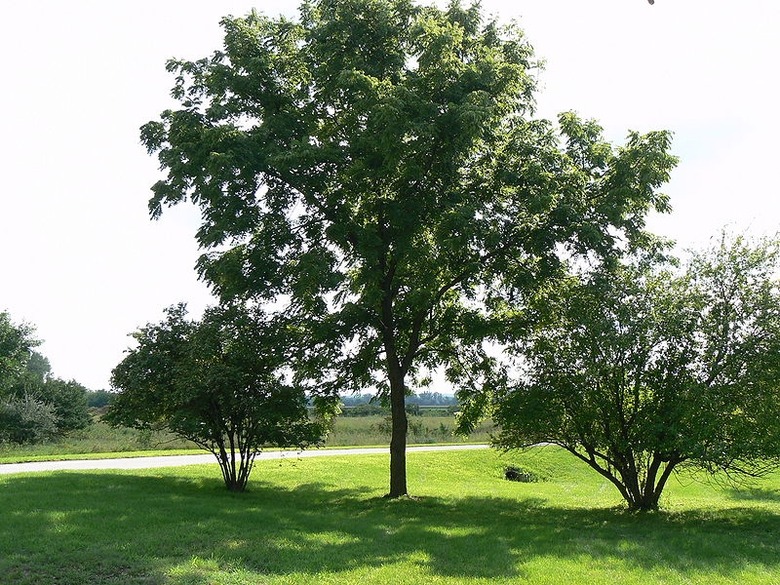
The black walnut tree (Juglans nigra, zones 4 to 9) grows in southern Minnesota. When grown in optimal conditions—rich, fertile, moist soil and full sun—it can grow quickly, adding 2 feet of height each year.
The black walnut tree is grown for its edible nuts. However, the roots of this tree produce toxins known as juglones that can kill susceptible plants growing nearby.
 Wilhelm Zimmerling PAR
Black Cherry Tree
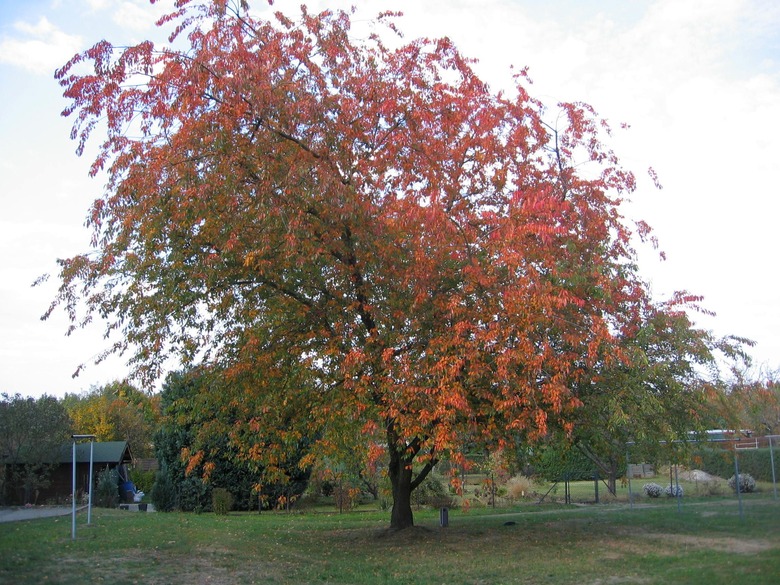
The black cherry tree (Prunus serotina, zones 3 to 9), also known as wild cherry, grows in southern and central Minnesota. It is considered a moderately fast grower, as it is capable of adding between 2 and 3 feet of height a year.
While many cherry trees are small, the black cherry ranks among the largest species, with a height of up to 80 feet. The fruit of this tree is bitter and better suited for making jams and jellies than for eating fresh.
 Ryan Hodnett
Eastern White Pine
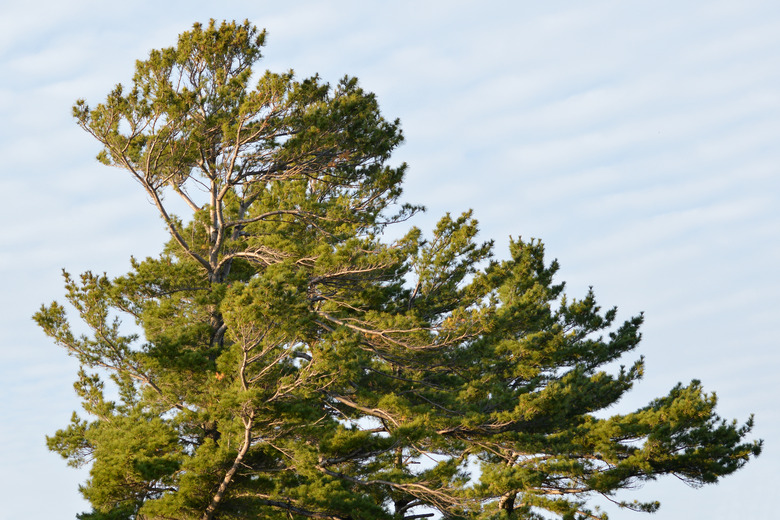
If you are looking for a fast-growing evergreen coniferous tree for Minnesota, consider the eastern white pine (Pinus strobus, zones 3 to 8). Found in northern, central and eastern Minnesota, it can grow more than 2 feet a year and reach mature heights of 80 feet.
This tree has blue-green needled foliage and is a good option for a screen or windbreak.
References
- Minnesota Department of Natural Resources: Choosing the Right Tree or Shrub for Your Area
- Carleton College Cowling Arboretum: Eastern Cottonwood
- Arbor Day Foundation: River Birch
- University of Minnesota Extension: River Birch
- Arbor Day Foundation: Northern Red Oak
- Minnesota Department of Natural Resources: Northern Red Oak (Quercus rubra)
- Arbor Day Foundation: About Growth Rate
- Missouri Botanical Garden: Betula nigra
- Arbor Day Foundation: Silver Maple
- Minnesota Department of Natural Resources: Silver Maple
- Urban Forest Ecosystems Institute at Cal Poly: Black Cherry
- Minnesota Department of Natural Resources: Black cherry (Prunus serotina)
- Arbor Day Foundation: Pin Oak
- Urban Forest Ecosystems Institute at Cal Poly: Eastern Cottonwood
- Urban Forest Ecosystems Institute at Cal Poly: Black Walnut
- Missouri Botanical Garden: Black Walnut
- Minnesota Department of Natural Resources: Black Walnut (Juglans nigra)
- Arbor Day Foundation: Eastern White Pine
- Minnesota Department of Natural Resources: Eastern White Pine