

Garden Separation Ideas
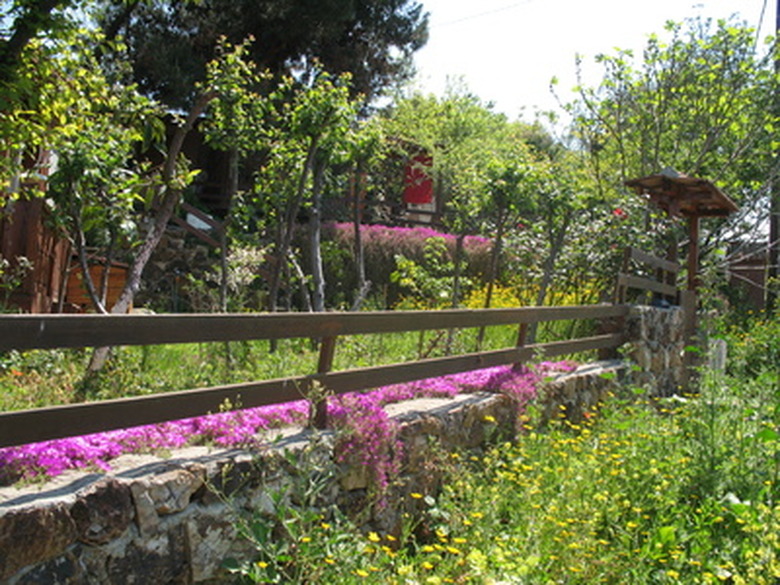
Just as the interiors of our homes are divided by walls and furnishings, our gardens need separators to divide and define spaces according to use. This is particularly true in no-till gardens or areas with raised beds, as it is important to keep foot traffic in those spaces to a minimum to avoid soil compaction.
Fences
Fences are the obvious choice for separating parts of the garden. In purely practical spaces, like vegetable gardens, these may be as simple as stretched chicken wire between metal posts pounded into the ground, (especially if rabbits are a nuisance). Lattice fences are pleasant in areas where a bit of screening may be desirable but light and airflow are necessary. They can serve as growing space for vines as well, so do double duty. Even a solid privacy fence offers practical use in the garden as a place to attach pots and window boxes, while unmistakably separating spaces. Keep solid walls to north sides of gardens to avoid shading plants.
- Just as the interiors of our homes are divided by walls and furnishings, our gardens need separators to divide and define spaces according to use.
- Even a solid privacy fence offers practical use in the garden as a place to attach pots and window boxes, while unmistakably separating spaces.
Dry Stacked Rock Wall
If you live in an area with lots of stone, you can smooth out the lawn, de-rock the garden and separate spaces all at once by using it to build a dry stacked stone wall. Use the old mason's rule of "one over two and two over one" to build a strong wall that will not fall over. Start with the largest stones and add smaller ones over the cracks between them, then lay the next row over the cracks created by the second row and so on, until your wall is as high as you want it to be. In any case, dry stacked walls–unless expertly done–should not exceed 3 feet in height or they may be unsafe.
Living Dividers
One of the best ways to separate garden spaces is with living walls. Fast growing shrubs like roses, camellias or blueberries, or tall grasses such as the native bluestems and fountain grasses will quickly define an area. Taller plants like bamboo may take two or three years to establish themselves completely, but are more satisfactory as privacy screens where local ordinances regulate the use of fences. If you prefer something shorter, sweet flags, armeria or hostas make neat and attractive evergreen dividers. (Hostas will do well even in shade, while armeria is a salt tolerant native great for coastal areas.) Artemisias, though not evergreen, make pretty dividers for sunny spaces–especially in herb gardens or along walkways.
- If you live in an area with lots of stone, you can smooth out the lawn, de-rock the garden and separate spaces all at once by using it to build a dry stacked stone wall.
- Taller plants like bamboo may take two or three years to establish themselves completely, but are more satisfactory as privacy screens where local ordinances regulate the use of fences.
Walkways
Create visual dividers that do not actually impede movement from place to place through use of clearly defined paths and walkways. Flagstone is durable and elegant, as is brick or faux stone (made from cement), but you can just as easily create paths of mowed grass, moss or low ground covers around simple stepping-stones. Creeping thyme and sweet woodruff are particularly nice for paths as they hold up well to foot traffic and are intensely fragrant when stepped on.