

Types Of Artificial Sunlight For Plant Life
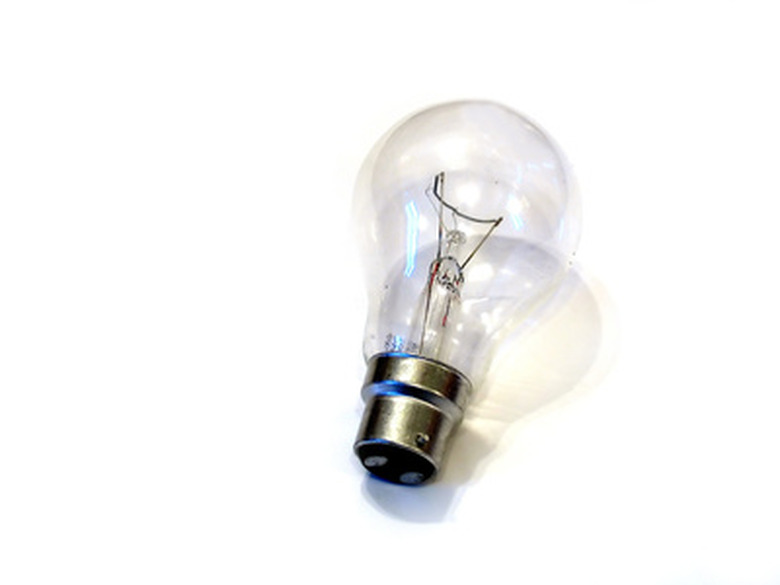
Artificial sunlight is generated by light bulbs. Plant life has evolved to make energy by taking in sunlight, water, and carbon dioxide through the process of photosynthesis. Growing plants with an artificial light source requires duplicating to the greatest extent possible the natural light conditions created by the sun and required by the plant. Ideally, artificial light should not emit excessive amounts of heat and should provide light in both the red and blue spectrum
Incandescent Bulbs
Incandescent bulbs are a poor source of artificial plant light because they produce a lot of heat and light in the blue spectrum. The high heat output requires the placement of incandescent bulbs at a substantial distance from the plant, reducing the amount and intensity of the light received. An incandescent light bulb lasts about 1,000 hours and is inefficient at utilizing and converting electricity.
- Artificial sunlight is generated by light bulbs.
- Ideally, artificial light should not emit excessive amounts of heat and should provide light in both the red and blue spectrum Incandescent bulbs are a poor source of artificial plant light because they produce a lot of heat and light in the blue spectrum.
Fluorescent Tubes
Florescent tubes are optimal sources of artificial plant light because they operate at cooler temperatures than incandescent bulbs and produce light in both the red and blue spectrum. The reduced heat output of fluorescent tubes allows the light source to by closer to the plant, providing more intense light for the plant. Fluorescent tubes average 10,000 hours of use and come in many shapes and sizes including square, U-shaped, or straight.
Spotlights
Spotlights can be incandescent or florescent and provide supplemental artificial light either in addition to other artificial sources or in addition to natural light. Spotlights can fill a gap in light intensity or light duration and are generally less effective and efficient than standard florescent tubes. Specialize self-reflecting spotlights are coated to emit greater amounts of blue light in a concentrated area and greatly aid standard incandescent bulbs.
Sunlight Vs. Artificial Light In Plant Growth
You can successfully grow plants under artificial light indoors, but it's important to get your setup right. Light consists of several different wavelengths, each of which produces its own color. Unfortunately, many artificial light sources produce more of the green and yellow wavelengths, which provide very little energy for plants. Others emit red or blue light but not both. When growing plants indoors, you must understand not only what parts of the light spectrum you are provided but also how much heat. As good as sunlight is, it is possible to provide your indoor plants with too much of a good thing. Plants that need a lot of sun do best in a south-facing window unobstructed by trees, roof overhangs or other obstacles. If the windowsill itself is too hot or cold, move the plant to a stand or table a few inches away from the window rather than placing it directly on the windowsill or against the window glass. Fluorescent bulbs last about 10,000 hours and run cool, so they need only sit about one foot away from your plants. Although these bulbs emit lots of the blue light wavelength that plants need, they tend to lack the equally important red hues. When it comes to the light they emit, incandescent bulbs are the opposite of fluorescents. You can expect a lifetime of about 1,000 hours from most incandescent bulbs. Cool to the touch and extremely energy efficient, LED lights are a great indoor growing option if you choose the right ones. In spite of this, they may not make for the best choices when growing plants indoors.
- Florescent tubes are optimal sources of artificial plant light because they operate at cooler temperatures than incandescent bulbs and produce light in both the red and blue spectrum.
- Specialize self-reflecting spotlights are coated to emit greater amounts of blue light in a concentrated area and greatly aid standard incandescent bulbs.
- Cool to the touch and extremely energy efficient, LED lights are a great indoor growing option if you choose the right ones.