

Slugs And Chrysanthemums
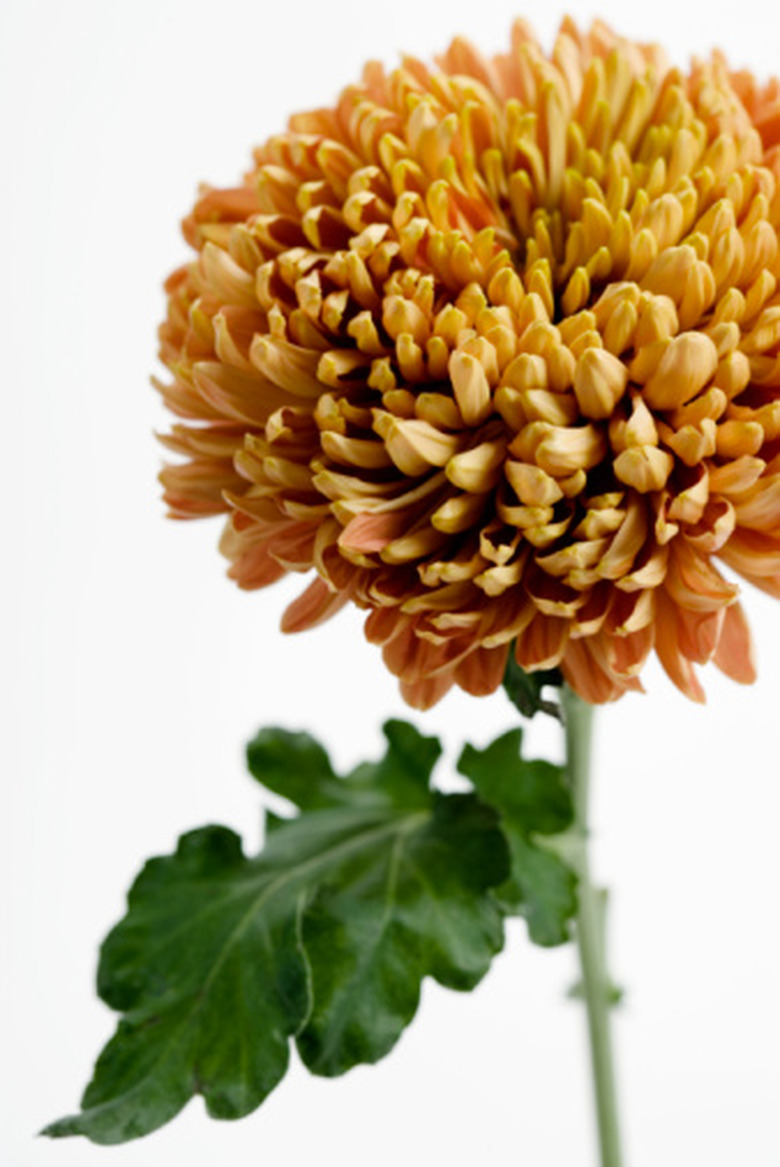
Chrysanthemums are hardy, sun-loving perennials favored for their autumn blooms. Grown as perennials in U.S., Department of Agricultural zones 5 to 9, mums are popular annuals in other zones. Their flowers are varied shapes from single to pompom blooms, with color shades from white and yellow to bronze. Easy to grow, these flowers do fall prey to slugs; slugs devour the foliage and damage mums.
Habitat
The most effective slug deterrent is habitat control. When slime trails around foliage indicate slugs, promptly patrol the mum bed. Pick up discarded vegetation, pull out weeds and clear the mum bed of debris. Look for slugs under old boards, flower pots and other protective covers. Water in early morning, as night watering encourages the nocturnal slugs. Plant the mums 18 to 24 inches apart, as the dry space between discourages the voracious pests. Cultivate lightly around the plants. This disturbs and kills slug eggs.
- Chrysanthemums are hardy, sun-loving perennials favored for their autumn blooms.
- Easy to grow, these flowers do fall prey to slugs; slugs devour the foliage and damage mums.
Hand-Picking
At night, use a flashlight to locate the slimy slugs and their snail relatives. Handpick the pests and drop them in soapy water. Encourage neighborhood children to do night duty, giving them the slug-gathering task. The next day, dump dead slugs in the compost heap or away from flowers and veggies. Put out slug traps such as rolled-up newspaper, flat boards or upturned flower pots. The next morning, when slugs return to these hiding places after a night of feasting, gather the slugs up and drop them in the soapy water. Hand-picking is effective on small slug infestations if you enjoy the nightly hunt. It is not effective on small slugs or large infestations.
- At night, use a flashlight to locate the slimy slugs and their snail relatives.
- The next morning, when slugs return to these hiding places after a night of feasting, gather the slugs up and drop them in the soapy water.
Barriers
For one or two mum plants, experiment with slug barriers. Some barriers, such as wood ash, diatomaceous earth, lime or eggshells, work in limited areas. Rain and watering wash them away and, over time, these methods lose their effectiveness. Some gardeners avoid these barriers as they eventually dissolve and raise the soil pH level. Copper is another barrier. Copper bands protect plants as slugs get a slight electric charge when their bodies contact the copper. This repels but does not hurt the slug, which slimes off in search of other garden fodder. Copper edges are sharp and painful to pets and children. These barriers may deter some slugs, but are not effective for large mum beds.
- For one or two mum plants, experiment with slug barriers.
- These barriers may deter some slugs, but are not effective for large mum beds.
Baits
Protect your mums with slug baits. Reliable slug controls include baits, both natural and chemical. Baits such as iron-phosphate granules are nontoxic, made from a soil compound and cause slugs to stop eating. This bait can be used around children, pets and wildlife. Uneaten bait decomposes the soil. Chemical baits containing metaldehyde and other ingredients are effective, but should not be used around children or pets. Scatter these baits lightly and do not make bait piles where pets or wildlife can access the bait.
- Protect your mums with slug baits.
- Chemical baits containing metaldehyde and other ingredients are effective, but should not be used around children or pets.