

Propagation Of Lantana By Cuttings
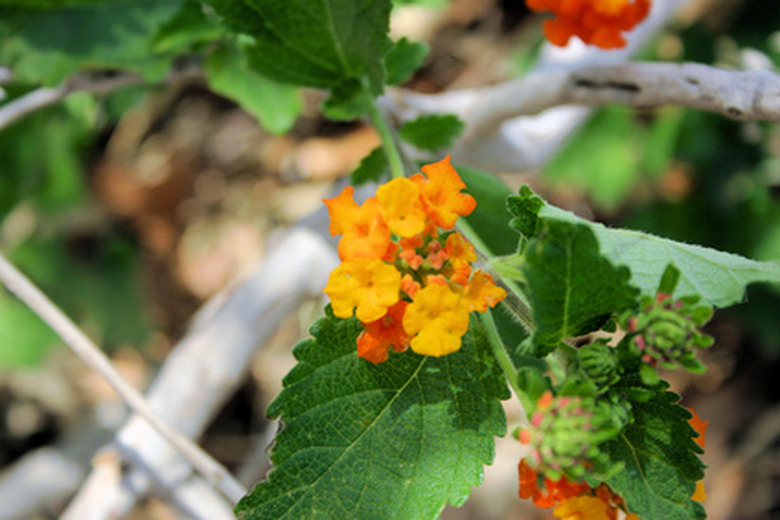
Lantana, a flowering annual in tropical and subtropical areas, grows as an annual in temperate zones. It is propagated both with seeds and by cuttings. Propagation by cuttings is not complicated and experienced growers agree on the basics. In temperate areas, newly rooted cuttings need to be protected from winter cold.
Best Soil
Plant lantana cuttings in soil that is moist and well-drained. Cuttings will grow in perlite or a mixture of peat moss and sand. They will also root in plugs of rockwool, a growing medium made of melted rock and sand that is popular in hydroponic growing systems.
- Lantana, a flowering annual in tropical and subtropical areas, grows as an annual in temperate zones.
- Plant lantana cuttings in soil that is moist and well-drained.
What and When
Cultivars of lantana usually grown in the United States are Spanish Flag and Trailing Lantana or hybrids of the two. Propagating lantana from cuttings is best done from early summer to August and September. You can grow cuttings from green wood or wood that is slightly more mature. Reports of successful propagation vary from twigs as short as 3 inches to cuttings that are 6 to 8 inches long.
Cutting and Starting
Leave at least two nodes on each cutting; a node is where leaves grow from the twig. Remove all flowers and the leaves from the lowest node. Plant the cutting with the lowest node under the soil or planting medium. Remove any leaves that come into contact with the soil. Dipping your cuttings in rooting hormones is useful, but not necessary.
- Cultivars of lantana usually grown in the United States are Spanish Flag and Trailing Lantana or hybrids of the two.
- Leave at least two nodes on each cutting; a node is where leaves grow from the twig.
Your cuttings should root in two to three weeks. When you see growth emerging, put the cuttings in good light and fertilize them with a general purpose fertilizer every two weeks. This will encourage new growth. When your cutting shows 2 to 3 inches of new growth, pinch the tips to promote bushy growth.
Keeping Cuttings Moist
Keep your planting mixture or compost moist. If you're a home gardener, you can put individual cuttings with a plastic bag to preserve moisture. Commercial growers sometimes place flats of cuttings in misting beds. Lantana flourishes in moist climates. If your climate is dry, misting is a good way to keep the growing cuttings moist.
- Your cuttings should root in two to three weeks.
- If you're a home gardener, you can put individual cuttings with a plastic bag to preserve moisture.
Replanting
When your cuttings start to root move them to individual pots. Put them in a greenhouse or cold frame over the winter to protect them from the cold and plant them the following spring.