

Insecticides For Tomato Plants
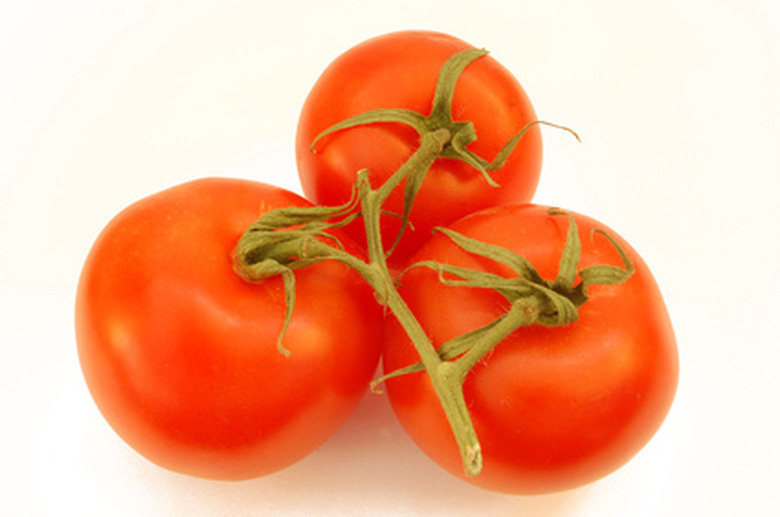
Because tomatoes grow in the warmer parts of the growing season, the chance for insect damage is great because insects are the most numerous and destructive in warmer weather. The most important insects that affect tomato plants are stinkbugs, aphids and several varieties of worms. There are several different insecticides available for controlling these pests on tomato plants.
Bacillus Thuringiensis
Bacillus thuringiensis, or Bt, is a naturally occurring fungus that kills worms and caterpillars once it is ingested. It remains active for only 24 to 48 hours, but can be used up to the day of harvest, in most situations. It is available in pre-mixed and powdered form. Because it degrades in sunlight, it is best to spray in the evening when insect larvae are active. Bacillus thuringiensis works best if used once a week to kill worms when they are small. It is considered an organic pesticide when used as directed. Overuse of Bt will damage some tomato plants by staining the leaves and fruit.
- Because tomatoes grow in the warmer parts of the growing season, the chance for insect damage is great because insects are the most numerous and destructive in warmer weather.
- Bacillus thuringiensis works best if used once a week to kill worms when they are small.
Permethrin
Permethrin is a contact insecticide that can be used for stinkbugs, aphids and flea beetles. It is available in powder or liquid form and for best results needs to be applied where the pests have contact with the pesticide. Permethrin is extremely toxic to bees and should be applied in the evening when bees are not active. Although bees are not needed for tomato production, bumblebees and other beneficial insects often visit the blooms of tomato plants during the day. Permethrin loses its potency in bright sunlight. It is considered a natural or organic type of insecticide and is produced from the chrysanthemum plant. Permethrin also controls aphids.
- Permethrin is a contact insecticide that can be used for stinkbugs, aphids and flea beetles.
- Permethrin is extremely toxic to bees and should be applied in the evening when bees are not active.
Spinosad
Spinosad is a natural organic pesticide for controlling worms and thrips. It has a longer residual period than other organic tomato insecticides, which is up to 20 days. It can be used within three days of harvest, if needed. For complete control, you need to cover the entire plant with a mixture of spinosad, mixed according to the label.
Carbaryl
Carbaryl is the active ingredient in the popular insecticide known as Sevin dust. It is a general-purpose insecticide that kills everything that has contact with the dust or liquid, including beneficial insects. Carbaryl has a residual effect for two to three weeks, depending on the weather conditions. It is not considered an organic pest control product. It controls all insect pests that affect tomatoes, if used correctly.
- Spinosad is a natural organic pesticide for controlling worms and thrips.
- Carbaryl has a residual effect for two to three weeks, depending on the weather conditions.