

Block Planting For Vegetables
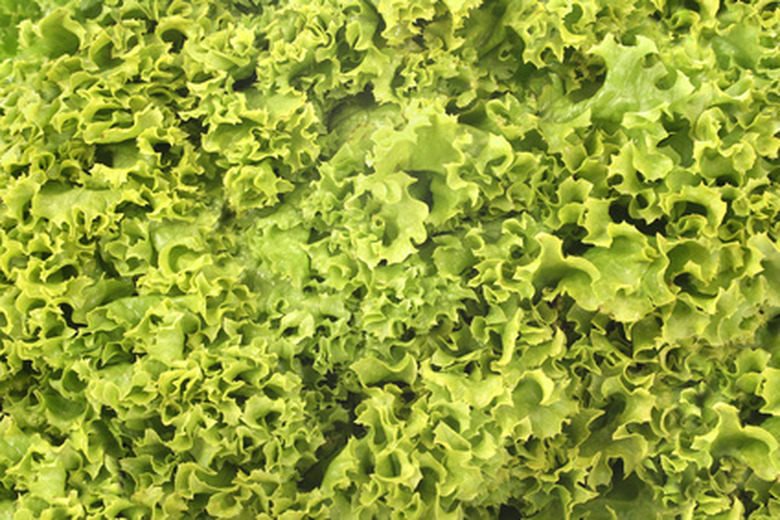
Block planting for vegetables results in tightly focused areas of planting and is a technique well-suited to raised beds. Vegetable seeds are planted in grid formations as opposed to the more traditional row patterns. The technique may also be referred to as square foot gardening, raised bed or intensive gardening. The concept behind block planting is to maximize the vegetable yield by utilizing a minimally defined area.
Identification
The block planting technique is applied to raised beds, with the beds acting as the defined area for planting. The beds may be mounded on the surface of the ground in small rectangular shapes, approximately 4 feet wide, or built beds may be used. The mounds or built beds may be as long as the gardener desires, resulting in mounds or beds measuring 4 feet by 6 feet, 10 feet or 20 feet, depending on the garden area.
- Block planting for vegetables results in tightly focused areas of planting and is a technique well-suited to raised beds.
- The block planting technique is applied to raised beds, with the beds acting as the defined area for planting.
Size
An area is defined within each bed for each type of vegetable. The size of the area for one type of crop may be as small as 2 feet by 4 feet, or 8 square feet of space. Seeds are planted in a block pattern within the area. For example, if planting lettuce, seeds may be spaced at 3 inches apart over the length of two feet and down the 4-foot width of the bed.
Effects
The planted grid results in 105 seeds planted. As the seedlings grow within the grid, the gardener can thin the emerging crop to eliminate weak plants. Ultimately, the result is a densely packed vegetable patch in the shape of the determined block.
- An area is defined within each bed for each type of vegetable.
Function
Block planting maximizes a defined area by greatly reducing the traditional spacing between plants as seen in row planting. The crowding of vegetables within the area also reduces weed growth. The plants shade the soil and their collective root systems create a strong, weed-resistant network.
Benefits
Block planting has other advantages such as increased opportunity for successive plantings. As crops are harvested, new seeds are planted within the block, resulting in multiple harvests. The practice of companion planting, the mingling of different plants for mutual benefit, may be easily adapted to block planting as different plants may be seeded closely together or even within a single block planting.
Warning
One disadvantage of block planting lies in its most attractive characteristic; the close proximity of plantings may result in losing an entire crop should one plant become infested with either disease or pest. If the bed includes various crops attractive to one type of pest, for example, the whole bed may quickly become infested.
- Block planting maximizes a defined area by greatly reducing the traditional spacing between plants as seen in row planting.
- One disadvantage of block planting lies in its most attractive characteristic; the close proximity of plantings may result in losing an entire crop should one plant become infested with either disease or pest.