

How To Tell If A Tulip Bulb Is Still Good
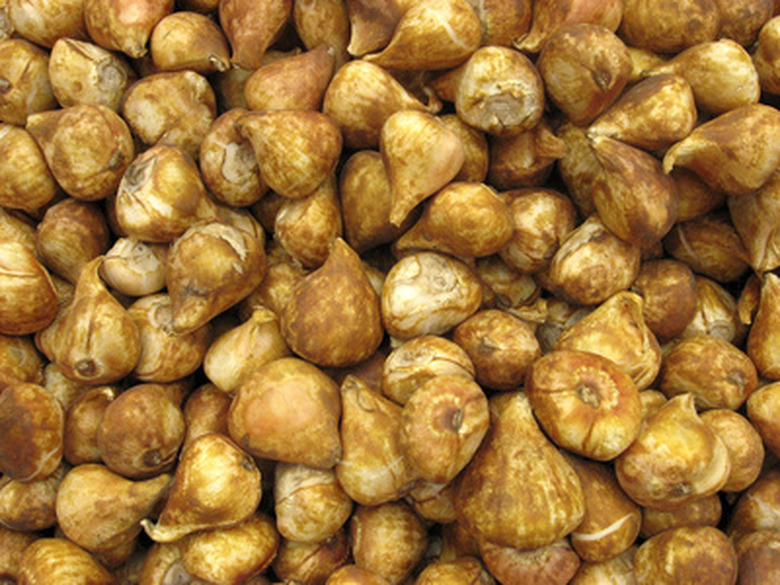
Tulips are bright, beautiful flowers that look great in any home or garden. Unlike many other flowers, tulips are grown from bulbs rather than seeds. It's important that a tulip bulb be in prime condition when you plant it, otherwise the flower will have a scraggly appearance or not even grow at all. Fortunately, there are a few ways to tell if a tulip bulb is good or not. You can check the quality of your tulip bulbs in just a matter of minutes.
Step 1
Weigh the tulip bulb in your hand. The bulb should feel somewhat heavy for its size. If it feels hollow, it may be bad.
- Tulips are bright, beautiful flowers that look great in any home or garden.
- It's important that a tulip bulb be in prime condition when you plant it, otherwise the flower will have a scraggly appearance or not even grow at all.
Step 2
Examine the color. The bulb should have even color all over. Blotchy or uneven coloring is a sign of a bad bulb.
Step 3
Check the tunic, the thin papery covering, to make sure it is completely intact. A damaged tunic is not able to hold in moisture necessary for the bulb.
Step 4
Check the bulb for cracks, scratches or other similar damage. This type of damage drastically increases the risk of mold or fungus growth within the bulb. A good bulb should have no damage at all.
- The bulb should have even color all over.
- Blotchy or uneven coloring is a sign of a bad bulb.
Tulip Bulbs Formed?
Each tulip plant grows from a tunicate bulb, which is a kind of true bulb that features an outer, papery layer that encases the inner bulb structure. The bulb's inner sections are called leaf scales. The flower bud forms in the bulb's center. The tulip bulb may replenish its nutrients and energy during the growing season and swell with new leaf scales so it can grow again the following spring. Bulbs provide a storage center for developing tulip plants. So offsets should be removed from main bulbs every three years.
Tip
If the bulb is free of damage but has small amounts of blue or green mold growth, the bulb may still be healthy on the inside. Simply wipe the mold away with a washcloth dampened with fungicide.