

Oleanders
Step 1
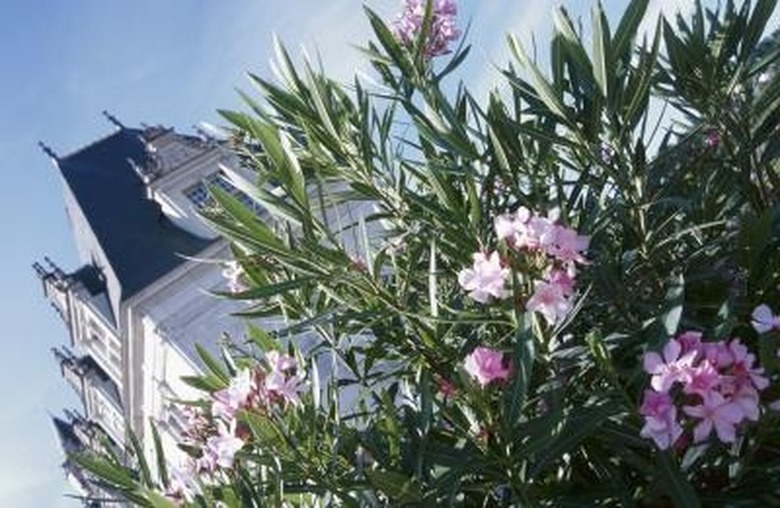
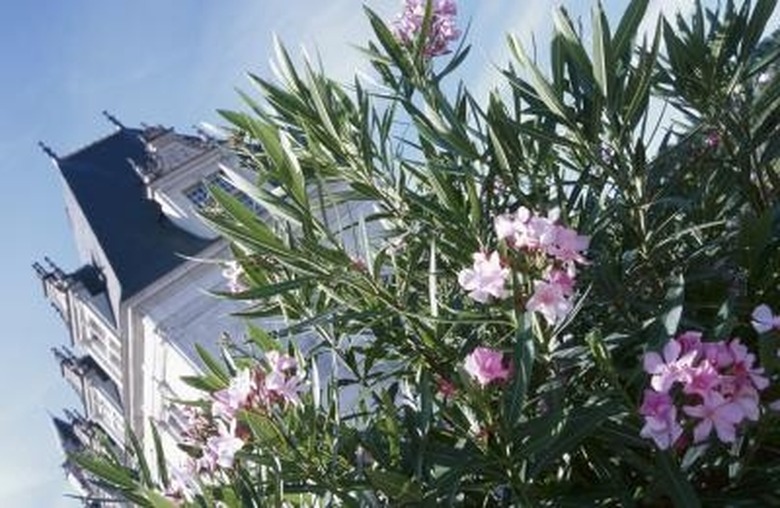
The oleander is a hearty flowering shrub or tree that takes a minimal amount of maintenance. It is used ornamentally and is often planted along highways. The oleander can tolerate the high temperatures of the desert. Because it can grow tall and dense, rows of oleanders are often used as privacy screens. The oleander can be grown in soil conditions that might make other plants perish. It grows in soil that is clay, loom, sandy, acidic or alkaline.
Step 1
Wear gardening gloves when handling the oleander and planting.
- The oleander is a hearty flowering shrub or tree that takes a minimal amount of maintenance.
- The oleander can be grown in soil conditions that might make other plants perish.
Step 2
Dig a hole slightly larger than the container holding the oleander. Choose a partial shade or sunny location away from pets or children, with well draining soil.
Step 3
Tap the bottom of the container to loosen the oleander from the nursery pot.
Step 4
Lift the plant from the container. If necessary, cut a vertical line down the side of the pot to remove the oleander.
Step 5
Set the oleander in the hole and back fill with the dirt that was removed, to fill in the hole. The soil line should be the same as it was when the oleander was in the nursery container.
- Dig a hole slightly larger than the container holding the oleander.
- Tap the bottom of the container to loosen the oleander from the nursery pot.
Step 6
Water thoroughly.
Warning
The oleander is one of the most poisonous plants and should be kept away from pets and children.
Things Needed
- Shovel
- Gardening gloves
- Heavy shears
Planting Time

Step 1
The International Oleander Society recommends planting oleanders between their initial spring bloom and September. Prune newly planted oleanders carefully during the spring, summer and fall, but refrain from pruning during the cold season.
Pre-Planting
Step 1
Keep oleanders moist and protected from extreme temperatures before planting. When possible, place these plants close together to keep them standing during high winds and to prevent water loss. Store un-planted oleanders in shady areas.
Planting Conditions
Step 1
Oleanders prefer sunny locations and well-drained soil. They tolerate dry, sandy conditions well and according to the University of Hawaii at Manoa, grow in soils from pH 5 to pH 8. Irrigate newly-transplanted oleander bushes regularly for the first year after planting to allow them to establish themselves.
Step 2
- The International Oleander Society recommends planting oleanders between their initial spring bloom and September.
- Keep oleanders moist and protected from extreme temperatures before planting.

Step 1
Fill a planting container with equal parts of sand and dampened peat moss.
Step 2
Sprinkle the seeds across the surface of the planting mixture and then cover them with a thin, 1/8-inch layer of the same mixture.
Step 3
Water the seeds very lightly without uncovering them. Keep the soil moist until the seeds sprout.
Step 4
Place the container in an area where it can get full sunlight to produce strong seedlings and temperatures are 75 degrees F.
Step 5
Thin out the extra seedlings so they don't crowd each other. Leave a 2-inch space between each seedling. Thin the seedlings by pinching the stems between your thumbnail and forefinger.
Step 6
- Fill a planting container with equal parts of sand and dampened peat moss.
- Leave a 2-inch space between each seedling.
Step 7
Transplant the seedlings into the garden in the early summer by digging a small hole the same size as its root mass with a small hand shovel.
Step 8
Water the plant immediately after planting and then only after periods of drought.
Step 1
Water your oleander shrub only during times of drought or prolonged dry spells. Oleanders even survive droughts, but grow much better if you provide a deep watering once each week during dry conditions. Provide water to moisten the soil down and around the oleander's root system.
Step 2
Feed your oleander shrub once each year in the spring with an all-purpose fertilizer made for flowering shrubs. Follow the application directions on the fertilizer label.
Step 3
- Transplant the seedlings into the garden in the early summer by digging a small hole the same size as its root mass with a small hand shovel.
- Feed your oleander shrub once each year in the spring with an all-purpose fertilizer made for flowering shrubs.
Step 4
Prune your oleander once every year in early spring to remove all cold-damaged and overgrown or old wood. In the summer, remove the spent flowers to promote longer blooming of the oleander shrub. Cut back any suckers that emerge from the base of the oleander to encourage healthy blooming during the spring and summer. Prune back the stem tips right after the oleander is finished blooming to promote healthy branching.
Step 5
Protect your oleander shrub from the cold when temperatures drop to or below 20 degrees Fahrenheit. Cover the oleander with a light blanket at night and remove it in the morning when the temperatures warm again.
Step 1
Provide a brightly lit growing location within 5 feet of a window. Ensure that your oleander receives at least three to five hours a day of bright direct sunlight or a full day of very bright indirect light. Uncovered north facing windows are ideal, as are lightly screened south and west facing windows.
- Prune your oleander once every year in early spring to remove all cold-damaged and overgrown or old wood.
- Cut back any suckers that emerge from the base of the oleander to encourage healthy blooming during the spring and summer.
Step 2
Maintain ambient temperatures around your oleander above 50 degrees Fahrenheit and below 80 degrees Fahrenheit for optimal performance and to prevent cold damage or leaf burn.
Step 3
Water your indoor oleander sufficiently to keep the soil evenly moist but not continuously soaking wet. Empty the saucer of water after each irrigation session and do not let the roots stand in water.
Step 4
Fertilize with a slow release, balanced houseplant formula with a guaranteed analysis of 10-10-10 or 20-20-20. Apply several times a year according to the product label dosing directions, and water in well after each feeding.
Step 5
Prune away and discard any dead, discolored or damaged leaves when you spy them. Wear gloves to protect your hands from the milky latex plant sap, as it can be irritating to the skin.
- Maintain ambient temperatures around your oleander above 50 degrees Fahrenheit and below 80 degrees Fahrenheit for optimal performance and to prevent cold damage or leaf burn.
Warning
Oleander is a poisonous plant and should not be grown where it can accessed by children or animals.
Step 1
Put on the protective gloves to protect yourself from any poisonous parts of the oleander.
Step 2
Prune the oleander in September and October to make way for new growth.
Step 3
Use the pruning scissors to cut the plant right above the leaf node, which is the area where three leaves grow off the branch. Each branch is fairly skinny, with three smaller branches coming out of it. The three smaller branches should be cut off right above the leaf node. Do this all over the plant. Pruning here is important, as this is where the new growth will come in.
- Put on the protective gloves to protect yourself from any poisonous parts of the oleander.
- Use the pruning scissors to cut the plant right above the leaf node, which is the area where three leaves grow off the branch.
Step 4
Prune the branches all over the oleander, from the very bottom to the top. Pay special attention towards the bottom of the oleander, where it needs to be the most strong and bushy. Pruning these once a year will ensure that you have an abundance of flowers.