

Difference Between Topsoil & Subsoil
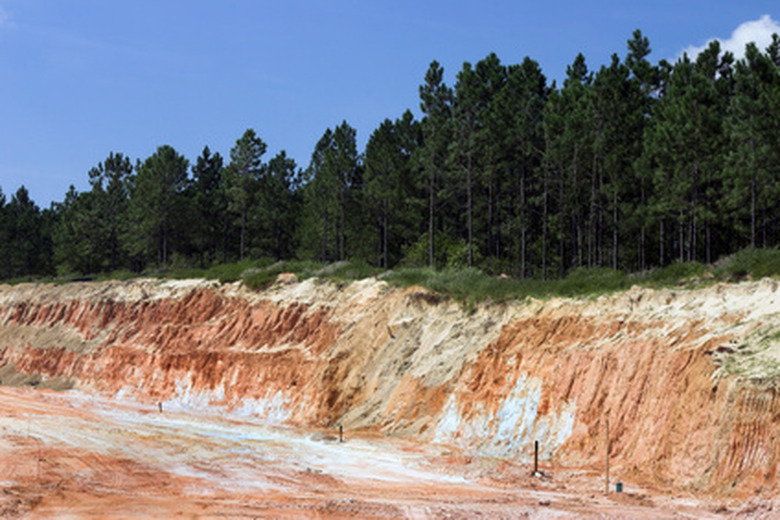
Not all soils are the same, and the difference between topsoil and subsoil has everything to do with where they are located. Topsoil is the soil on the surface, while subsoil is the soil beneath. It is important to know the difference between these two soils, especially when working with your landscape and planning your garden areas.
Topsoil Characteristics
Topsoil is lighter and more aerated than subsoil and has a better soil structure that retains water and prevents erosion. Its humus and nutrient content make topsoil a rich environment for microorganisms, insects and worms. These creatures will continue to enrich the topsoil from their waste products and decomposition after death.
Humus
Over time, microorganisms cause plant and animal matter to decompose to a point where they no longer decay rapidly, and the remaining material is considered stable. This is humus, and topsoil contains a higher content of humus than subsoil since it is at the surface where decomposition of organic matter occurs.
- Not all soils are the same, and the difference between topsoil and subsoil has everything to do with where they are located.
- This is humus, and topsoil contains a higher content of humus than subsoil since it is at the surface where decomposition of organic matter occurs.
Subsoil Composition
The level of subsoil, which is at least eight inches deep, prevents it from receiving the amount of oxygen topsoil receives. This does not make it as suitable for insects and microorganisms as topsoil.
Subsoil is usually clay, muck or loess that has stores of trace elements necessary for plant health but are present in unusable forms, according to the Forest Preserve District of Cook County, Illinois.
Topsoil and Plants
Topsoil plays an important role in plant development. In fact, many plants deprived of the nutrients in topsoil cannot survive. According to the Forest Preserve District of Cook County, Illinois, plants depend on varying amounts of calcium, carbon, hydrogen, iron, magnesium, nitrogen, oxygen, phosphorus, potassium and sulfur in topsoil. Trace elements present in topsoil, including boron, cobalt, iodine and zinc, enrich the soil and are also important to plant development.
- The level of subsoil, which is at least eight inches deep, prevents it from receiving the amount of oxygen topsoil receives.
Considerations
Over time, as new layers of humus are formed and mixed into the topsoil each year, today's topsoil will eventually become tomorrow's subsoil. The soil will transform from a light and porous soil composition to compacted clay that loses its ability to hold oxygen and water.
Since subsoil was once topsoil, it is easy to mix and enrich with new topsoil. This is useful for gardeners who turn their dirt over to halt weed growth but find that their subsoil needs added nutrients to grow new plants and vegetables.