

How To Grow A Japanese Plum Tree
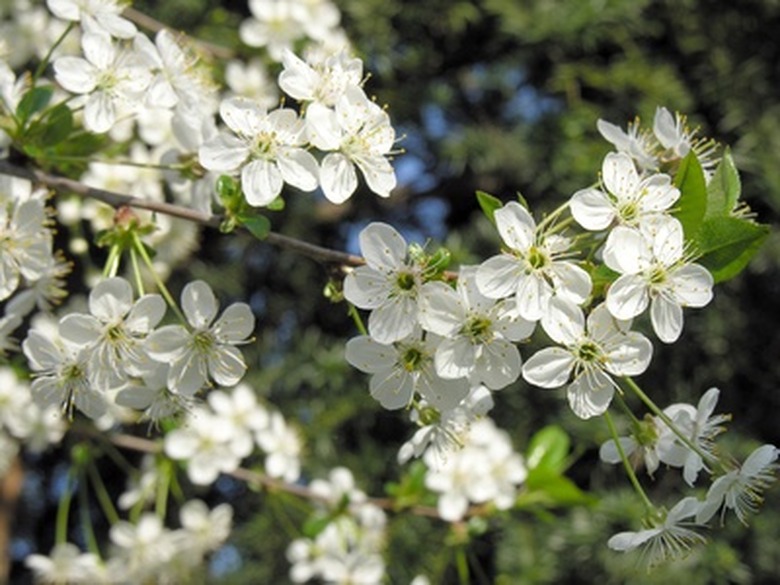
The Japanese plum tree (Prunus salicina) is a medium-sized fruit-producing tree, typically growing to about 15 to 20 feet in height. The plums are the most commonly eaten fresh plum thanks to their juicy, sweet taste. Plant a Japanese plum tree in full sun, and make sure you provide rich, well-draining soil with a pH range of 5.5 to 6.5.
Step 1
Dig out a planting hole for the bare-root Japanese plum that is approximately 18 to 24 inches wide and about 16 to 18 inches deep. If you are planting more than one Japanese plum tree, make sure to dig the planting holes approximately 15 to 20 feet apart from one another.
Step 2
Incorporate into the soil you extracted from the planting hole 1 to 2 cubic feet of an organic matter. Use aged manure, compost, leaf mold or similar material.
- The Japanese plum tree (Prunus salicina) is a medium-sized fruit-producing tree, typically growing to about 15 to 20 feet in height.
- If you are planting more than one Japanese plum tree, make sure to dig the planting holes approximately 15 to 20 feet apart from one another.
Step 3
Create a conical mound of soil in the center of the planting hole that is approximately 8 to 9 inches high. Snip off any broken branches or broken roots on the Japanese plum tree.
Step 4
Place the bare-root Japanese plum into the planting hole. According to the National Gardening Association, you should plant plum trees with the graft union 1 inch above the soil line. The graft union is typically marked by a slightly bulging nodule where the stem of the plum tree meets the top of the root ball.
Step 5
Hold the Japanese plum tree vertical in the hole, once you are sure it is sitting at the proper planting depth. Then, slowly scoop in a few shovelfuls of soil. Spread the soil in and around the roots of the Japanese plum tree using your hands. Scoop in more soil until the planting hole is about 1/2 full of soil.
- Create a conical mound of soil in the center of the planting hole that is approximately 8 to 9 inches high.
- Hold the Japanese plum tree vertical in the hole, once you are sure it is sitting at the proper planting depth.
Step 6
Pour enough water into the planting hole to fill it. Let the water completely drain back before proceeding. Then, fill the remainder of the planting hole with soil. Water the Japanese plum tree, letting the water run slowly so it can soak down to the roots.
Tip
Fertilize Japanese plum trees with 1 to 3 lbs. of a 10-10-10 or 12-12-12 fertilizer every year. Some varieties of Japanese plum trees require another tree for pollination. Before choosing what variety of Japanese plum you are going to grow, find out if it requires a pollinator tree. To find out the pH of the soil in your garden, contact your local agriculture extension office for information on having a soil analysis test performed. Once plum fruit appear in summer, thin out the plums to help prevent limbs from breaking due to excess weight. Thin the plums down to about 4 to 6 inches apart from one another. According to Sunset Plant Finder, Japanese plum trees need between 500 and 900 hours of 45 degree F (or lower) temperature in order for the trees to produce fruit. If the root system of the bare-root Japanese plum appears dried out, soak it in a bucket of water for 30 minutes to one hour prior to planting. This can can help plump up the roots.
Things Needed
- Japanese plum trees
- Shovel
- Organic matter