

How To Plant Pond Plants Without Soil
Things Needed
- Pond plants of your choice
- Water hose
- Creek or river rock
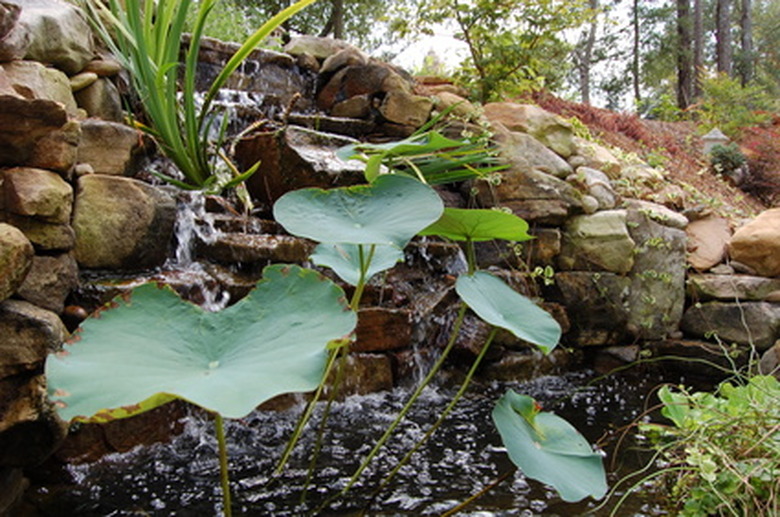
Adding plants to a pond not only adds food and a safe haven for pond wildlife, but adds beauty and character that makes your pond different from all the others. Planting plants into a pond without soil can be done successfully in any sized pond. Common plants that are planted into ponds without soil are floating plants, such as water lilies, which are embedded into the pond's bed, and marginals, which are planted along the edge of the pond in the shallow water.
Step 1
Remove the aquatic pond plants from their planting container if they were planted in soil when purchased.
Step 2
Rinse the potting soil from the plants' roots with a hose. Remove any spray attachment from the hose, and allow the water to simply pour over the roots, and rinse away the soil. Spraying can easily damage the plants' fragile roots.
- Adding plants to a pond not only adds food and a safe haven for pond wildlife, but adds beauty and character that makes your pond different from all the others.
- Rinse the potting soil from the plants' roots with a hose.
Step 3
Select an area in your pond where you would like to plant the plants. Make sure that the area is an area where the specific plant can grow.
Step 4
Plant marginal plants along the shore of the pond by removing some of the larger rocks that are covered by shallow water and creating a hole. Nestle the plant's roots into the hole and anchor the plant down with some small creek or river rock.
Step 5
Plant floating plants, such as water lilies, by placing the plants roots onto the pond's bed and covering the roots with small stones to anchor the plant. If the water is deep, place the plant into a heavy container and fill in around the plants roots with gravel, and simply lower the pot into the pond.
Tip
The plants will not stand up directly after planting, but will have a wilted appearance. This is normal for the plants, until they grow a healthy root system in their new home.