

How To Grow Ladyfinger Grapevines
Things Needed
- Bucket
- Pitchfork or gardening fork
- Shovel
- Pruning shears
- 6-foot stake
- Green plastic staking tape
- Mulch
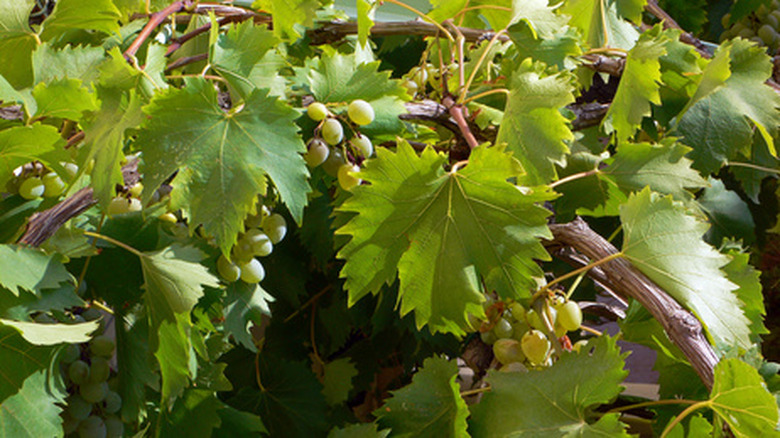
Grapevines are popular residential garden plants for their fruit, for the shade they provide and for the Mediterranean accent they can lend to the patio and garden. Ladyfinger is a variety of the common grape (Vitis vinifera Calmeria) and is easy to grow in USDA hardiness zones 6 through 10. You may find this variety called Calmeria at nurseries. Purchase dormant, bare-root ladyfinger grapevines and look for certification that they are disease-free.
Step 1
Choose the location in which you will grow your grapevines. Grapes require lots of sunshine.
Step 2
Fill a bucket with room temperature water and place the roots of the ladyfinger grapevines into the water. Allow the plants to soak for two to three hours.
- Grapevines are popular residential garden plants for their fruit, for the shade they provide and for the Mediterranean accent they can lend to the patio and garden.
- Fill a bucket with room temperature water and place the roots of the ladyfinger grapevines into the water.
Step 3
Prepare the planting area by loosening the soil with a pitchfork or gardening fork. Dig into the planting bed to a depth of 12 inches, turning and crushing the soil. Remove any roots or rocks that turn up.
Step 4
Find the soil line on the grapevines. It should be on the lower half of the vine and typically appears as a brown ring. This indicates the depth at which the plant was previously growing. Measure from the roots of the vine to this line. This is the depth at which you will plant the vines.
- Prepare the planting area by loosening the soil with a pitchfork or gardening fork.
Step 5
Dig holes 6 to 8 feet apart for the ladyfinger grapevines to the appropriate depth and twice the width of the roots. Spread the roots out in all directions and place them in the bottom of the hole. Backfill the hole with soil and tamp gently around the base of the vines.
Step 6
Cut the strongest cane back so that it contains two or three buds. Remove all other canes.
Step 7
Drive a 6-foot stake into the ground 6 inches from the ladyfinger grapevine and use the tape to attach the the cane to the stake.
Step 8
Water the vine until the water puddles and then supply it with 1 inch of water per week. During dry periods you may need to water the ladyfinger grapevine more often.
- Dig holes 6 to 8 feet apart for the ladyfinger grapevines to the appropriate depth and twice the width of the roots.
- Drive a 6-foot stake into the ground 6 inches from the ladyfinger grapevine and use the tape to attach the the cane to the stake.
Step 9
Apply a 3-inch layer of mulch around the vines, keeping it at least 2 inches from the plant's bark. Mulch helps the soil to conserve moisture and also keeps the weeds down.
Tip
New grapevines do not require fertilizer. Too much nitrogen at any time during the ladyfinger vine's life will cause the plant to grow more foliage thus taking energy away from grape quality.