

A Guide To Evergreen Dwarf Azaleas
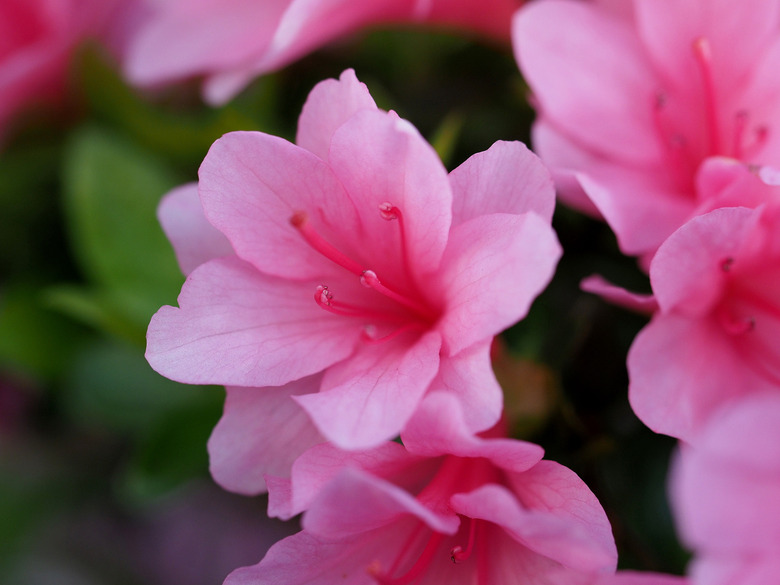
When large shrubs just aren't the right fit for a foundation planting or other landscape design application, dwarf evergreen azaleas may be the perfect option. Not only do these plants keep a tidy shape and retain their leaves year round, they offer the added benefit of flowers that bloom in springtime and add early-season pops of color.
It's important to note that "dwarf" doesn't mean teeny-tiny. The mature height of dwarf evergreen azalea shrubs typically is around 3 feet, although it may take them 5 to 10 years to reach this size, depending on species.
 KENPEI
Satsuki Dwarf Evergreen Azaleas
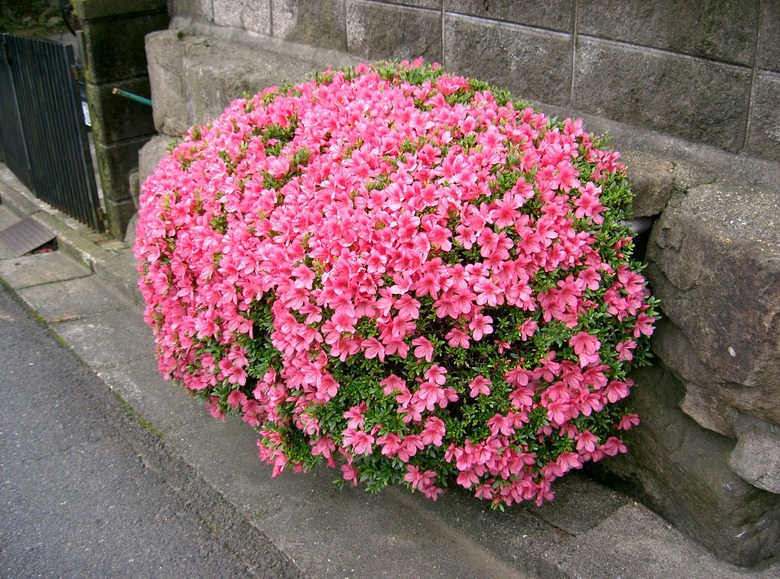
In Japanese, "Satsuki" translates to "fifth month," a nod to when these dwarf evergreens burst into bloom in May. Here in the U.S., the Satsuki azalea (Rhododendron indicum, USDA zones 7 to 9) begins blooming in April across much of its hardiness range, which is later by a couple of months than some other types of azaleas.
Even though these evergreen azaleas reach only 3 feet tall and wide when mature, the individual flowers may span 5 inches in diameter. Unlike the flowers on other types of azaleas, which erupt in a profusion of blooms all at once, Satsuki azalea flowers open a few at a time for an average extended bloom period of eight weeks. Some shrubs may continue blooming for 14 weeks, which is a remarkable feat for an azalea.
Flower color depends on cultivar, ranging from 3-inch diameter blooms on Gumpo Pink to 4- to 5-inch purplish-pink flowers with purple blotches on Higasa. Other flower colors include white, red and orange with some blossoms sporting patterns that include stripes, speckles and contrasting edges.
 Ryan Somma
Kurume Dwarf Evergreen Azaleas
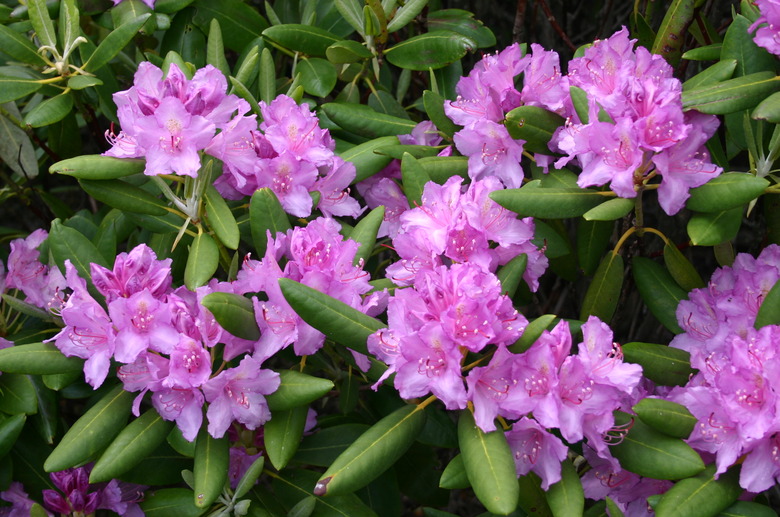
Kurume azaleas (Rhododendron ponticum, zones 6 to 9) grow 3 to 4 feet tall, but their spread is up to 5 feet. These evergreen shrubs bloom a couple of weeks before Satsuki azaleas, so you'll have an even longer bloom period if you grow both species. You'll also be providing an early food source for bees and other pollinators.
Two notable Kurume cultivars are Hinode Giri (purplish-red flowers) and Hino Crimson (bright-red flowers), which blooms earlier than other cultivars. Although Hinode Giri's leaves are evergreen, they may turn wine-red in fall. Hino Crimson's evergreen leaves may turn bronze in winter, and its tiered branches add architectural interest to the garden.
 KaCey97007
Hybrid Dwarf Evergreen Azaleas
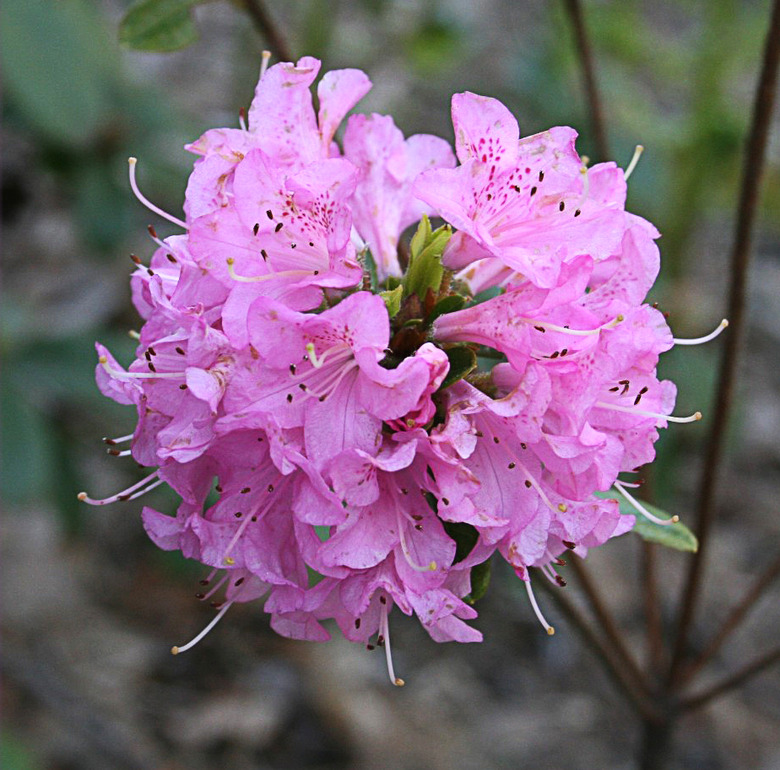
One type of dwarf evergreen azalea is the result of intentionally breeding different plants in various Rhododendron subgenera, resulting in hybrid plants. Decoding the science, the genus Rhododendron includes eight sub-categories called "subgenera," which are also subdivided into numerous categories. When plant breeders genetically cross azaleas from different subgenera, the resulting plants, called intersubgenus hybrids, display qualities from their parent plants.
Some of these intersubgenus hybrids are called "azaleodendrons," but there are very few of these type plants because of the difficulty in making successful genetic crosses. One notable exception is Rhododendron 'Hardijzer Beauty,' a dwarf evergreen shrub that grows only 3 feet tall in 10 years. Individual purplish-pink flowers are small (1-inch diameter), but the blooms are borne in clusters of two to four blossoms. The red-tinged green leaves may take on a purplish cast in winter.
Planting and Growing Dwarf Azaleas
Planting and growing dwarf evergreen azaleas follow the same cultural guidelines as other types of azaleas. A location with morning sun and some afternoon shade, organically rich acidic soil that's moist but has superior drainage, light applications of fertilizer in spring and little to no pruning are the optimal conditions for these plants.
Because they're much smaller than other azaleas, dwarf evergreen azaleas are suited to growing in containers. They'll overwinter outside in their pots, but only reliably so in a zone that's two zones warmer than their coldest hardiness zone. In other words, if a plant is cold hardy to zone 6 (in-ground), it's only hardy to zone 8 in a container.
References
- University of Florida IFAS Extension: Satsuki Azaleas – Elegant Small Evergreens with Oversized Flowers
- North Carolina State Extension: Rhododendron Ponticum
- Oregon State University: Rhododendron 'Hinodi Girl'
- Oregon State University: Rhododendron 'Hino Crimson'
- Oregon State University: Rhododendron
- Oregon State University: Rhododendron 'Hardijzer Beauty'