

How To Care For A Begonia X Tuberhybrida
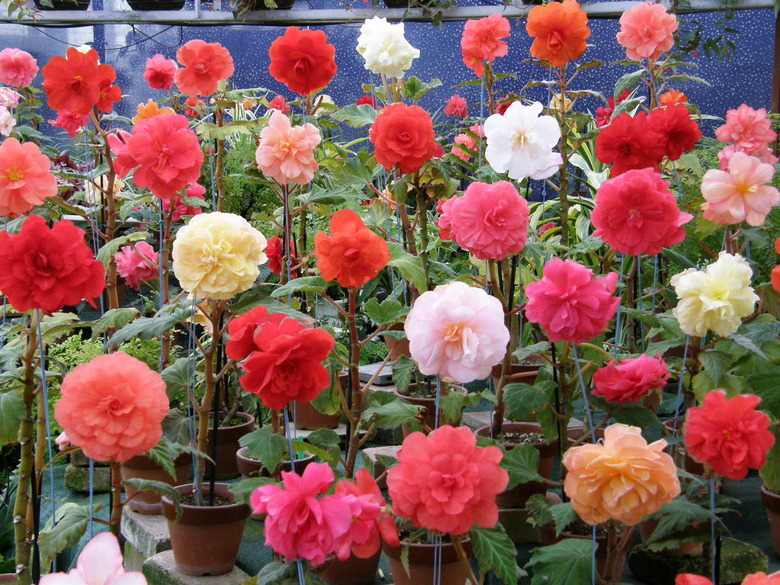
There are more than 1,300 species of begonia (Begonia spp.) in the family Begoniaceae that are grown for their showy blooms. The Tuberosa Group of begonias, which are often noted as Begonia x tuberhybrida, includes a type of begonia that grows from swollen underground stems.
Most tuberous begonias can survive winters in USDA hardiness zones 9 to 11, although hardy begonia (Begonia grandis) survives colder climates as a perennial in zones 6 through 9.
Tuberous Begonia Characteristics
Tuberous begonias are native to South America and Africa, though the plants usually available for purchase are hybrid cultivars.
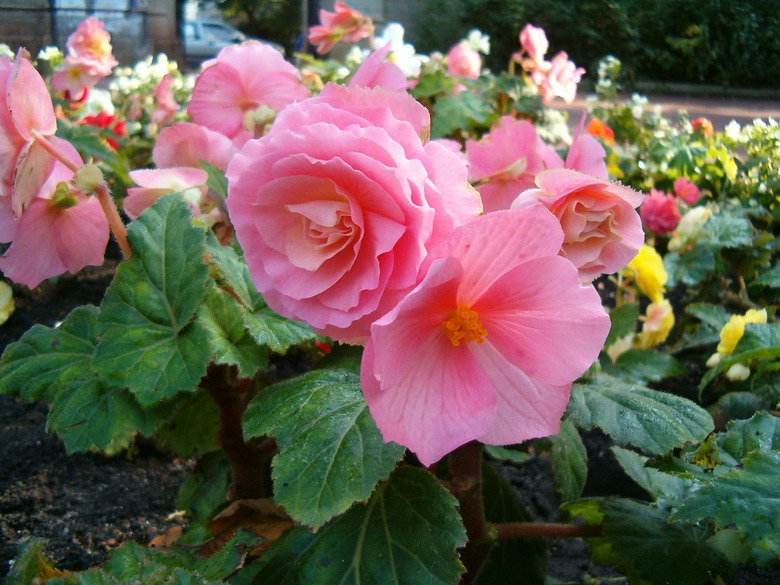
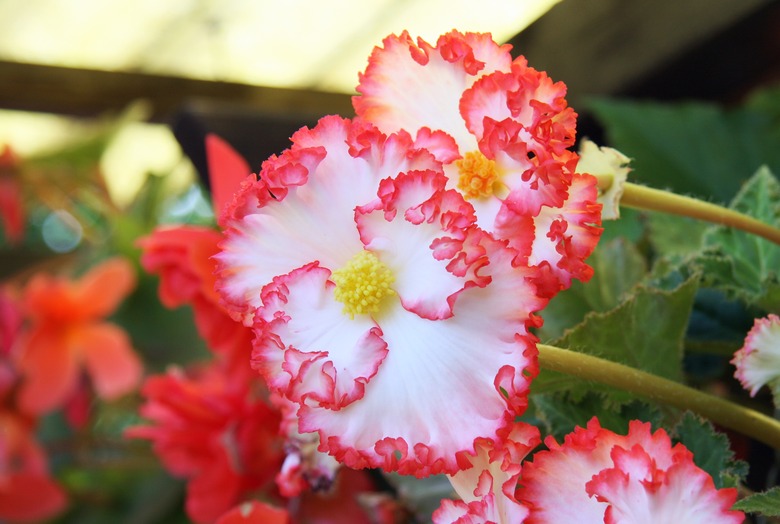
Tuberous begonias typically have heights between 12 and 18 inches. They bloom in the summer. The flowers are waxy and 2 to 4 inches wide. Begonia flower colors include yellow, apricot, pink and red, as well as white. There are a variety of cultivars with different flower forms, including single and double flowers.
While they can be grown from seed, tuberous begonias are usually grown from their underground stems, known as tubers, which is the faster method.
 BotBln
Is Begonia a Perennial?
Many types of begonia are perennial, although because many are frost tender, these types are often grown as annuals.
In the case of tuberous begonias, you can dig up the tubers and store them in a dry medium like vermiculite or peat moss and plant them again in late winter or early spring. Tuberous begonias grown in containers can be overwintered indoors.
Tip
Excessive water and fertilizer can cause bloom and bud drop in begonias.
How to Care for Begonias
- Tuberous begonias should be planted in a location where they receive partial shade rather than full sun.
- This type of begonia is used as a bedding plant and is also well suited for growing in containers, including patio pots, window boxes and hanging baskets.
- Keep in mind that tuberous begonias prefer cool summers and will decline in excessive heat and humidity.
- Tuberous begonias must be watered regularly and require good drainage.
- Unlike other begonias, tuberous begonias require more fertilizer during the growing season for best results. Applying a balanced fertilizer that has been diluted is therefore part of tuberous begonia care. Too much water or fertilizer can cause the flowers and flower buds to drop, however.
- You should reduce the amount of water you give your tuberous begonias in fall, once the leaves begin to turn yellow. Dig up the tubers before the first frost.
 Maja Dumat
Begonia Pests and Diseases
Begonias are susceptible to a number of diseases, including powdery mildew, a fungal disease that produces a white, powdery substance on the leaves that can be unattractive.
**Providing proper spacing and air circulation can help prevent the development of this disease.** You should allow a foot of space between begonia plants grown in the ground, though they can be planted closer together in containers.
Tip
Allow proper air circulation between begonia plants to prevent powdery mildew.
It is also important not to overwater begonias and to grow them on well-draining soil, as excessive soil moisture can cause the tuberous root to rot.
Begonias are also prone to becoming infected by pests such as mealybugs and scales. In addition, they can be targeted by thrips, which can spread viral diseases such as tomato spotted wilt virus.
Insecticidal soaps are often used to control these pests, however, begonias may be sensitive. Therefore, you should test a small area before applying insecticidal soaps to begonias.