

Dethatching Vs. Aerating
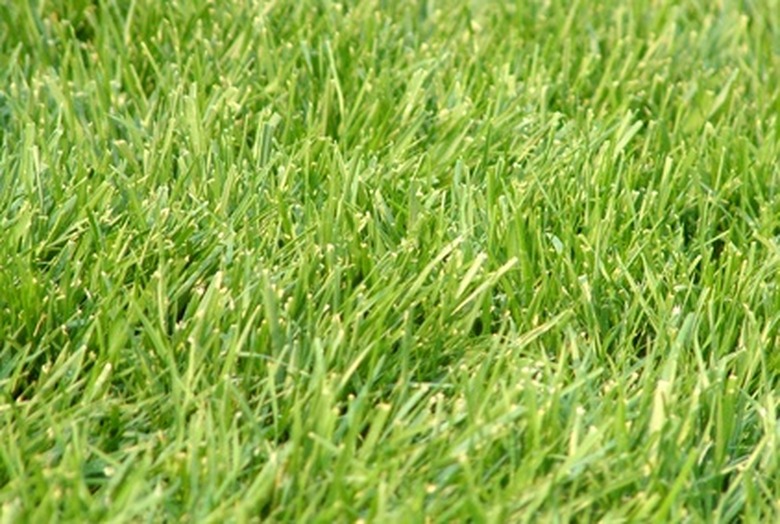
The accumulation of decomposing roots, grass and debris in a lawn is called thatch. Thick layers of thatch can block water and air from the roots and become infested with insects, fungal and bacterial diseases. Heavy use of lawns can compact the grass also blocking air and water. Aeration may usefully treat thin layers of thatch; thick layers of thatch may have to be removed.
Aeration
Pets, playing children and vehicle traffic can all compact lawns, reducing the pores that soil needs to hold air, water and nutrients for the roots. The solution is to aerate your lawn; aeration also helps treat minor thatch buildup by letting in air and water necessary for the thatch to decompose.
Aerating Lawns
Lawn aeration is usually done with a machine called a core aerator that has hollow tines mounted on a drum. The revolving drum pushes the tines into the lawn, extracting cores of soil 1/2 to 3/4 inch wide. These cores are usually 1 to 6 inches deep and 2 to 6 inches apart.
- The accumulation of decomposing roots, grass and debris in a lawn is called thatch.
- The solution is to aerate your lawn; aeration also helps treat minor thatch buildup by letting in air and water necessary for the thatch to decompose.
Machines that aerate by pushing solid spikes into the lawn can make compaction worse.
Thatch Basics
Thatch 1/4 to 1/2 inch deep protects the soil from temperature changes and helps the lawn spring back into shape instead of compacting when people walk on it or children play on it. Thatch thicker than 1/2-inch deep prevents water and nutrients from reaching the grass roots; the grass then grows in the thatch, not the soil. Water evaporates quickly from thatch so the lawn will dry faster.
Thatch provides a growing environment for diseases and insects. It blocks insecticides applied to kill insects that feed on grass roots.
Dethatching
Using a vertical mower is the best way to dethatch. These machines have vertical knives that cut through the grass and pull thatch to the surface for disposal. The blades should penetrate the top half of the thatch; dethatch in one direction and then repeat at a 90-degree angle from the first pass. You might have to dethatch extremely deep thatches several times during a growing season at modest depths to avoid yanking the grass up by the roots.
- Machines that aerate by pushing solid spikes into the lawn can make compaction worse.
- Thatch 1/4 to 1/2 inch deep protects the soil from temperature changes and helps the lawn spring back into shape instead of compacting when people walk on it or children play on it.
Dethatching is best performed every other year in the spring. Dethatch Kentucky bluegrass and other cool season grasses in the fall. Cool season grasses grow vigorously between 60 to 70 degrees F and go dormant in hot weather.
Treatments Compared
If your thatch is less than a 1/2 inch deep, you should aerate it before dethatching it. Aerating is cheaper and does less damage to the grass than dethatching. If your grass doesn't turn green after you fertilize it or you have worn areas on your lawn, you may need to aerate it once or twice a year. Dethatching causes more damage to the grass, which then has to recover. You should only dethatch if your thatch is more than 1/2-inch deep.
- Dethatching is best performed every other year in the spring.
- If your thatch is less than a 1/2 inch deep, you should aerate it before dethatching it.