

Life Cycle Of A Lily Flower
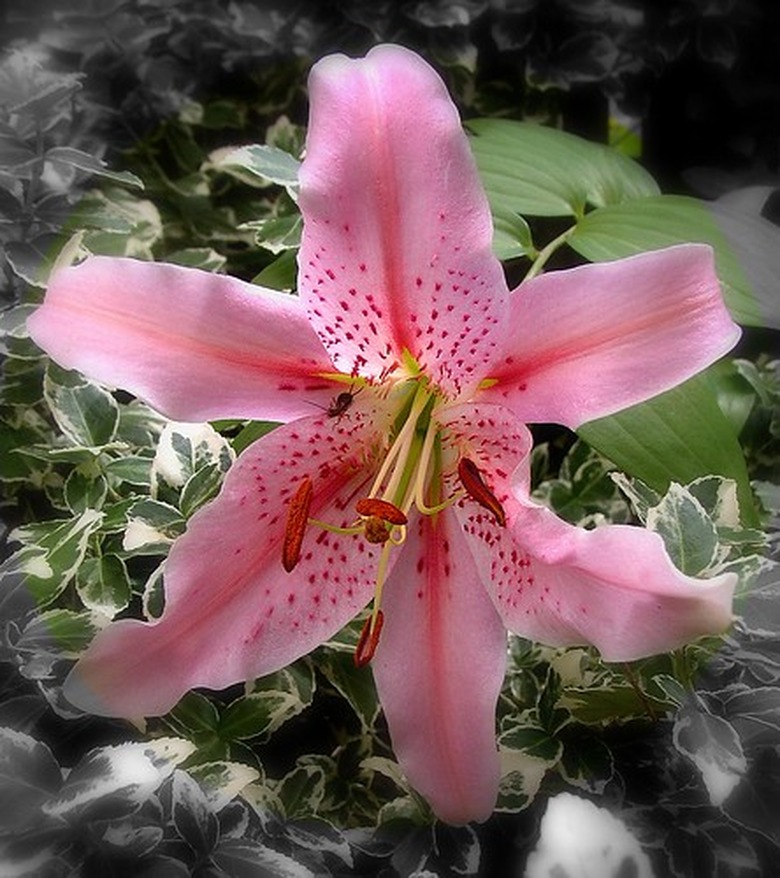
Lily plants belong to a large group of plants called angiosperms. This means that they grow flowers to reproduce. Each flower contains the necessary sex organs to produce seeds, thereby continuing the life cycle.
Seeds
The life cycle of a lily flower begins with a seed. Once mature, the plant reproduces by growing a flower, which is the sexual part of the plant that produces seeds.
Male Sex Organs
The male sex organ is called the anther, and there are several in each lily flower. The anthers produce pollen.
- Lily plants belong to a large group of plants called angiosperms.
- The male sex organ is called the anther, and there are several in each lily flower.
Female Sex Organs
The female portions of the flower are called the stigma, pistil and ovule. The ovule contains the unfertilized ova of the plant.
Pollination
Pollination is accomplished when pollen grains, the male gametes of the plant, are transferred to the stigma by an insect or other physical action.
Fertilization
The pollen grains come in contact with the stigma and stick to it. Pollen travels down a path called a pollen tube through the pistil into the ovule to fertilize the ova.
Seed Growth
Seeds form in the lily flower. As the seeds mature, the flower dies, and a seed pod grows. The pod eventually releases its seeds.
- The female portions of the flower are called the stigma, pistil and ovule.
- The ovule contains the unfertilized ova of the plant.
Life Cycle Of A Rose
Rose are perennials, meaning they can grow, flower and seed for many years. Perennials grow and bloom over spring and summer, then die back in the fall and winter, and renew themselves the following spring. With the help of warm weather and water, a shoot pushes up from the ground and the plant grows bigger. Its thorns help it hang on to whatever surfaces are around it. Buds appear that will become flowers. When the sepals have opened, the flower shows forth. Flowers have petals with bright colors and sweet scents to attract insects and animals, such as birds, as pollinators. Flowers produce pollen–tiny grains needed to make seeds. Pollen sacs, called "anthers," sit on top of filaments in the flower's middle. When they go to the next flower, the pollen rubs onto it, starting pollination. A tube called a "style" holds up the stigma. Because the flower has done its job–reproducing the plant through pollination–it begins to wither. Its petals begin to fall off, and it loses its scent.
- Rose are perennials, meaning they can grow, flower and seed for many years.
- Pollen sacs, called "anthers," sit on top of filaments in the flower's middle.
Life Cycle Of A Rose
Rose are perennials, meaning they can grow, flower and seed for many years. Perennials grow and bloom over spring and summer, then die back in the fall and winter, and renew themselves the following spring. With the help of warm weather and water, a shoot pushes up from the ground and the plant grows bigger. Its thorns help it hang on to whatever surfaces are around it. Buds appear that will become flowers. When the sepals have opened, the flower shows forth. Flowers have petals with bright colors and sweet scents to attract insects and animals, such as birds, as pollinators. Flowers produce pollen–tiny grains needed to make seeds. Pollen sacs, called "anthers," sit on top of filaments in the flower's middle. When they go to the next flower, the pollen rubs onto it, starting pollination. A tube called a "style" holds up the stigma. Because the flower has done its job–reproducing the plant through pollination–it begins to wither. Its petals begin to fall off, and it loses its scent.
- Rose are perennials, meaning they can grow, flower and seed for many years.
- Pollen sacs, called "anthers," sit on top of filaments in the flower's middle.
References
- University of Illinois Extension: The Great Plant Escape–Life Cycle
- University of Illinois Extention: The Great Plant Escape–Plant Parts
- "The Life Cycle of a Rose;" Ruth Thompson, 2009
- University of Illinois Extension: The Great Plant Escape–Life Cycle
- University of Illinois Extention: The Great Plant Escape–Plant Parts
- "The Life Cycle of a Rose;" Ruth Thompson, 2009