

How To Cure A Dying Shrub
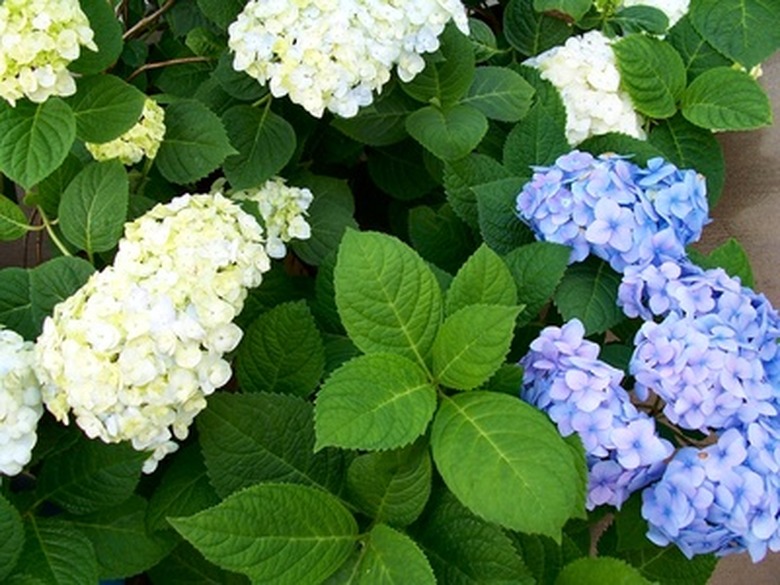
Healthy shrubs may lose leaves or needles as part of the growth process. A premature large loss or change in color of leaves or needles from a deciduous or evergreen shrub may be an early indication that something is wrong with the shrub. When attempting to diagnosis and cure a dying shrub, there are certain things you can change that may affect the long-term survival of the shrub.
Step 1
Check the ground for moisture. The roots of the shrub should not be in standing water, which could cause root rot. If the soil is too moist, redirect the water away the shrub, perhaps by installing a French drain. Equally important is if the ground is too dry. The shrub can be watered every 7 to 14 days if there is no rainfall.
- Healthy shrubs may lose leaves or needles as part of the growth process.
- The roots of the shrub should not be in standing water, which could cause root rot.
Step 2
Look for indication of bacterial or fungal disease, a problem that may occur in damp areas or during extended periods of high humidity. If you see spots on leaves, snip the branch off and dispose of it. Applying a commercial fungicide spray may help. Thinning of plants in the area to increase air flow may help.
Step 3
Keep the area beneath and around the shrub free of debris, including fallen leaves or limbs. Remove and replace mulch. Ensure pets are not using the shrub or the area around it as a bathroom.
- Look for indication of bacterial or fungal disease, a problem that may occur in damp areas or during extended periods of high humidity.
- Thinning of plants in the area to increase air flow may help.
Step 4
Examine the shrub for insects and clip off any problem areas. A commercial pesticide may help. Read the label closely for application instructions and do not use in an area where pets may come in contact with the shrub while the pesticide is still wet.
Step 5
Prune off any stem affected with cankers, a bulging growth on or around the stem. Make the cut at least 6 inches into healthy wood.
Step 6
Evaluate the sun level. Some shrubs, like hydrangea and azalea, prefer a part sun location. Full sun may cause the shrub to droop or lose leaves. If the shrub needs to be relocated to a more sun-correct location, wait until the fall while the shrub is dormant to transplant it. In the meantime, keep the area around shrub moist and use about 3 inches of mulch to help retain moisture and prevent dry out.
- Examine the shrub for insects and clip off any problem areas.
- In the meantime, keep the area around shrub moist and use about 3 inches of mulch to help retain moisture and prevent dry out.
Step 7
Stop fertilizing the shrub. Too much fertilizer can impact the health of a shrub. In particular, do not start fertilization when a shrub appears to be dying. Fertilizer is intended to make a healthy shrub more full and robust.
Tip
Sterilize clippers before each cut using rubbing alcohol or a bleach and water mix of about 2 tablespoons bleach to 1 cup water.
Warning
Disease that enters a shrub through its roots, like bacteria or fungal infections, is difficult to cure. It may be best to remove the shrub. If a root-related disease was the problem, it may not be appropriate to replant in that area. Check with your county extension office for guidance.
Things Needed
- Garden pruners
- Mulch
- Fungicide
- Pesticide