

Stop Unwanted Weeds With A Flowering Ground Cover That Adds Color To The Garden

If you're tired of the back-breaking labor of pulling weeds from the garden, try growing some pretty ground cover plants to crowd the weeds out. Creeping phlox — also known as moss phlox (Phlox subulata) — is a dense ground cover that will keep your garden beds full of flowers, not weeds. The low-lying, mat-like growth of the creeping phlox can stand about 6 inches high and about 3 feet wide, making it perfect for weed suppression.
Creeping phlox blooms in early spring, giving a lush carpet of pretty pink, lavender, or white flowers, which die back for a green moss-like cover for the rest of the summer. Part of the Polemoniaceae family, creeping phlox is known for its five-petaled flowers that open flat. These flowers, called salverform, resemble a salver, which is an old antique silver serving tray perched on a stem.
Creeping phlox suppresses weeds because its roots spread underground, essentially choking out other unwanted plants. At the same time, it's not an invasive plant ... unlike other certain ground covers that aren't worth planting in your yard. Creeping phlox grows well in USDA Plant Hardiness Zones 3 through 9. It requires full sun, but will also love dappled sunlight or sun peaking through a leafy canopy, especially in places where it's particularly hot. Creeping phlox tends to manage hot or dry weather better than other phlox varieties. Beware, though, that during hot and dry summers, spider mites might be a problem for this herbaceous perennial.
Tips to help creeping phlox thrive
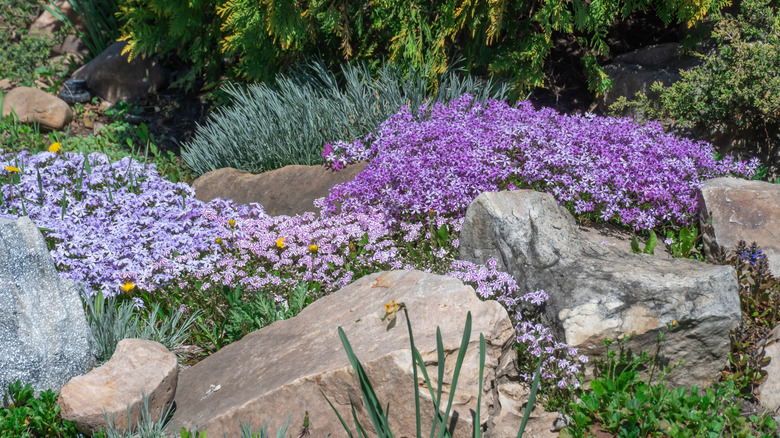
When thinking about planting creeping phlox, know that it likes well-drained soil, but will do well in silt, sand, and shallow rocky types. You'll want to plant creeping phlox from seed or divisions in spring, when the ground thaws or in the early fall, weeks before the first frost. Give the plant time to develop strong roots before the heat of summer or cold of winter.
If you do plant in the early fall, then you might want to consider adding a layer of mulch if you live in a zone with a harsh winter, which can further help suppress any unwanted weeds. Other than that, you don't need to do much more to care for creeping phlox over the winter. Once established, creeping phlox will provide such a thick layer of cover that it'll block out sunlight for pesky weeds, making it difficult for their seeds to germinate and grow. If you want to encourage this shade that inhibits weeds, you can plant creeping phlox closer together.
If you're worried about crowding creeping phlox too much, don't. While some varieties of phlox are prone to powdery mildew — the disease that often comes from crowding and poor air circulation – creeping phlox happens to be a mildew-resistant kind of plant. If you want to encourage more blooms, you can pinch off dying flowers. In general, pruning is optional, but you can learn the best techniques for how to prune creeping phlox, which typically should be done after flowers fade.