

How To Trim Iris Plants
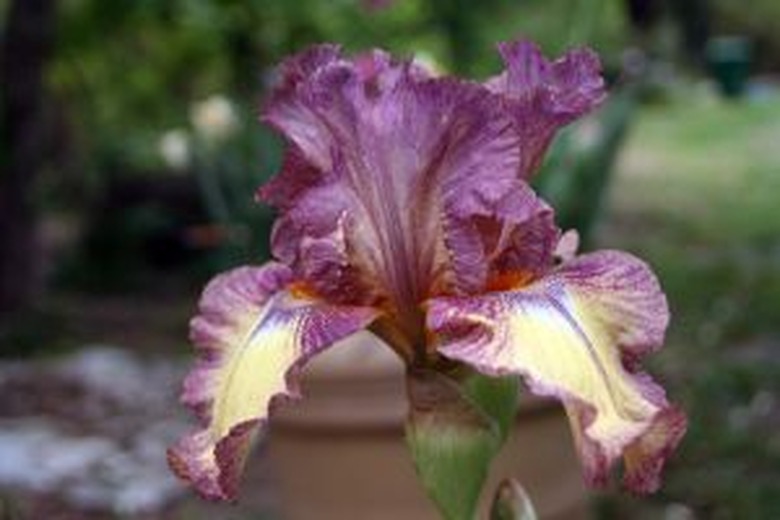
Iris come in many varieties including bearded and Siberian. Prized for its stand of spear-like leaves and large, drooping petals, iris require very little maintenance and are rarely finicky about their growing conditions. Unlike many other perennials, iris rarely require a serious trimming. Pruning back the leaves before transplanting is a necessity to avoid damaging them. Minor trimming, especially before the winter months, also improves the look of the plant and helps prevent diseases from affecting your iris plants.
Step 1
Cut off the flower stall ½ inch above the nearest flower bud or bloom after the top bloom has faded. Irises bloom in late spring and early summer. Use sharp shears to avoid damage to the plant.
- Iris come in many varieties including bearded and Siberian.
- Minor trimming, especially before the winter months, also improves the look of the plant and helps prevent diseases from affecting your iris plants.
Step 2
Remove the entire flower stalk after all the buds have opened and have completed blooming. Cut it off 1 inch above the soil surface to avoid damage to the rhizome.
Step 3
Remove dead or damaged leaves throughout the growing season. Cut them off from the base of the plant.
Step 4
Allow the rest of the leaves to die back naturally in late summer and early autumn. Remove them at the base once they have begun to yellow.
Step 5
Trim down all the leaf spears to 5 inches before transplanting or dividing the iris rhizomes. Avoid cutting the leaves off completely as the rhizomes will need some foliage to collect nutrients and recover from the transplant shock.
- Remove the entire flower stalk after all the buds have opened and have completed blooming.
- Trim down all the leaf spears to 5 inches before transplanting or dividing the iris rhizomes.
Tip
Remove any grass or garden debris from around the base of the plant when doing your fall trimming. This helps prevent rhizome rot. Some varieties of iris, such as Siberian, have attractive seed pods on the flower stalks that you may wish to leave on the plant through winter. Transplant or divide iris 8 weeks after the flowering period ends.
Warning
Never remove the small leaves that grow in late summer and early fall. These collect nutrients for the iris rhizome in the winter months.