

Passion Flower Poison
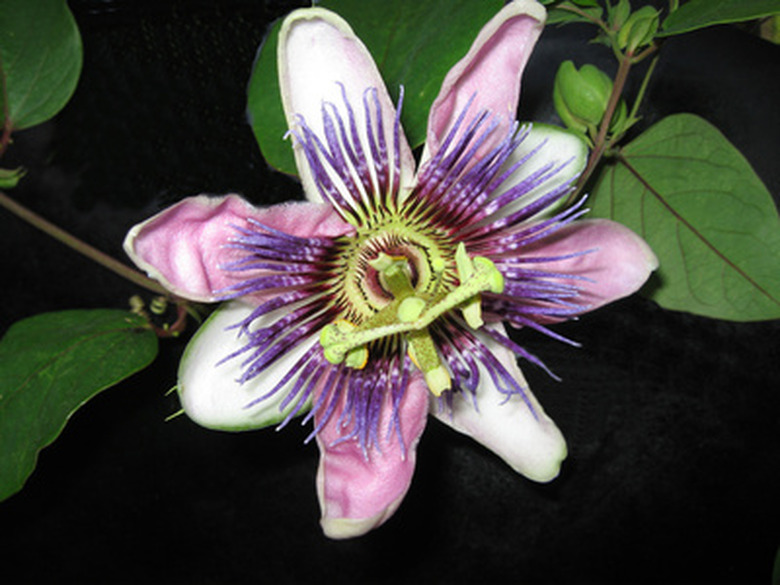
The passion flower family includes more than 500 species. The family received its name in the belief the flowers of some species have a structure symbolic of the crucifixion, or passion of Jesus Christ. Some herbalists use passion flower to make a soothing tea, but parts of some species are also toxic.
The passion flower family includes more than 500 species. The family received its name in the belief the flowers of some species have a structure symbolic of the crucifixion, or passion of Jesus Christ. Some herbalists use passion flower to make a soothing tea, but parts of some species are also toxic.
Adenia Digitata
This tropical species of the passion flower family is the most poisonous plant in the world, according to the University of Berkeley. Its tuberous roots include a deadly mix of cyanide and a slower-acting poison unique to this plant.
Passiflora Incarnata
This climbing vine makes a tea used for insomnia and anxiety. According to prevention.com, some doctors say the passion-flower alkaloids could react badly with antidepressants, but there are no reports of this actually happening.
- The passion flower family includes more than 500 species.
- Some herbalists use passion flower to make a soothing tea, but parts of some species are also toxic.
Nausea
Prevention.com says passion flower appears to be safe if taken in recommended doses, but there is one unconfirmed report of a patient experiencing nausea and vomiting in response to taking passion flower.
Dangerous Vines
Some species of passion flower have cyanide in their vines, leaves and unripe berries, enough to make someone sick from eating them.
Clinical Studies
There are no documented cases of poisoning from P. incarnata, but there have been no clinical trials to definitively determine if it's toxic.
Red Passion Flower Plants
This fast-growing vine reaches 15 to 20 feet long using tendrils to cling to any support surface available. The deep green leaves are deeply-lobed with three distinct lobes. Each unscented bloom is made up of ten petals and five bright green stamens in the middle. The structure of the flower was compared to the death of Jesus by missionaries who attempted to convert Native Americans to christianity. Missionaries thought that this would make their teaching more memorable. The ornamental fruit of the red passion flower plant is yellowish-green. The fruit hangs off the vine growing 2 inches long with a distinctive egg shape. Do not store the seeds and sow in moist soil right away. Use flower fertilizer to feed the vine once or twice a year. The vine needs a tall trellis to grow up or some other support structure.
- Prevention.com says passion flower appears to be safe if taken in recommended doses, but there is one unconfirmed report of a patient experiencing nausea and vomiting in response to taking passion flower.
- Some species of passion flower have cyanide in their vines, leaves and unripe berries, enough to make someone sick from eating them.
References
- Drugs: Passion Flower
- Monrovia: Crimson Passionflower
- California Rare Fruit Growers: Fruit List
- Fairchild Tropical Botanic Garden Virtual Herbarium: Passion Flower Vines
- The New Sunset Western Garden Book; Kathleen Norris Brenzel; 2012