

The Best Jasmines To Grow Indoors As House Plants
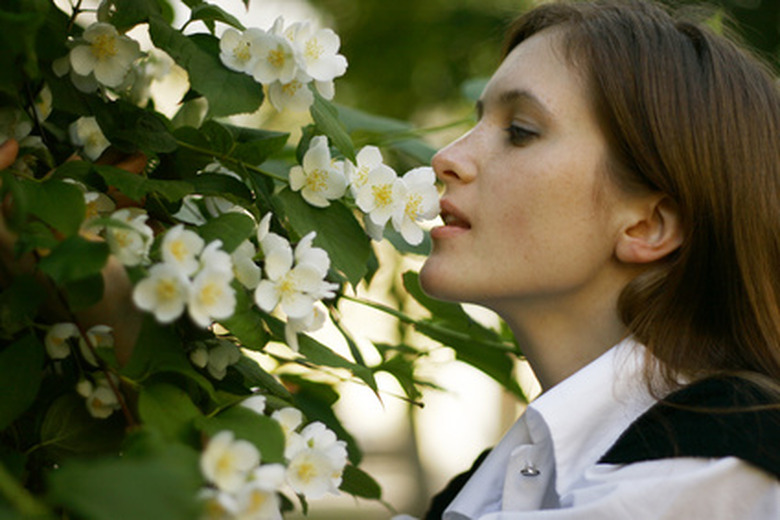
The fragrant white flower trademarks the jasmine plant. Although this plant thrives in the Asian tropics, it can be successfully grown indoors, as long as it is kept in the correct temperature range. All types of jasmine like full sun and will live well outside in the summer. During the summer, water Jasmine to keep the soil moist and feed every two weeks. During the winter, most species of Jasmine prefer light watering.
Winter-Blooming Jasmine
Winter-blooming jasmine's (Jasminum polyanthum) fragrant white flowers come from pink buds that bloom around Valentine's Day. For this reason, this plant is sometimes called the pink jasmine. This species of jasmine is well suited for a cool porch or well-lit windowsill. Winter-blooming jasmine is a cold-weather species that likes temperatures to be 45 to 50 degrees during the winter. Warmer temperatures increase the likelihood of aphids. This climbing vine can grow to 20 feet long and should be pruned or provided a support structure. Jasminum polyanthum is hardy to USDA Hardiness Zone 8.
- The fragrant white flower trademarks the jasmine plant.
- Winter-blooming jasmine is a cold-weather species that likes temperatures to be 45 to 50 degrees during the winter.
Common Jasmine
Common jasmine (Jasminum officinale) is hardy to USDA Hardiness Zone 8 and is also known as true jasmine and poet's jasmine. This cold-weather vine can be left outside on a protected patio during the winter. The common jasmine blooms from June to October. Care for common jasmine in the same manner as the winter-blooming jasmine. This twining vine can grow to 8 feet long and is drought and pollution tolerant.
Angel Wing Jasmine
The angel wing jasmine (Jasminum nitidum) is also called star jasmine, Pinwheel jasmine or shining jasmine. This plant is a warm-temperature jasmine and does well in 65 to 80 degrees F. This bushy vine has glossy foliage. Angel wing jasmine is hardy in USDA Hardiness Zones 9 to 11. The shrub form grows to a height of 3 feet if pruned properly. If grown as a vine, it can be as long as 15 feet.
- Common jasmine (Jasminum officinale) is hardy to USDA Hardiness Zone 8 and is also known as true jasmine and poet's jasmine.
- This cold-weather vine can be left outside on a protected patio during the winter.
Arabian Jasmine
Arabian jasmine (Jasminum sambac), or pikake as it is known in Hawaii, has a shrub form but will climb if a support structure is present. The shrub form will grow up to 3 feet wide and 6 feet tall. The Chinese use this species of jasmine for tea. The Hawaiians use this flower for making leis. This warm-weather species of jasmine is good for growing in a windowsill and is the national flower of the Philippines.