

How To Care For Asters
Things Needed
- Organic compost
- Garden tiller
- Fertilizer
Tip
Spread mulch around asters in winter to insulate the soil around the roots and reduce the frequency of continuous thawing and freezing. Asters can be propagated through division during the spring.
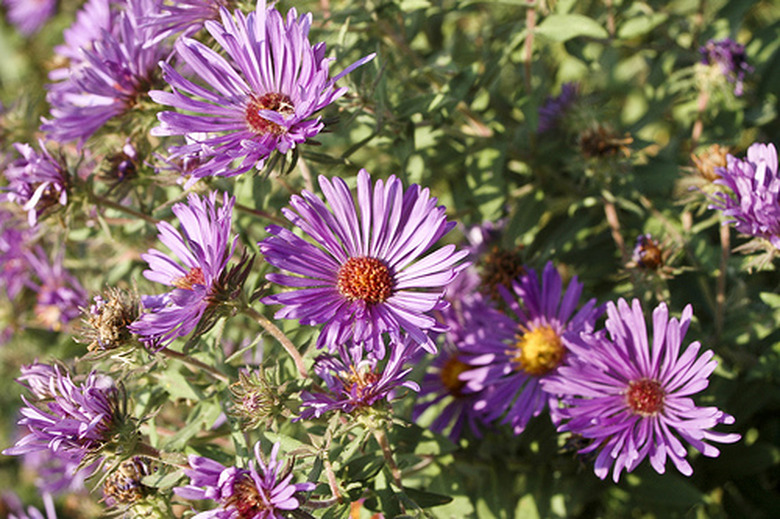
The aster is a genus of perennial flowers that consists of about 180 different species. They are native to most temperate regions of Europe and Asia, and are commonly grown in gardens as ornamental flowers. They produce flowers in early fall that can be white, purple, pink or red, though the center is always yellow. Asters are easy to maintain and care for, and thrive in all hardiness zones.
Step 1
Plant asters grow during spring in a location that receives 6-8 hours of direct sunlight every day. Spread 1 inch of organic compost over the planting site and use a garden tiller to incorporate it into the soil, increasing fertility and drainage.
Step 2
Water aster plants twice per week during spring and summer. Use enough water to soak the roots, but do not allow the soil to become soggy. Reduce watering to once every week during fall, and once every two weeks in winter.
- The aster is a genus of perennial flowers that consists of about 180 different species.
- They produce flowers in early fall that can be white, purple, pink or red, though the center is always yellow.
Step 3
Feed asters using a balanced 10-10-10 NPK fertilizer once a month during spring, summer and fall. Water the soil around the aster thoroughly both before and after applying fertilizer to prevent root burn. Follow the manufacturer's directions for proper application and dosage.
Step 4
Remove any dead or dying aster flowers as they appear to encourage the growth of more blossoms. This allows the plants to focus their nutrients on forming more flowers instead of producing seeds.
Step 5
Check foliage regularly for powdery mildew, which can occur from excessive humidity or moisture on the leaves. Powdery mildew can be identified by a white, fuzzy coating over parts of the foliage. Remove any infested leaves and burn them at a remote location to prevent the spread of fungal spores.
- Feed asters using a balanced 10-10-10 NPK fertilizer once a month during spring, summer and fall.
- Check foliage regularly for powdery mildew, which can occur from excessive humidity or moisture on the leaves.