

How Do Different Fertilizers Affect Plant Growth?
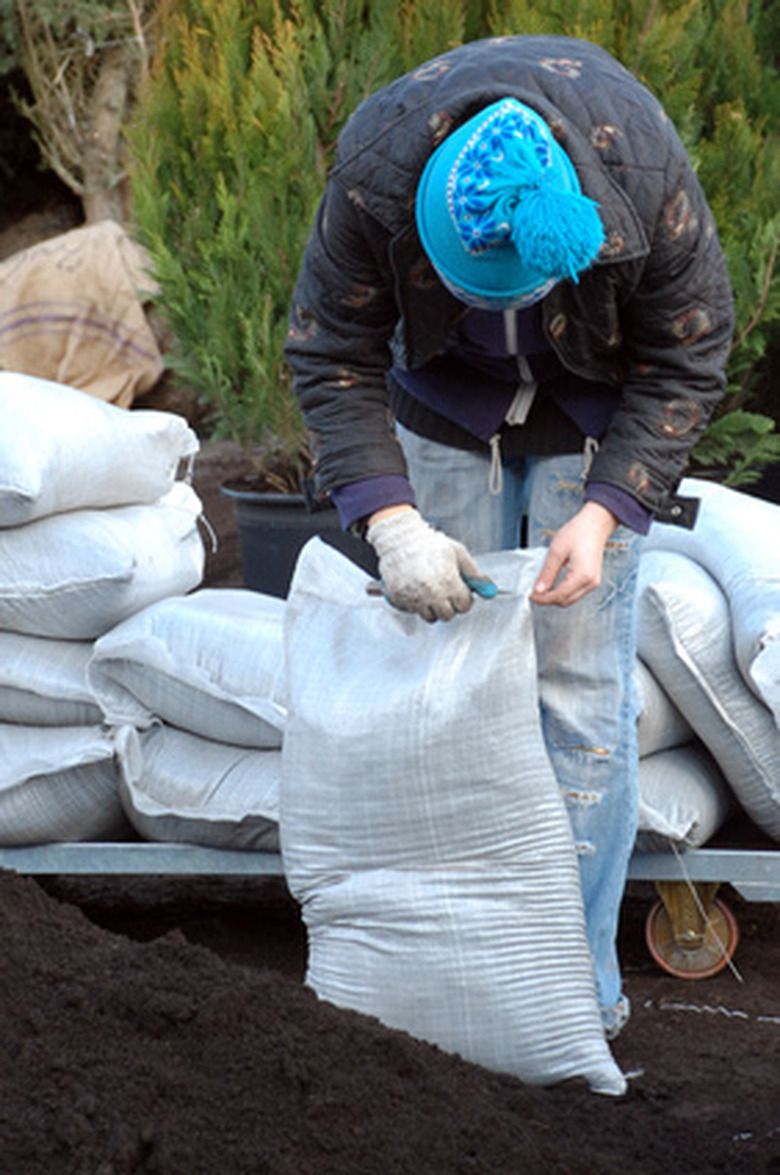
Fertilizers on the market today vary in a few ways. They are classified as organic or inorganic based on the common ingredients used in the fertilizers. They are also classified by the percentages of macronutrients present in the fertilizer. These variations in fertilizer affect plants in different ways. Careful planning and selection of the proper fertilizer for what you grow can boost the health of your plants.
Fertilizers
Common fertilizers are available as organic or inorganic fertilizers. Organic fertilizers contain materials that are naturally occurring in most plant environments and minimize chemical elements. Inorganic fertilizers are produced primarily with peat, seaweed and guano and contain only the primary nutrients needed for proper growth: potassium, nitrogen and phosphorus. A common problem with inorganic fertilizers is over-fertilization, which occurs when necessary chemicals are released too quickly in the soil and overwhelm the plant.
- Fertilizers on the market today vary in a few ways.
- Inorganic fertilizers are produced primarily with peat, seaweed and guano and contain only the primary nutrients needed for proper growth: potassium, nitrogen and phosphorus.
Nitrogen
Nitrogen is one of the three most important nutrients required by plants for healthy development. Nitrogen is an essential element in chlorophyll development, amino acids and protein production. High-nitrogen fertilizers spur lush foliage growth. Many fertilizers have nitrogen as the main component. These brands are valued by farmers for their ability to produce high-yielding crops.
Phosphorus
Phosphorus is the second primary nutrient necessary for plant functions. Phosphorus is essential in plant energy and is an important component of DNA in plant cells. Fertilizers with a high phosphorus percentage are used to promote flowering and seed growth and are often used by farmers to fertilize fruit and vegetable crops.
- Nitrogen is one of the three most important nutrients required by plants for healthy development.
Potassium
The third and final macronutrient necessary for all plants is potassium. Potassium is important for plant nutrition and the formation of proteins. Most functions within the plant rely on potassium's presence. Potassium thickens stems and leaves. It enables a plant to grow faster, resist disease and pests and resist drought.
Application
Plants need a combination of both macronutrients and micronutrients to obtain complete and proper development. Properly fertilized crops experience enhanced plant growth and less discoloration. Over-fertilization can cause several problems, such as salt stress and stressed roots. It is important to follow all manufacturer's guidelines when applying fertilizer to your plants.
- The third and final macronutrient necessary for all plants is potassium.
- Potassium is important for plant nutrition and the formation of proteins.
References
- "Plant Nutrition of Greenhouse Crops": Cees Sonneveld: 2009
- "Western Fertilizer Handbook": California Plant Health Association: 2002