

Facts About The Witch Hazel Tree
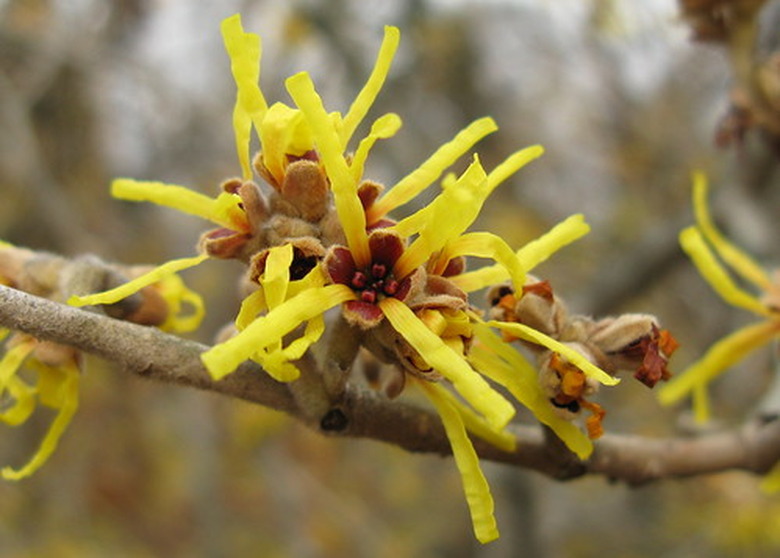
Witch hazel tree, also known as Hamamelis virginiana, is a shrub or tree depending on pruning preference. It is part of the witch hazel family of plants, called Hamamelidaceae.
Description
The witch hazel tree has light brown bark and greenish flowers with yellow ribbons of petals in the autumn, as well as fruits during the same season. Leaves are 4 to 6 inches long. It will reach a maximum height of 20 to 30 feet.
Growth
Witch hazel needs a rich soil with a pH of neutral to slightly acidic. It grows best in full sun but can tolerate the shade. It is not drought tolerant.
- Witch hazel tree, also known as Hamamelis virginiana, is a shrub or tree depending on pruning preference.
- It grows best in full sun but can tolerate the shade.
Hardiness
The witch hazel tree is hardy from Zones 3 (Minnesota and Alaska are examples) to 9 (Texas and Florida are examples). It can survive in temperatures down to 35 degrees below 0 F.
Propagation
Witch hazel is propagated by seeds, layering or softwood cuttings. In the wild, they germinate from seed more often than other methods.
Fun Facts
Native Americans used witch hazel tree bark to treat sores, tumors and skin ulcers. When boiled, twigs were used for sore muscles, and a tea was used to treat coughs, colds and dysentery.
Witch Hazel Tree Leaves Are Turning Brown In June
The witch hazel tree becomes 15 to 20 feet tall, with a similar spread, and has abundant, healthy foliage when its general needs are met. Stress can eventually cause leaf damage that appears as dry, brown leaf tissue. Long-lasting dry conditions can cause leaf drop and may risk the tree's survival. If leaves begin to turn brown and the soil is consistently dry, correct the problem by giving the tree extra water, ensuring it receives at least 1 inch each week. It's also possible that a witch hazel tree with brown leaves suffers from late spring leaf scorch, especially if brown areas are irregularly shaped and appear between the veins of leaves. These include root rot and a disorder called honey fungus, both more prevalent when a tree grows under especially wet conditions. You can add some coarse sand to the soil around the tree's roots to improve its drainage and help correct root rot.
- The witch hazel tree is hardy from Zones 3 (Minnesota and Alaska are examples) to 9 (Texas and Florida are examples).
- It's also possible that a witch hazel tree with brown leaves suffers from late spring leaf scorch, especially if brown areas are irregularly shaped and appear between the veins of leaves.