

Lime & Sandy Soils
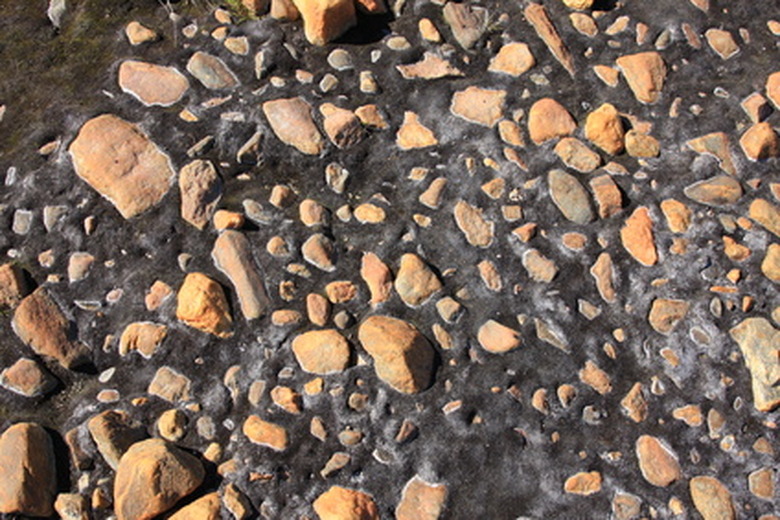
All soil is a composed of broken down particles of rock and organic material. Soil is typically spoken of as having one of three structures: sand, clay or loam. Lime is an amendment that you can add to sand, clay or loam to change the pH from acidic to alkaline.
Identification
Sandy soil is composed of large particles of broken rock and has large air spaces between them. Sandy soils typically drain quickly and are not able to hold nutrients because water carries these nutrients away very quickly. This is in contrast with clay soils that have very few air spaces between them and do not drain well. Loamy soil is a mix of sand, clay and humus. When humus is incorporated into sand, it acts like a sponge to hold in moisture and nutrients.
- All soil is a composed of broken down particles of rock and organic material.
- When humus is incorporated into sand, it acts like a sponge to hold in moisture and nutrients.
Types
Lime is a type of limestone that has been crushed into powdered form. Lime contains calcium in large quantities. When lime also contains magnesium carbonate it is known as dolomitic limestone. It is considered to be an inorganic soil amendment because it is mined from the ground, as opposed to organic amendments that once came from living things.
Function
Lime is typically added to the soil to adjust the pH of soil. Most plants generally grow best in a pH neutral range of 6.5 to 7.5. If your soil is more acidic than that, most plants grown in the soil will not thrive. To determine the pH of your soil, you must take a sample to be analyzed in a soil laboratory.
- Lime is a type of limestone that has been crushed into powdered form.
- It is considered to be an inorganic soil amendment because it is mined from the ground, as opposed to organic amendments that once came from living things.
Most state land grant colleges maintain soil laboratories that will test your soil as a part of their community and continuing education program. The results of a soil test for the soil's pH will contain recommendations as to how much limestone to add per square foot of land.
Process
To incorporate lime into your soil you must first break up the soil. Sandy soil will break up easily with a rototiller or other light-duty cultivator thanks to its' coarse, grainy texture. Once your soil is broken up, spread your lime over the surface according to the recommendations in your soil test.
For certain soils, such as the piedmont found in the southeastern United States, general assumptions can be made to measure the soil. For example, many piedmont farmers add 2 tons of lime per acre of soil to start with.
- Most state land grant colleges maintain soil laboratories that will test your soil as a part of their community and continuing education program.
- For certain soils, such as the piedmont found in the southeastern United States, general assumptions can be made to measure the soil.
Significance
Typically soils that are higher in sand need less lime than soils that are higher in clay. That's because clay has a higher buffering capacity than sandy soils do. According to the University of Florida, a soil's capacity to buffer means that it requires more of a soil amendment to change the pH of soil.