

How To Prepare Corn Seed For Planting
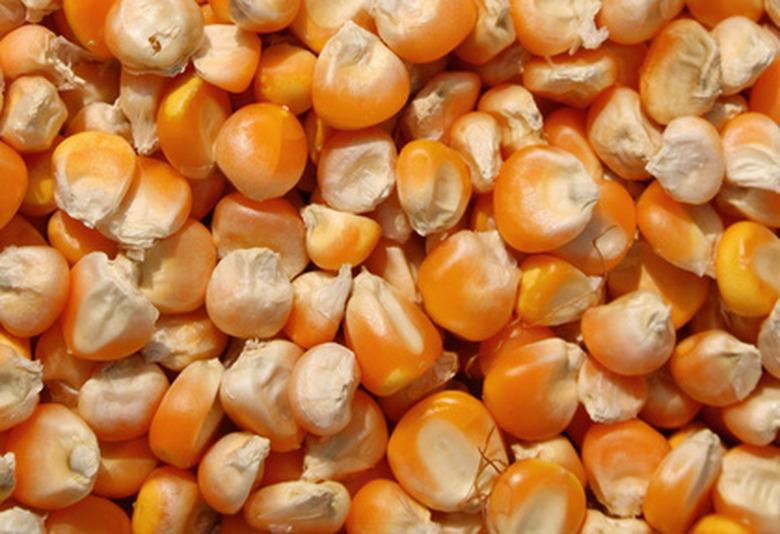
Sweet corn produces sweet, tender ears of corn, typically between 7 and 9 inches long. Classified as early, midseason or late corn, the time to maturity ranges from 65 to 90 days. Corn requires well-drained soil with a pH between 6 and 6.5, which can be determined by a soil test kit available at your local hardware or home improvement store.
Step 1
Place the corn seed in a large bowl. The seed swells with soaking and may double in size. Choose a bowl that will accommodate the increased size.
Step 2
Pour lukewarm water over the corn seed, filling the bowl to within 2 inches of the top. Seeds that float to the top are not viable seeds. Remove and discard. Place in a warm area to sit overnight.
- Sweet corn produces sweet, tender ears of corn, typically between 7 and 9 inches long.
- Pour lukewarm water over the corn seed, filling the bowl to within 2 inches of the top.
Step 3
Drain the water and plant in prepared garden soil to a depth of 1 inch. Plant four to six corn seeds in a cluster. Space individual seeds 2 to 3 inches apart. Space clusters 12 inches apart in rows 24 to 36 inches apart. Firm down with the back of the hoe and water well to thoroughly moisten the soil. Corn germinates in seven to 14 days.
Prepare Corn Seed For Next Year's Planting
If you want to save seeds, your corn must be open-pollinated, otherwise known as "heirloom." Before you begin to harvest your corn for eating, select the ears you want to save seed from. Ideally, you want to take seed from 100 ears to avoid inbreeding depression. Choose plants that grew well. If your corn is almost dry and the weather report says you are about to get heavy rain or frost, pull up the stalks by the roots and hang them upside down in a dry shelter to finish drying. Right after the milk stage, in other words, when a kernel pressed with a thumbnail will no longer produce a milky liquid, pick the corn and peel back or remove the husk. Hang the cobs to dry in a dry shelter.
- Drain the water and plant in prepared garden soil to a depth of 1 inch.
- Hang the cobs to dry in a dry shelter.
Things Needed
- Corn seed
- Large bowl
- Lukewarm water
Tip
Corn may be planted several days before the last expected frost. Side dress corn when it is 4 to 6 inches high with 5-10-10 fertilizer, following the recommended application rate. Work into the soil with the edge of the hoe to provide a boost of nutrients. Plant corn in several rows to encourage pollination. Two or three short rows produces better corn that one long row.
References
- Purdue University: Growing Sweet Corn
- University of Illinois Extension: Corn
- Iowa State University Extension: Corn Planting
- International Seed Saving Institute: Corn
- Vegetable Seed Saving Handbook: Specific Seed Saving Instructions for Common Vegetables
- Native Seeds/SEARCH: Seed Saving Instructions
- Backwoods Home Magazine: Saving Seeds