

Life Cycle Of A Tomato Plant
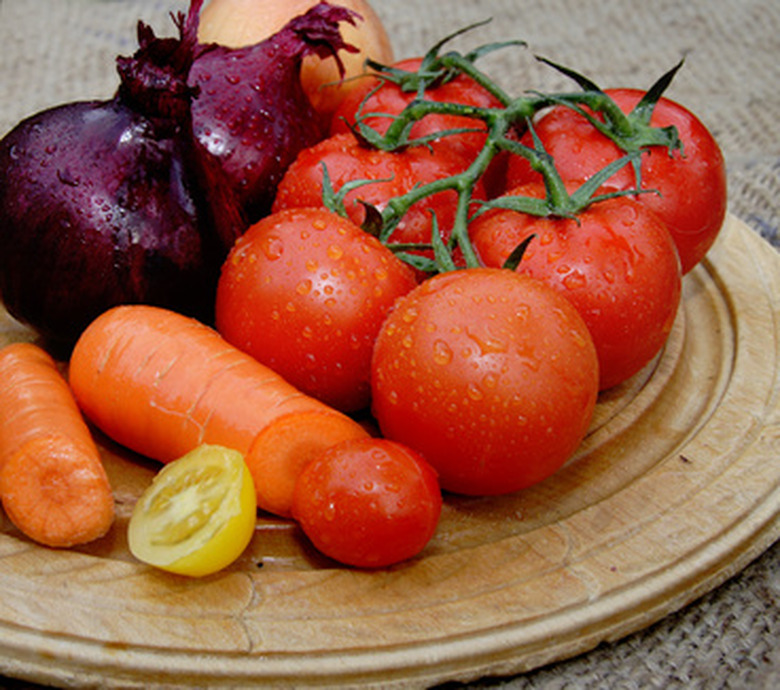
Whether grown upside-down or upright, in a hanging bucket or garden plot, tomato plants dot the summer landscape from city apartment decks to rural kitchen vegetable gardens. Although cross-breeding and hybridization have guaranteed tomatoes suited to every garden and gardening skill, they all follow the same life cycle. Most plants begin to produce fruit within a month or two of planting.
Origins
The original tomato was a vine that grew in the Andes Mountains and was carried to Central America within the last 2000 years where the Spanish found it. They carried it to Europe in the 1500s. Early cultivars were vines and produced small fruits, possibly yellow in color ("pommes d'oro") in long bunches, similar to the "cherry" tomatoes we grow in pots. They were tender perennials in the temperate mountains of South and Central America but are grown today as annuals, going from seedling through flowering, fruiting and death in one growing season.
- Whether grown upside-down or upright, in a hanging bucket or garden plot, tomato plants dot the summer landscape from city apartment decks to rural kitchen vegetable gardens.
- The original tomato was a vine that grew in the Andes Mountains and was carried to Central America within the last 2000 years where the Spanish found it.
Identification
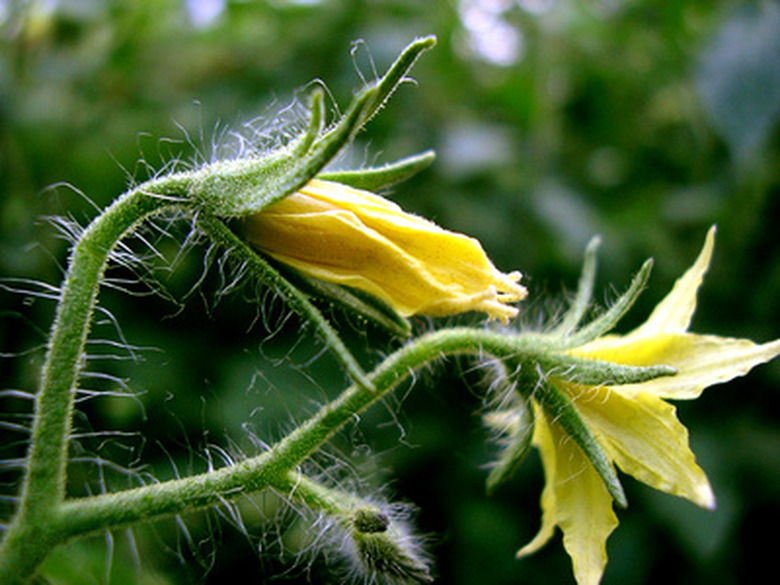
Like all angiosperms, tomatoes flower. Their seed matures inside a fruit in a process controlled by a series of hormones produced by the plant. One of these, ethylene, helps the fruit ripen but also cues the plant's death. Tomatoes and other fruits (like apples) give ethylene off as gas. Ethylene off-gassing ripens tomatoes that have been picked early, provided they are kept in a confined space like a paper sack or box.
Time Frame
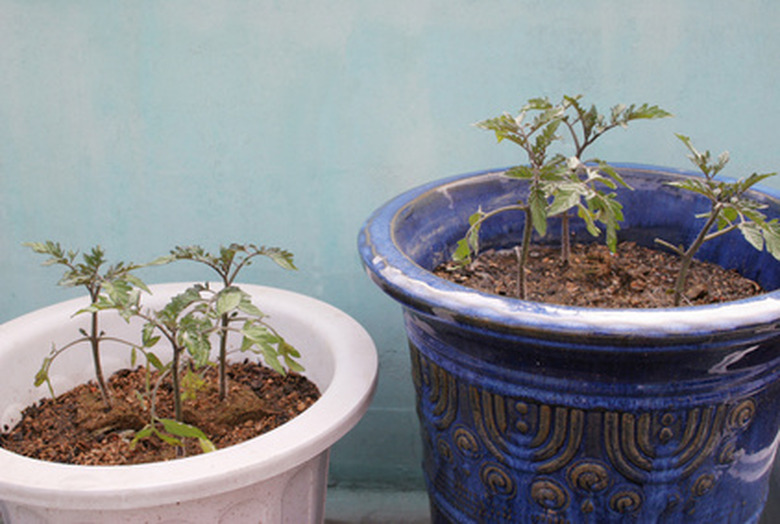
Another hormone, abscisic acid, keeps seeds from germinating until soil temperature, moisture and light are right for growth. Most tomato seeds germinate within a few weeks of planting. Vegetative growth to maturity and fruiting may take as little as 45 days for some smaller varieties to 80 days for fleshy "paste" tomatoes. In areas where growing seasons are short, tomatoes seedlings planted indoors are transplanted when garden soil warms above 60 degrees F.
- Like all angiosperms, tomatoes flower.
- Another hormone, abscisic acid, keeps seeds from germinating until soil temperature, moisture and light are right for growth.
Features
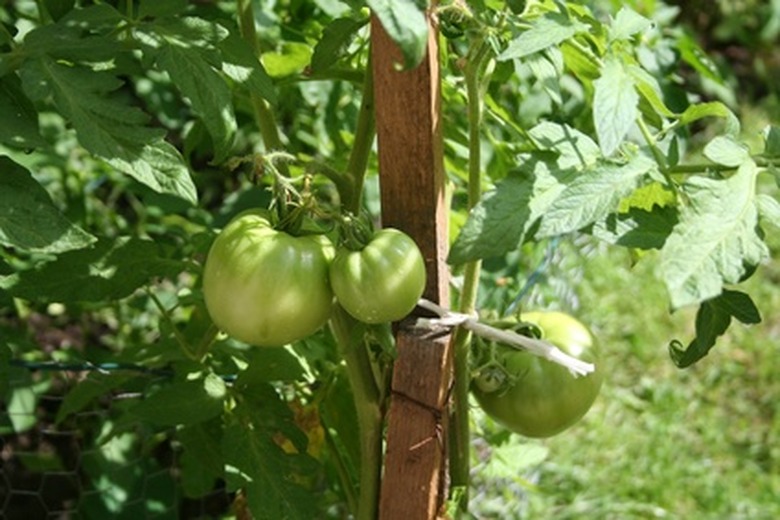
After germination, the embryonic tomato plant sprouts a downward-growing radicle (root) to start to gather nutrients. It then raises a shoot (plumule) that will be the main stalk of the plant. Two simple leaves (cotyledons) begin the collection of solar energy that will convert air, water and other nutrients to the sugars needed for growth (photosynthesis). True leaves mark the transition from seedling to vegetative growth. Flowers bloom to attract pollinating insects. When eggs at the base of the pistil in the center of the flower are fertilized, the ovary begins to swell and form the fruit.
Considerations
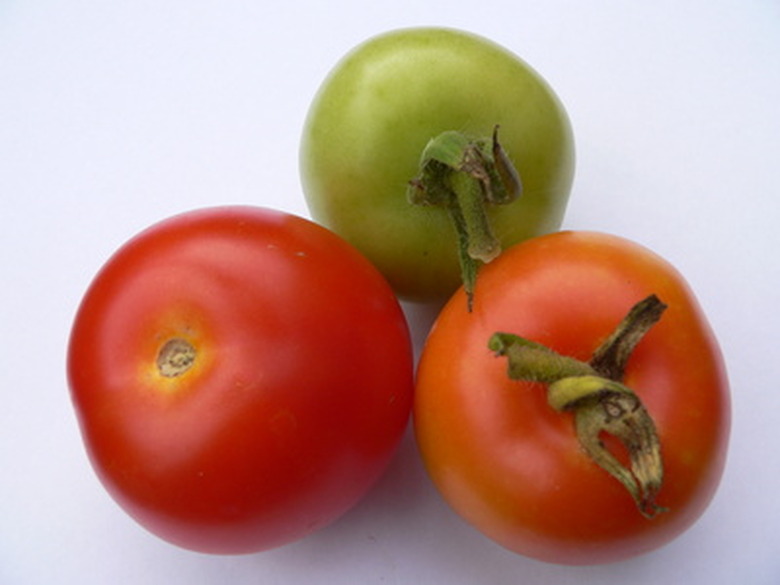
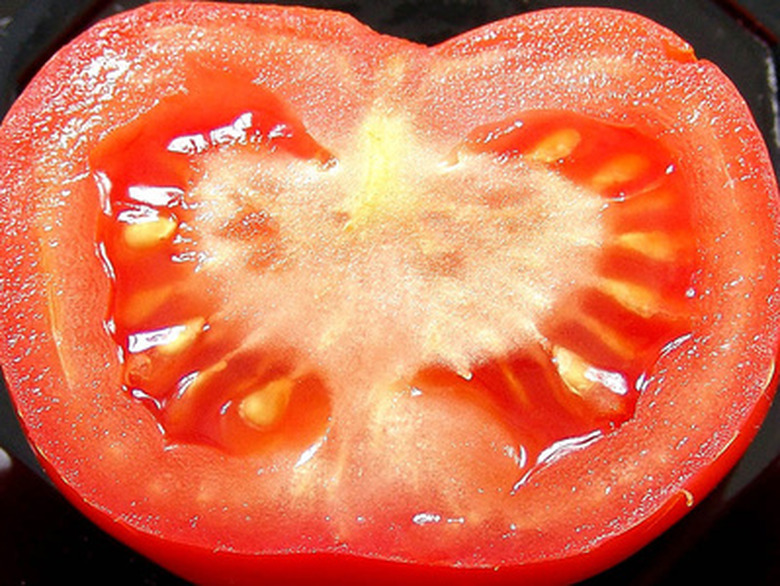
Plant embryos within the fruit develop as the fruit ripens. In the meantime, the ripening fruit produces ethylene that signals the leaves to shut down chlorophyll production. Seeds are insulated in a protein sack that will break down in soil or in digestive juices. Of all the seeds in each fruit, a few may survive to germinate in the spring. Each tomato variety grows and sets fruit on its own schedule. "Determinate" varieties grow to maturity and then set fruit. "Indeterminate" vines begin blooming and setting fruit as soon as they have enough foliage to support themselves; they continue to produce as they grow.
- After germination, the embryonic tomato plant sprouts a downward-growing radicle (root) to start to gather nutrients.
- Of all the seeds in each fruit, a few may survive to germinate in the spring.