

Why Are Animals & Plants Important In The Ecosystem?
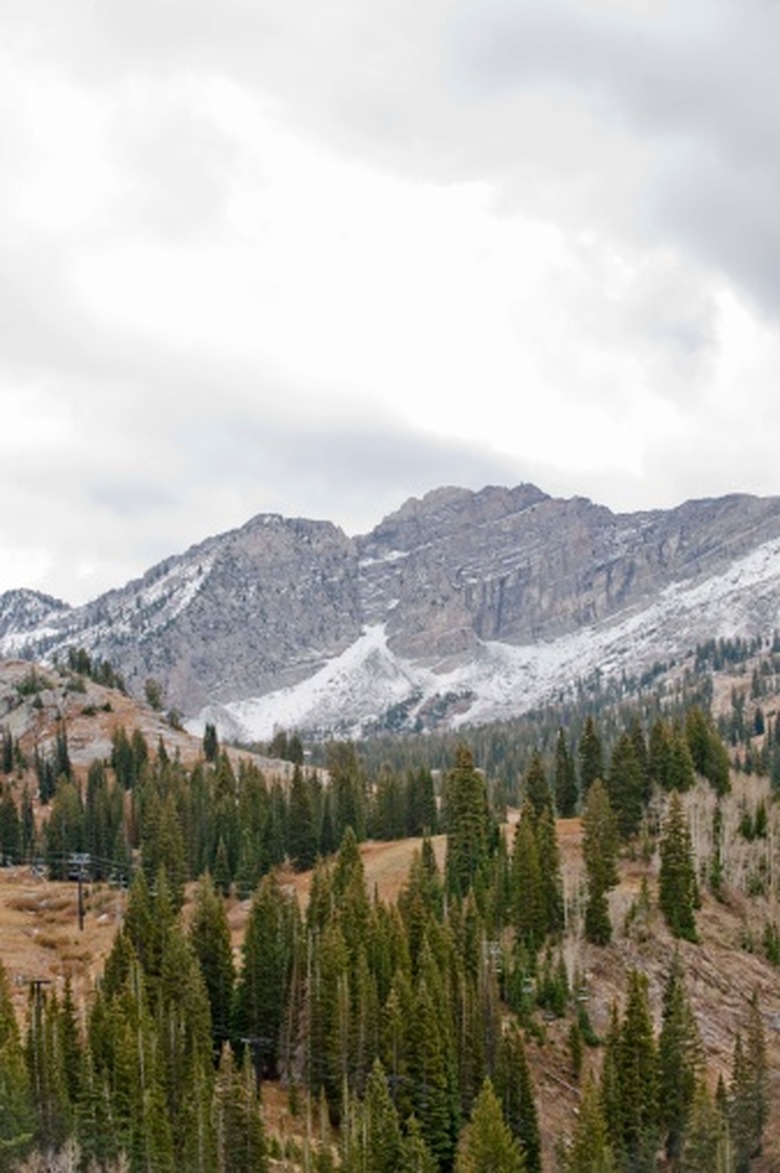
Plants and animals need each other to survive in an ecosystem. They are also the two life forms in an ecosystem–and without life, there is no ecosystem.
Plants and animals need each other to survive in an ecosystem. They are also the two life forms in an ecosystem–and without life, there is no ecosystem.
Pollination
Pollination is a vital part of an ecosystem's functioning and health, according to the Ecological Society of America's fact sheet on pollination. Bees and hummingbirds pollinate flowers by transferring pollen from one flower to another, thereby ensuring their survival as a species. These animals also need the flowers. For instance, hummingbirds pollinate when they drink nectar–their primary fuel source–from flowers.
Food Chain
Plants and animals are part of a food chain, which keeps an ecosystem alive. Carnivores eat herbivores, which eat plants. When animals die, they decompose into the soil. Their nitrogen transforms into nitrate, which plants require for growth. Herbivores eat these plants, and the cycle starts again.
- Plants and animals need each other to survive in an ecosystem.
- Plants and animals are part of a food chain, which keeps an ecosystem alive.
Climate
Besides affecting each other, animals and plants also influence the rest of the ecosystem. For instance, trees produce oxygen and lower forest temperatures. This enables animals–including humans–to live comfortably in the ecosystem even during warm months.
Plants In A Pond Ecosystem
Many types of flowers make their homes in or near ponds. While many shrubs prefer drier soil conditions, some are adapted to the constant wetness of life at the banks of a pond. Near the banks and even partially submerged, several species of grass thrive. " Sparkler" sedge (Carex phyllocephala "Sparkler"), which lives in USDA hardiness zone 7 through 10, grows in exploding clumps of cream-rimmed short green blades, while variegated Japanese sedge (Carex morrowii "Aurea-variegata"), which thrives in USDA zone 5 through 9, grows as tall as a foot, with light green blades that hang lazily near the water's edge.
- Besides affecting each other, animals and plants also influence the rest of the ecosystem.
- While many shrubs prefer drier soil conditions, some are adapted to the constant wetness of life at the banks of a pond.
References
- U.S. Environmental Protection Agency: Ecosystems and Biodiversity
- Monrovia: Sparkler Sedge
- Monrovia: Variegated Japanese Sedge
- Monrovia: River Birch
- Monrovia: Kilmarnock Willow
- Monrovia: Horsetail Reed
- Fine Gardening: Victoria Cruziana (Santa Cruz Waterlily)
- Missouri Botanical Garden: Nymphaea "Sunny Pink"
- Monrovia: Deutschland Astilbe
- Monrovia: Chirimen Marlberry