

About Meyer Lemon Tree Diseases
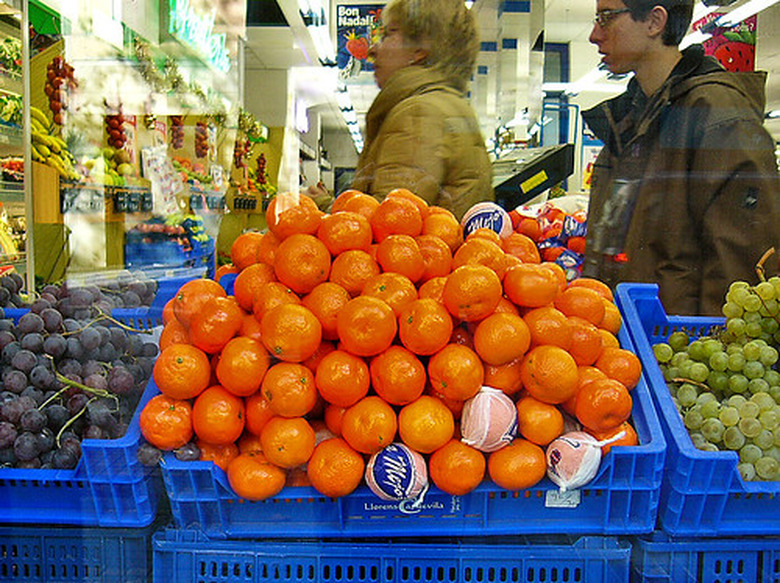
The Meyer lemon originated in China and was brought to the United States in 1908. It is not a true lemon and it is much less acidic than that of a regular lemon. The juice of the Meyer lemon is used as a substitute for regular lemon juice, but it looks has a very distinctive appearance. It resembles a large orange in both shape and color. The Meyer lemon, like other lemons, is susceptible to the same diseases as other citrus fruits.
Types
Citrus tristeza is a viral disease that is prevalent in regular Meyer lemon trees. The " Improved Meyer" strain, however, is resistant. Citrus canker is a highly contagious bacterial infection. Root rot is a fungal infection also known as brown rot. Greasy spot is a fungus disease. Sooty mold is another fungal disease caused when insects leave a substance called honeydew on the leaves which fungus mold sticks too.
- The Meyer lemon originated in China and was brought to the United States in 1908.
- The juice of the Meyer lemon is used as a substitute for regular lemon juice, but it looks has a very distinctive appearance.
Signs
Citrus tristeza causes the seedlings to turn yellow, the stem to suffer severe pitting and rootstock decline. Citrus canker appears as yellow lesions in the shape of a halo on the leaves, fruit and twigs. Root rot appears as dark brown patches of hard bark on the trunk, which can ooze liquid. Greasy spot appears as yellow/brown blisters on the underside of the leaf which turn into oily blisters.
Prevention
The chance of fungus diseases taking hold can be lessened by making sure the soil is well drained and the trees are planted far enough apart so that they get good air circulation. Citrus tristeza can only be prevented by using rootstocks that are immune to the disease.
Treatment
Trees infected with citrus tristeza should not be used and should be sprayed with an insecticide to kill the aphids, which lessens the chance it can be spread to other trees. There is no treatment or cure for citrus canker. The tree needs to be removed and destroyed. Root rot can be controlled by removing all the leaves and damaged fruit as soon as it drops. Also prune off all of the branches less than 2 feet above the ground. Spray with a fungicide when the disease is first diagnosed and again the following spring.
- Citrus tristeza causes the seedlings to turn yellow, the stem to suffer severe pitting and rootstock decline.
- Trees infected with citrus tristeza should not be used and should be sprayed with an insecticide to kill the aphids, which lessens the chance it can be spread to other trees.
Greasy spot can be controlled by collecting and removing and disposing of all fallen leaves. Spray with a liquid copper fungicide in June or July and then again in August or September. Sooty mold can be controlled by controlling the insects with insecticides. If it is already established, spray with liquid copper fungicide.
Effects
Citrus tristeza results in reduced crops or loss of trees. Severe citrus canker infections can blemish the fruit, cause the leaves to drop off and the fruit to die and drop off. Root rot causes the bark to dry, crack and die. It can also cause the fruit to die back and the leaves to yellow.
- Greasy spot can be controlled by collecting and removing and disposing of all fallen leaves.
- Sooty mold can be controlled by controlling the insects with insecticides.