

How To Care For Canterbury Bells
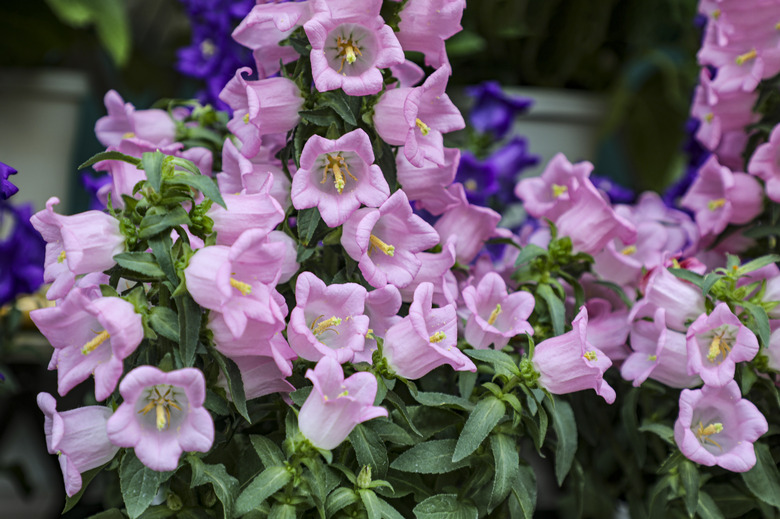
Canterbury bells (Campanula medium) are biennial plants and, as their name suggests, they are grown for their showy, bell-shaped flowers. Proper care during the first year of the plant's two-year life cycle helps ensure a successful bloom. Canterbury bells are winter hardy in USDA plant hardiness zones 5 to 8.
Features of Canterbury Bells
Native to southern Europe, Canterbury bells are the most popular of the approximately 300 species of bellflowers in the genus Campanula. Canterbury bells have long been associated with heirloom English cottage gardens.
Canterbury bell flowers grow on racemes, with each blooming being 1.5 to 3 inches wide. Some cultivars, such as Double Melton Bells Mix, have double flowers, while others have single flowers. The flowers make great cut flowers and are also very attractive to pollinators, including honeybees.
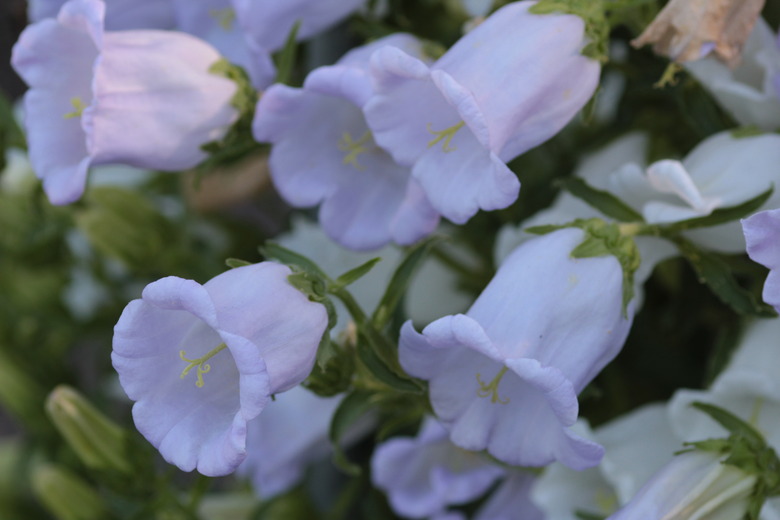
**Canterbury bell plants flower in late spring or early summer.** Canterbury bell flower colors include shades of blue, purple and pink as well as white. These plants reach a height between 1 and 3 feet when they flower during their second year, though there are dwarf varieties available.
As biennial plants, Canterbury bells do not flower until their second year. In the first year, these plants produce only green leaves, which often grow in a rosette form.
How to Grow Canterbury Bells
Canterbury bells can be grown from seed, which take two to three weeks to germinate. Soil that is fertile with a neutral pH is best for this species. Well-draining soil that is kept evenly moist is also key. Sow seeds 12 to 15 inches apart. It may be necessary to thin the plants.
While they can be grown in full sun or partial shade, Canterbury bells grow best in cool conditions with minimal humidity; in fact, they require a period of exposure to cool temperatures to flower. Therefore, in warm climates, it is best to provide these plants with afternoon shade during the hottest part of the day to keep the plants cool.
Canterbury bells grow best in cool conditions with minimal humidity.
It is also possible to grow Canterbury bells plants in nursery containers during their first year and transplant them into flower beds in the spring of their second year. This might be an appealing option to some gardeners, because the plant is not particularly attractive during its first year when it consists only of a rosette of foliage.
 Guy Waterval
Caring for Canterbury Bells
To help protect a Canterbury bells plant from frigid temperatures during the winter months, applying a thick layer of mulch to the rosette at the end of the first growing season is recommended.
In some cases, tall cultivars of Canterbury bells may require stakes for support in their second year when they flower. This is especially important in windy locations. Planting Canterbury bells in groups, however, can reduce the need for staking.
After Canterbury bells flower, the plants die and can be removed from the garden and discarded. These plants will self-seed in the garden, however. So by allowing some of the seedpods to mature on the plants, you can ensure a display of Canterbury bells year after year.
Applying a thick layer of mulch to the rosette at the end of the first growing season is recommended.