

How To Get Rid Of Lichen On Apple Trees
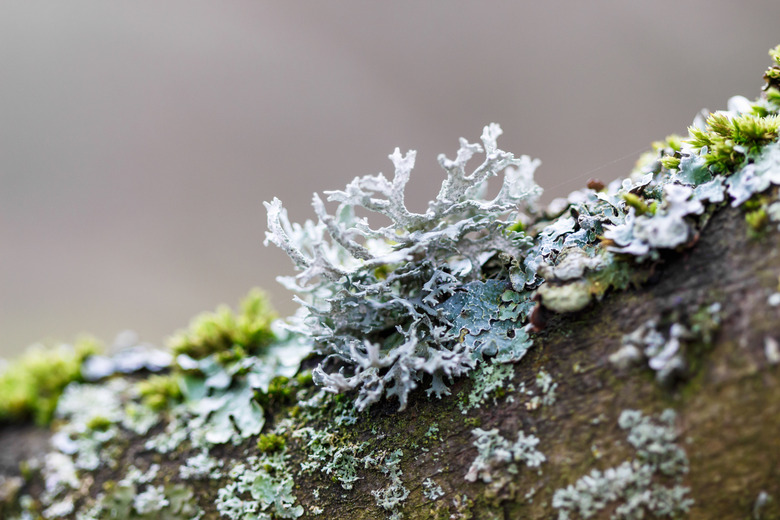
If you have lichen on your apple trees, there's no need for concern or alarm, and you don't need to remove it or kill it. The presence of lichen may, however, indicate that your tree is stressed, even if the lichen is not causing the stress.
Tip
There is no need to kill or remove lichen from your apple tree, since it is not a parasite and is not harming the tree.
What Is Lichen?
Lichen is not a parasite and does not derive nutrients from the tree; rather, it uses the tree as a comfortable dwelling, a safe place to reside, while it attracts the sunlight, moisture and materials it needs from the air.
Is Lichen Moss?
No, lichen is not a moss. It's part fungus and part algae. The algae takes care of photosynthesis, while the fungi helps anchor the algae to its host—your apple tree—and also helps store moisture.
Lichen Likes It Sunny and Clean
Unlike moss, which prefers shade, lichen likes sun. You might see lichen not only on trees but on rocks, roofs, glass and even the soil.
Lichen spreads when bits dry out and fall off; then it's spread by wind or animals to new locations. Even though dry, these bits will come back to life if they get enough water.
Interestingly, the presence of lichen indicates that the air is clean, as it won't grow in a polluted area.
Tip
If your tree has lichen, a lot of light is coming through, which may indicate a loss of leaves or branch dieback.
What Kinds of Trees Do Lichen Prefer?
Lichen will grow on young trees as well as on older, less healthy trees. Experts posit that it seems to appear on older trees more frequently, perhaps because their bark doesn't exfoliate. A tree that exfoliates its bark will slough off the algae.
Lichen Can Point to Problems With Your Tree
Lichen can indicate a problem with the tree, however. Because lichen prefers sun, it will not grow on bark under a very leafy canopy, so if your tree has lichen, a lot of light is coming through, which may indicate a loss of leaves or branch dieback.
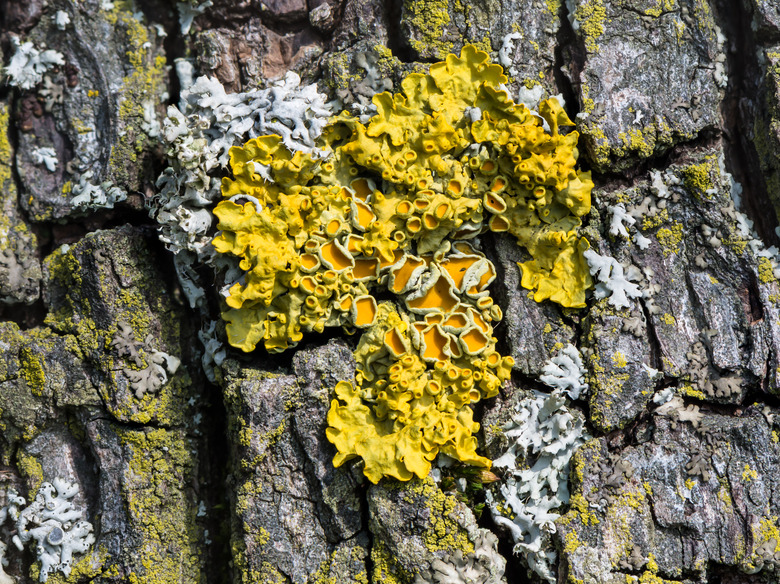
Further, a stressed or older tree may have brittle bark with a lot of cracks and crannies, which is perfect for lichen to attach to.
 Uoaei1
Getting Rid of Lichen on Fruit Trees
If you find the lichen unsightly and would rather enjoy your tree without it, you can take steps to eradicate it. No chemical controls are available for lichen, moss or algae on plants, so you'll need a homemade remedy.
Prepare a soapy solution of simple dish soap and water. Spray the trunk and branches that are covered with lichen; then use a natural-bristle brush to rub it off. Avoid steel brushes or any scraping tool because it may also remove bark, which will then invite disease and pests. Spray it off with your hose.