

How To Prune A Ginkgo Tree
Things Needed
- Pole saw
- Long handled loppers
- Long blade shears
Tip
Water the gingko well after significant pruning to ease stress on the tree and prevent shock.
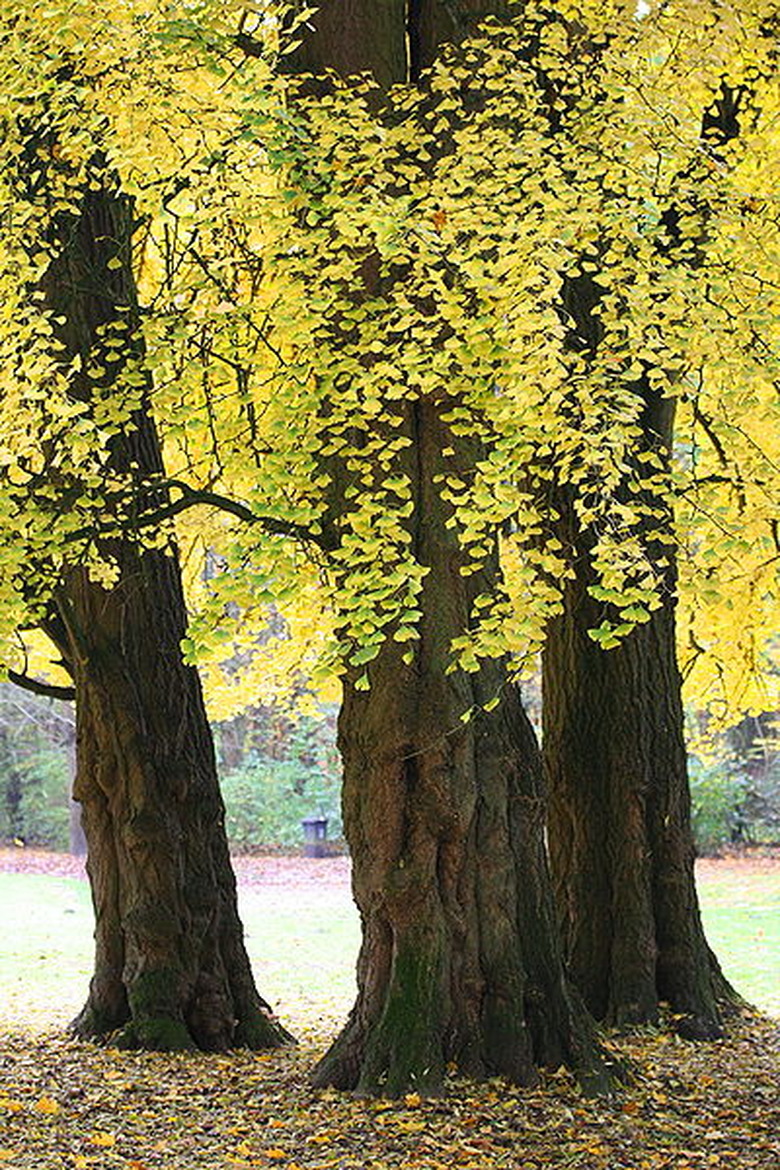
Ginko trees, also known as maidenhair trees, are deciduous trees that sport delicate bright green fan-shaped leaves in the spring and summer that turn pale gold in the fall and winter. Gingko trees thrive in USDA zones 4 through 8 in full sun and grow to up to 80 feet tall and 40 feet wide at maturity. Gingko trees are well loved for their dramatic arching canopy, unique foliage and simple maintenance requirements. They can be pruned for decorative purposes or cleaning anytime throughout the year without damage.
Step 1
Inspect your gingko tree several times a year, looking for any dying, broken, diseased or damaged branches. Prune back any compromised branches by cutting just past the damaged point on the branch or down to the branch joint where it meets up with the primary branch or trunk. Always place your cuts just outside the raised ring branch collar where the branches meet. Cutting into the branch collar can diminish the tree's ability to heal over at the wound. Pull each branch from the canopy as you make a cut and discard it. Remove any branches that are crossing or abrading one another which may be an entry point for disease.
- Ginko trees, also known as maidenhair trees, are deciduous trees that sport delicate bright green fan-shaped leaves in the spring and summer that turn pale gold in the fall and winter.
- Prune back any compromised branches by cutting just past the damaged point on the branch or down to the branch joint where it meets up with the primary branch or trunk.
Step 2
Shape your ginko tree with pruning to alter the natural oval shaped canopy or manicure prune the bottom of the canopy if so desired. Use long blade shears to cut the exterior of the canopy and make flat plane cuts across the tips of the lowest hanging branches to give a crisp topiary look.
Step 3
Thin the interior canopy of the tree to allow even penetration of sunlight into the tree center and improve fresh air circulation. Work methodically around the tree to maintain a symmetrical and professional end result. Make one cut, pull the cuttings from the canopy, look at your work to determine the next best cut and then make the cut. Look up through the tree toward the overhead sun and make sure that the tree canopy evenly filters the sunlight through the entire canopy. Never remove more than one-third of the interior canopy mass in any one pruning session to limit the stress the tree experiences.
- Shape your ginko tree with pruning to alter the natural oval shaped canopy or manicure prune the bottom of the canopy if so desired.
- Thin the interior canopy of the tree to allow even penetration of sunlight into the tree center and improve fresh air circulation.