

How To Kill Reed Grass
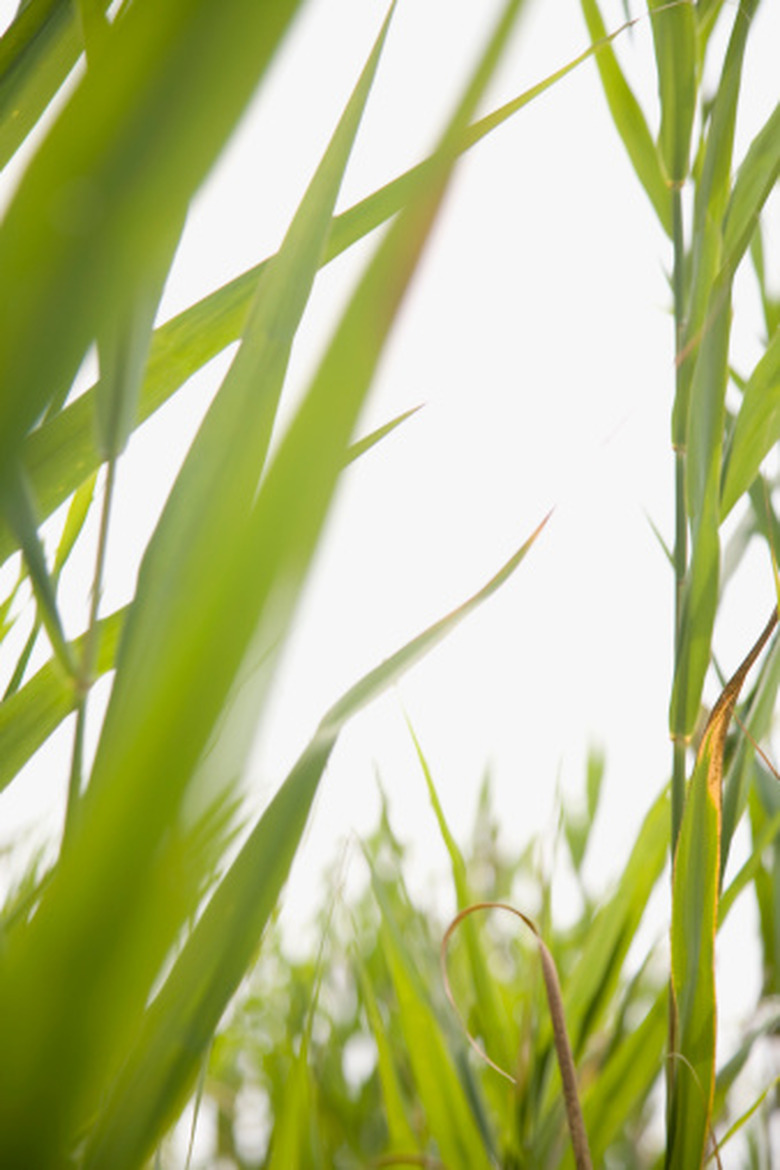
Reed grass varieties, found near wet areas such as riverbanks and marshes, have tall, thin stalks and long, flat leaves. Flowering occurs in the late spring and summer. Reed grass is found throughout all but the coldest areas of the world and is primarily used by farmers and governments for erosion control purposes.
Things Needed
- Herbicide approved for aquatic use
- Sprayer with coarse droplet or adjustable nozzle
Reed grass varieties, found near wet areas such as riverbanks and marshes, have tall, thin stalks and long, flat leaves. Flowering occurs in the late spring and summer. Reed grass is found throughout all but the coldest areas of the world and is primarily used by farmers and governments for erosion control purposes. Hard to kill, eager to expand and quick to grow, reed grass often eradicates and replaces native, existing flora in a wetland. Larger operations utilize yearly burnings to kill and control reed grass, but less dangerous chemical options are available for homeowners.
Step 1
Select a herbicide approved for aquatic use such as the Rodeo brand herbicide recommended by the University of Illinois. Prepare the herbicide according to label directions and add to a herbicide spray gun or sprayer.
- Reed grass varieties, found near wet areas such as riverbanks and marshes, have tall, thin stalks and long, flat leaves.
- Reed grass is found throughout all but the coldest areas of the world and is primarily used by farmers and governments for erosion control purposes.
Step 2
Spray the reed grass in early spring, when its leaves are still green. Target large clumps from multiple directions and use spray techniques that minimize the amount of drift in the air. Apply enough herbicide to ensure effective coverage. Avoid applying so much that excess herbicide runs off the plant and into the surrounding soil and water. Check herbicide labeling to identify which sections of the plant to target.
Step 3
Repeat for all known patches or clumps of undesired reed grass. Avoid dripping or spraying the herbicide on other plant life, as most herbicides are non-selective and kill plants indiscriminately.
- Spray the reed grass in early spring, when its leaves are still green.
- Avoid dripping or spraying the herbicide on other plant life, as most herbicides are non-selective and kill plants indiscriminately.
Step 4
Check sprayed areas toward the end of summer. Remove all dead reed grass and look for living specimens.
Step 5
Pull any remaining stray, living reed grass stalks by hand. Reapply herbicide the following spring.
Tip
Don rubber boots if standing or walking in water.
Warning
Follow all directions on the herbicide label. Check local regulations before spraying near water areas.