

Landscaping Ideas For Subdivision Entryways
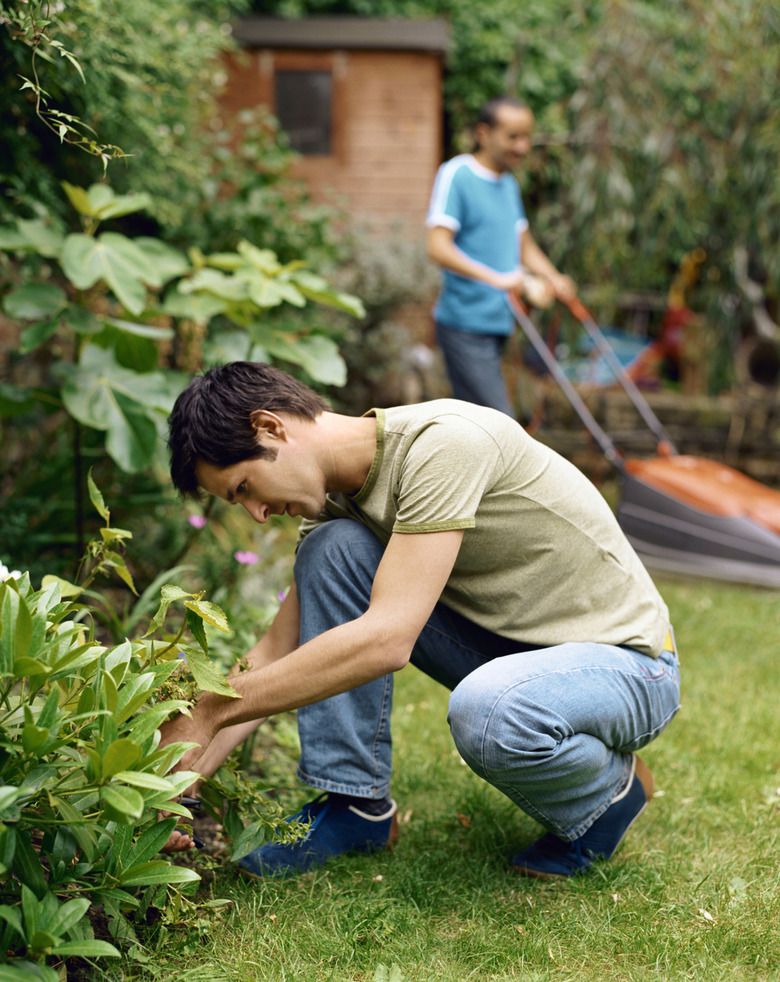
Subdivisions are often unfairly characterized as cookie-cutter neighborhoods with row after row of identical houses that have boring grass yards and little creative landscaping. When subdivisions lack individuality, stylish entryways that the whole neighborhood can enjoy also enhance curb appeal for visitors and may even inspire the community members toward greater gardening efforts in their own yards. Appealing landscapes increase property values. So the more exertion put toward beautifying public subdivision entryways, the more valuable the subdivision's individual homes may become.
Step 1
Many neighborhoods operate under covenants or ordinances established by community directors or boards of trustees. Before landscaping public-use or common areas, it is a good idea to check with whatever governing board has authority in your subdivision for regulations concerning acceptable landscaping ideas. Consider electrical and plumbing needs as well; check for underground utilities by calling 811 as a safety precaution before digging.
Theme Selection
Step 1
If the name of your subdivision is Oak Hill, you probably don't want palm trees at its entrances, but you may not want to maintain huge oak trees there either. In that case, consider shrubs and herbaceous plantings that grow naturally in conjunction with oak woodland communities in your area. Use a similar approach to enhance any subdivision named for plants or natural features, including glades, waterfalls or lakes. If your subdivision has a more generic or less natural name, such as Smith-Jones Village, you have more leeway in plant selection.
Step 2
- Many neighborhoods operate under covenants or ordinances established by community directors or boards of trustees.
- Before landscaping public-use or common areas, it is a good idea to check with whatever governing board has authority in your subdivision for regulations concerning acceptable landscaping ideas.
Consideration of Signs
Step 1
Nearly every subdivision has at least one sign or wall with its name at an entryway. A landscaping design greatly depends upon the shape and size of that immovable feature. A tall sign may block sunlight, and masonry or stone walls may create micro-environments warmer than surrounding areas. In every case, landscaping takes a backseat to sign visibility. So take care to choose plants that will not grow taller than the name marking your community. At a small entryway, it may come down to putting low-growing shrubs, grasses or beds directly in front of the sign and limiting taller shrubs or small trees to the sides of or behind the sign. Container plants are options for tops of wide walls and substantial wooden signs, but container plants need daily irrigation to stay alive, especially in a hot, dry area.
Step 2
- Nearly every subdivision has at least one sign or wall with its name at an entryway.
- A tall sign may block sunlight, and masonry or stone walls may create micro-environments warmer than surrounding areas.
Native Plants
Step 1
If possible, choose native perennial plants of your area. They generally need less maintenance than non-native plants because they are pre-adapted to the area's climate and soil conditions. Because they almost never need re-planting, they save you time and money over annuals. In addition, native plants appear to belong where they are and create a sense of harmony between landscaped spaces and surrounding natural areas. That factor is especially important where zoning regulations prohibit removal of trees and where adjacent properties are undeveloped. Consult your state or county Cooperative Extension Service office or conservation agency office for a list of plants native to your area; those offices often provide information about obtaining native seeds and plants as well.
Bedding Plant Accents
Step 1
Even if you choose perennials for background trees, shrubs, grasses and herbaceous plants, you still can have petunias, marigolds and other bedding plants. In well-designed flowerbeds and borders, annuals offer seasonal color and variety to retain year-round landscaping interest. In order to have the easiest substitution of plants, set the plants, containers and all, in the ground, and take them out of the ground when their blooming finishes. With a background of evergreens, you never need worry about clashing colors — whether you display pink flowers in spring, golden blooms in autumn or flaming red plants for the winter holidays.
Step 2
- If possible, choose native perennial plants of your area.
- With a background of evergreens, you never need worry about clashing colors — whether you display pink flowers in spring, golden blooms in autumn or flaming red plants for the winter holidays.