

How To Transplant Allium
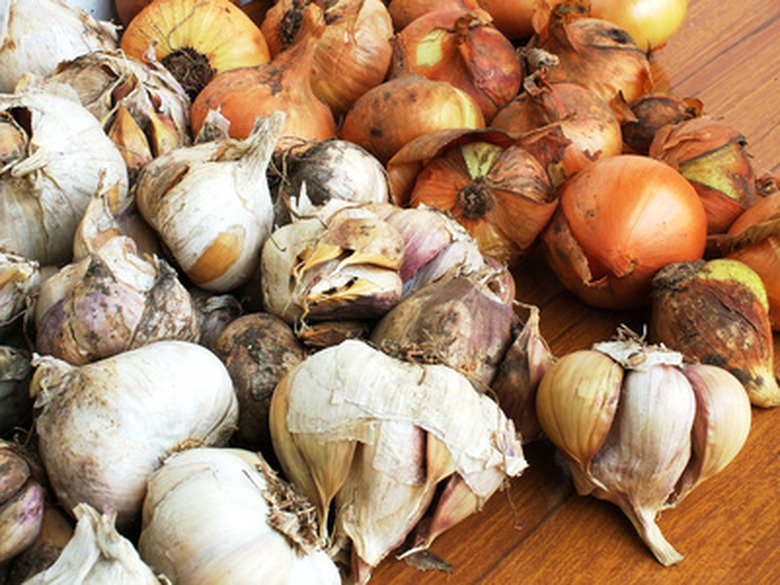
The allium family of plants include onions, garlic and leeks. These edible plants thrive in home vegetable gardens. Onions and leeks are often started from seed in the spring, so you can get a jump start on the summer gardening season by starting the plants indoors in late winter then later transplanting them out to the garden. Plant out allium transplants you started or purchased two to four weeks before the last expected spring frost in your area.
Step 1
Prepare a garden bed in full sun. Lay a 2-inch layer of compost over the bed and apply 1 lb. of 8-8-8- analysis fertilizer per every 20-foot row. Till the compost and fertilizer 8 to 10 inches into the bed prior to planting.
- The allium family of plants include onions, garlic and leeks.
- Till the compost and fertilizer 8 to 10 inches into the bed prior to planting.
Step 2
Dig planting holes deep enough so that the allium transplant is planted at the same depth in the bed as it is in the nursery pot. Space the holes 4 to 6 inches apart in the row and space the rows 12 to 18 inches apart.
Step 3
Set the transplants into the planting holes and refill around each allium with the soil. Lightly firm the soil in place with your hands then water thoroughly so that any air pockets in the soil around the roots collapse.
Step 4
Lay a 1- to 2-inch layer of organic mulch, such as straw, over the garden bed. Mulching preserves moisture, prevents weeds and helps protect the young allium transplants during colder weather.
Tip
Garlic isn't well-suited to transplanting, as it is usually grown from cloves directly planted in the garden bed. In areas with mild winters and little freezing, onions and leeks can be grown as a winter crop. Plant them out in autumn.
Things Needed
- Compost
- Fertilizer
- Trowel
- Mulch