

How To Grow Persian Lime Trees In Pots
Things Needed
- Planting pot
- Metal mesh or screen
- Gravel or pebbles
- Sand
- Peat moss
- Potting soil
- Perlite
- Citrus food
- Burlap or blanket
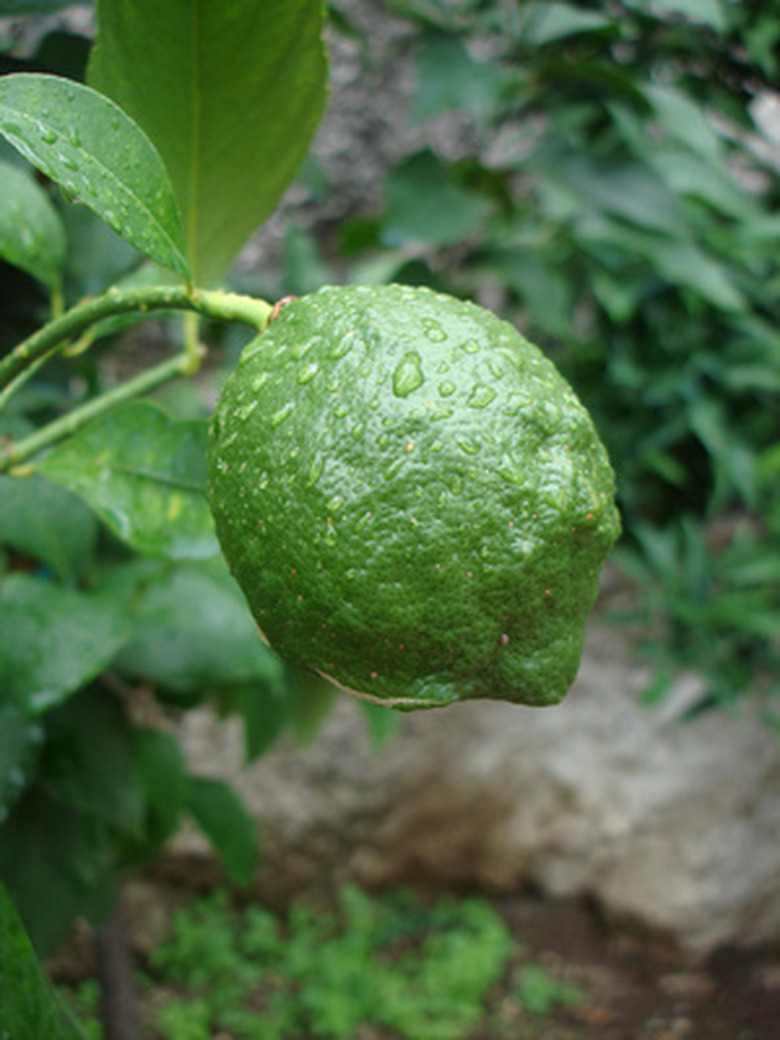
The Persian lime tree is also known as the Tahiti lime. Persian lime trees in the landscape can grow to 20 feet in height with thorny branches. Growing the Persian lime in pots is a good way to do away with concerns over poor soil, inclement weather and many pests. When shopping for the pot for your Persian lime tree consider the largest one you can find. It can be made of almost any material including plastic, ceramic, clay and wood. The folks at the California Rare Fruit Growers Association suggest using whiskey or wine barrels cut in half. Whichever container you choose, make sure it has holes in the bottom for drainage.
- The Persian lime tree is also known as the Tahiti lime.
- Growing the Persian lime in pots is a good way to do away with concerns over poor soil, inclement weather and many pests.
Step 1
Place the pot in its permanent location. Once it is filled with soil it may be too heavy to move around. Persian lime trees require full sun.
Step 2
Lay a square piece of screen over the main drainage hole in the bottom of the container. Cover that with a thin layer of 2-inch gravel or pebbles.
Step 3
Mix equal parts of sand, peat moss, potting soil and perlite. Moisten it well and allow it to drain.
- Place the pot in its permanent location.
- Mix equal parts of sand, peat moss, potting soil and perlite.
Step 4
Pour the planting mix into the pot until it is half full. Remove the Persian lime tree from its pot and place the rootball on the soil in the new pot. Add or remove soil to be sure the lime tree is planted at the same depth at which it has been growing. Fill the pot with soil, to within 3 inches of the rim.
Step 5
Water the Persian lime tree until the excess water runs from the bottom of the pot then water every three days for the first three weeks. After that, reduce the interval to seven days.
Step 6
Fertilize the Persian lime tree after you see new growth. Use a water-soluble citrus food at the rate and schedule suggested on the package. Always apply fertilizer to wet soil.
- Pour the planting mix into the pot until it is half full.
- Water the Persian lime tree until the excess water runs from the bottom of the pot then water every three days for the first three weeks.
Step 7
Protect the Persian key lime in the winter by either bringing it indoors (place it in a draft-free area) or by covering it with burlap or a blanket. Remove the blanket in the mornings to allow the tree to get some sun.