

How To Care For A Butterfly Bush
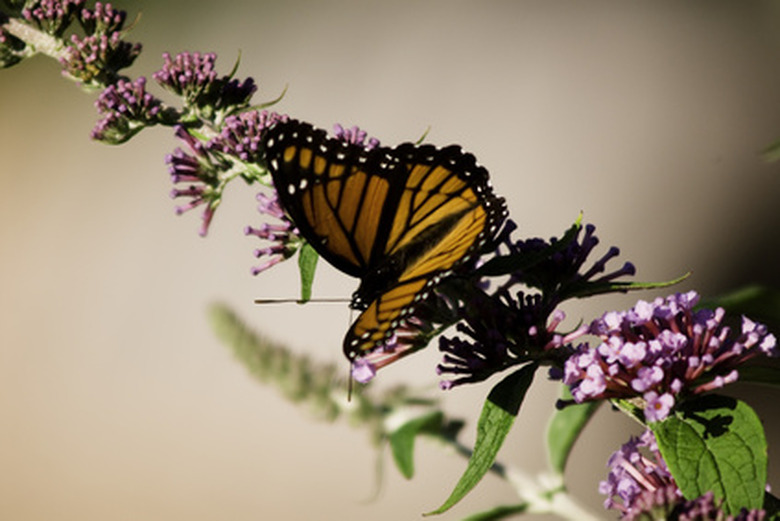
Butterfly bush, or Buddleja davidii, derives its name from its ability to attract butterflies to the garden. Growers also value the shrub for its attractive foliage and brightly colored flowers that appear in summer in shades of white, yellow, pink, red, blue and purple, depending on the variety. Butterfly bush reaches heights of 10 to 12 feet when given proper care, and gardeners often use the shrub for border plantings. Native to northwestern China and areas of Japan, butterfly bush thrives in hardiness zones 5 through 10 in the United States.
Step 1
Plant butterfly bush during early spring, just before active growth begins. Choose a planting site that receives six to eight hours of full sunlight throughout the day and has fertile, well-drained soil. Space butterfly bushes at least 5 to 10 feet apart.
- Butterfly bush, or Buddleja davidii, derives its name from its ability to attract butterflies to the garden.
- Butterfly bush reaches heights of 10 to 12 feet when given proper care, and gardeners often use the shrub for border plantings.
Step 2
Apply a 1/2-inch layer of compost followed by a 3-inch layer of mulch to the soil each spring. Begin the mulch about 3 inches from the base of the butterfly bush to reduce the chance of disease. Replenish as necessary throughout the year to maintain 3 inches of mulch.
Step 3
Water once per week during spring and summer, but only on weeks that receive less than 1 inch of rainfall. Do not water during winter, when active growth has stopped. Never allow standing water to accumulate, or the plant's crown may rot.
Step 4
Feed butterfly bush once per year during early spring, just after active growth has resumed. Use a complete 10-10-10 NPK fertilizer to provide adequate nutrients for root formation and flowering. Apply following the instructions provided by the manufacturer for the best result.
- Apply a 1/2-inch layer of compost followed by a 3-inch layer of mulch to the soil each spring.
- Use a complete 10-10-10 NPK fertilizer to provide adequate nutrients for root formation and flowering.
Step 5
Prune butterfly bush once per year during early spring before new growth begins. Use pruning shears to remove dead, damaged or leggy growth to improve the appearance of the plant and conserve nutrients. Remove spent flowers to extend the blooming period.
Tip
Butterfly bush may die back during winter in zones 5 and 6, but it will return the following spring with new growth. Butterfly bush flowers are commonly taken as cuttings and used in flower arrangements and bouquets.
Things Needed
- Compost
- Mulch
- Fertilizer
- Pruning shears
References
- National Gardening Association Plant Care Guides: Butterfly Bush
- Floridata.com: Buddleja davidii
- "Illinois Gardener's Guide"; James A. Fizzell; 2002