

The Uses Of The Tulip Flower
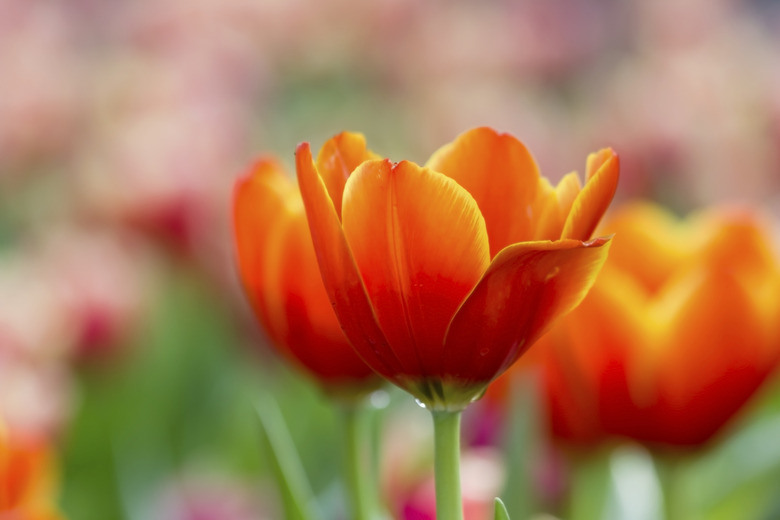
Tulips (Tulipa spp.) are springtime plants that produce vibrantly colored blossoms, sometimes even multicolored ones. The appearance of tulips hails the arrival of warmer weather for many people. Tulips are hardy in U.S. Department of Agriculture plant hardiness zones 3 through 8, and, with careful planning, you can enjoy them from early spring through early summer. They are indoor or outdoor plants and a simple way to ensure bright color in an otherwise drab landscape after winter finishes.
Large and Small Groups
How you group tulip bulbs depends on space restrictions and when they blossom. For springtime blooms, plant your tulips in groups of at least 12 per color. The early spring landscape is often barren, and so smaller groupings can make a garden look scrawny rather than lively. Tulips bloom in a variety of colors, ranging from pink, white and red to purple, orange and multicolored. Plant only tulips of a single flower color in small spaces. Although making use of tulips' wide color variety is tempting, too many colors in a small space have less visual impact than fewer colors do. Plant groups of single-colored tulips in corners and hidden areas to highlight those parts of the yard.
- are springtime plants that produce vibrantly colored blossoms, sometimes even multicolored ones.
- Plant groups of single-colored tulips in corners and hidden areas to highlight those parts of the yard.
With Other Plants and Walkways
Plant tulips in single-color bunches — with each bunch containing a minimum of six tulips — to highlight borders and walkways. Even though the dark green of evergreens is a contrasting backdrop for the bright color of tulips, especially in early spring, do not plant tulips under evergreen trees because their shade results in poor growth. Tulips require full- or partial-sun exposure to thrive. Flowerbeds at the base of deciduous trees, however, are optimal tulip-growing environments because those trees' branches are not yet filled with shade-producing foliage in spring.
Potted Plants Indoors
Because tulips can grow successfully indoors in containers, you can enjoy their blossoms year-round. Tulips look best in a wide, shallow pot, roughly 4 to 6 inches deep; the pot must be deep enough to allow a minimum of 2 inches below the bottom of the bulbs for root development. It is all right to have the top of the bulbs in line with the container's rim. Use a blend of potting mix and compost for the growing medium. Tulips do best in a clay pot, which drys faster than a plastic pot, reducing the risk of excess moisture. Tulip varieties that do best indoors are short ones.
- Plant tulips in single-color bunches — with each bunch containing a minimum of six tulips — to highlight borders and walkways.
- Tulips look best in a wide, shallow pot, roughly 4 to 6 inches deep; the pot must be deep enough to allow a minimum of 2 inches below the bottom of the bulbs for root development.
Guidelines for Indoor Tulips
When planting tulip bulbs for indoor use, group the bulbs closely together so they have more visual appeal when they blossom. Fit as many bulbs into one pot as possible without having them touch. Tulip bulbs growing indoors do not naturally undergo a wintertime chill, as they would outdoors, and the change in temperature from cold to warm is what triggers tulips to blooms. Most tulip bulbs require a minimum of 14 to 20 weeks of cold temperatures before they blossom two to three weeks later. Force tulips to grow and flower indoors by chilling their container — filled with soil and bulbs — in a 35- to 45-degree Fahrenheit environment. If you are in an area where temperatures do not fall below 25 degrees Fahrenheit, then keep the bulbs on a porch, and protect them with a layer of straw. In an area that gets colder weather, store them in a consistently cold environment, such as a cold cellar. Depending on when they are planted, indoor tulips can take eight to 16 weeks to bloom.
- When planting tulip bulbs for indoor use, group the bulbs closely together so they have more visual appeal when they blossom.
- Depending on when they are planted, indoor tulips can take eight to 16 weeks to bloom.
References
- The Old Farmer's Almanac: Tulips
- Breck's: How to — Landscaping with Bulbs: Design Ideas
- Lushome Re-Design Kaleidoscope: Spring Flowers and Yard Landscaping Ideas — 20 Tulip Bed Design Ideas
- University of Illinois Extension: Landscaping with Bulbs
- Gardener's Supply Co.: Growing Bulbs Indoors
- The National Gardening Association: How-to-Project — Forcing Bulbs Indoors
- Royal Horticultural Society: Tulipa "Apricot Beauty"