

Parts Of The Passion Flower

The West discovered passion flowers in the 1600s as Spanish missionaries traveled in Peru. The priests found that the passion flower's parts could serve as an illustration of the suffering or "passion" of Jesus. Seeing the crucifixion story in the parts of the passion flower gave the flower its name. Today, the flower has traveled beyond Latin America, and the vine is grown in warm climates for the beauty of the flower. About 400 species exist. One of them, Passiflora edulis flavicarpa, provides passion fruit juice.
Pistil
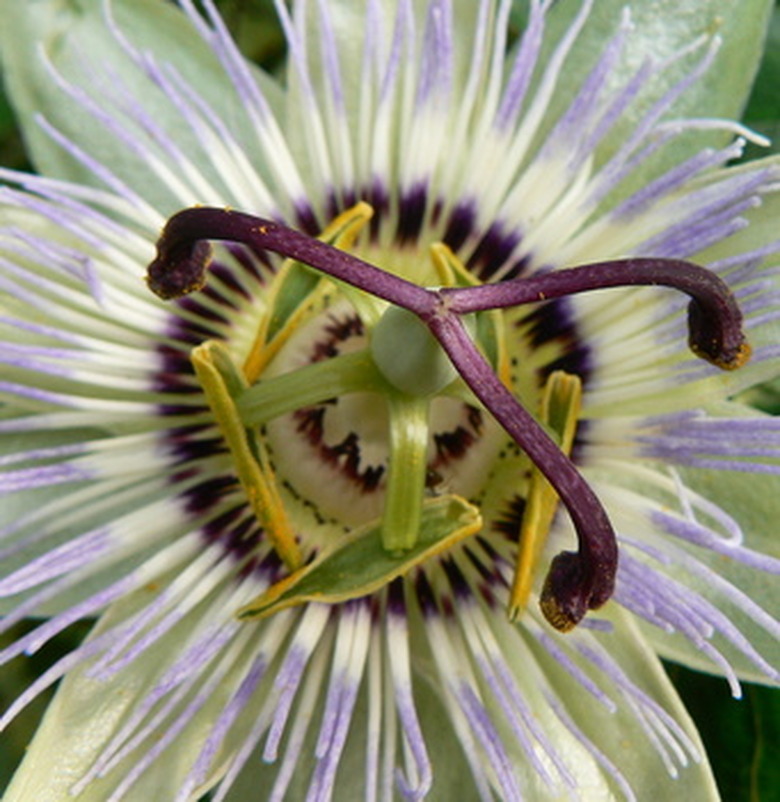
The pistil is the female part of plant, consisting of an ovary, style and stigma. The stigma sits at the top, there to catch pollen, which contains sperm. The style leads from the stigma to the ovary, where egg-containing ovules are located. Sperm travel the style to the bulb-shaped ovary and fuse with the eggs to eventually become seeds. Passion flowers have three pistils.
- The West discovered passion flowers in the 1600s as Spanish missionaries traveled in Peru.
- Today, the flower has traveled beyond Latin America, and the vine is grown in warm climates for the beauty of the flower.
The ovary of the passion flower swells and ripens into a yellow fruit that's edible and about the size of a lemon. Fruits vary in taste from sweet to sour. Contained within the fruit are the seeds for the next generation of vines.
Passion flower pistils were likened to the nails used in the crucifixion.
Stamen
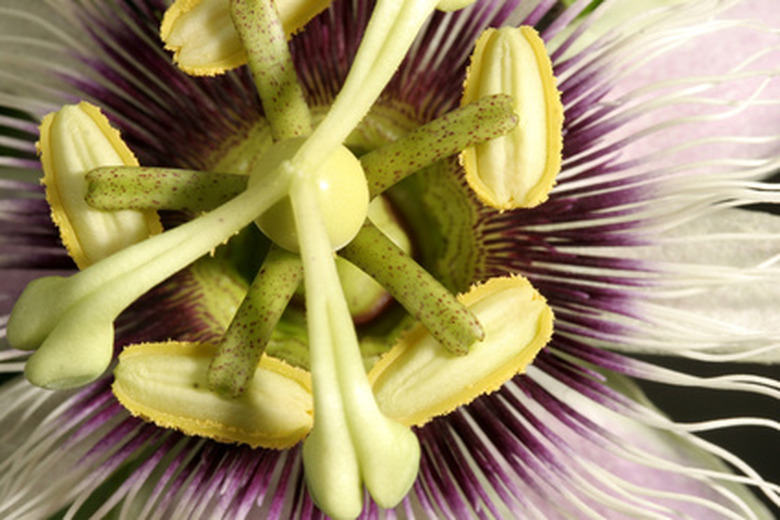
Stamens are the male parts of flowers. When a plant possesses both male and female parts, as the passion flower does, it is called a "perfect" flower. Additionally, with both male and female parts, the passion flower is hermaphroditic and bisexual.
- The ovary of the passion flower swells and ripens into a yellow fruit that's edible and about the size of a lemon.
- When a plant possesses both male and female parts, as the passion flower does, it is called a "perfect" flower.
Stamens are composed of filaments that are topped by anthers, which produce pollen. Passion flowers have five stamens, said by the missionary priests to symbolize the wounds of Jesus.
Corona
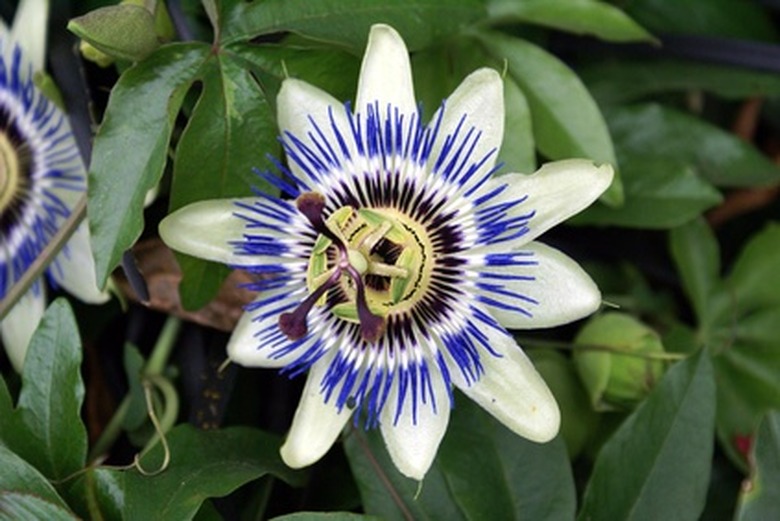
Passion flowers have filaments radiating out from the center between the whorls of stamens and pistils and the grouping of petals and sepals. The filaments are often one color at the base, changing to another at the tips. This striking feature of passion flowers, the corona, was thought of by the priests as the crown of thorns Jesus wore at his death.
Perianth
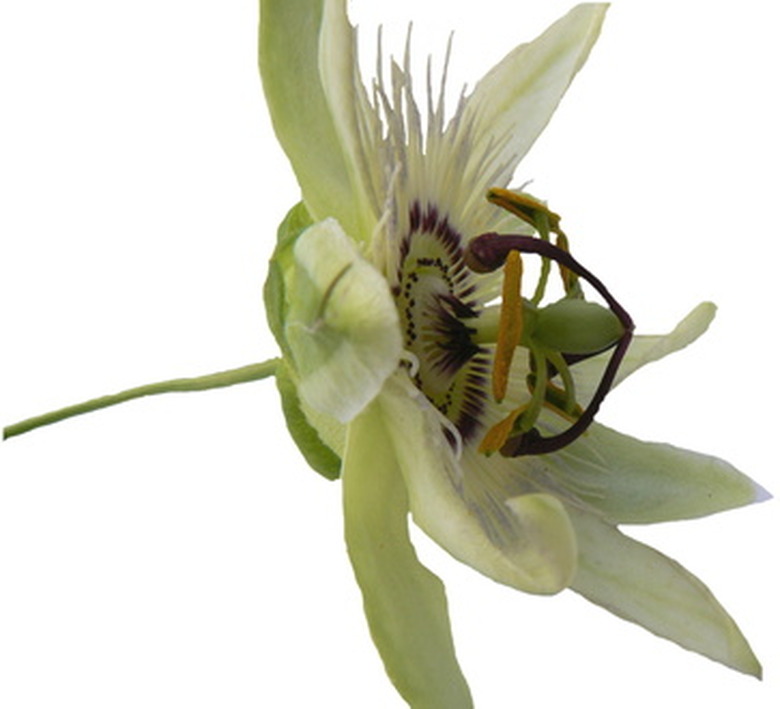
Beneath the corona of the passion flower is the perianth, composed of both sepals and petals together. Sepals are protective, leaf-like structures which, on the passion flower, look almost exactly like the petals.
- Stamens are composed of filaments that are topped by anthers, which produce pollen.
- Passion flowers have five stamens, said by the missionary priests to symbolize the wounds of Jesus.
The sepals and petals are laid out like spokes at the bottom of the blossom, five sepals alternating with five petals. The ten together were seen by the priests as symbolizing apostles.
Sepals and petals are thought of as accessory parts as opposed to the stamens and pistils, which are necessary for the plant to produce.