

How To Prune Lily-Of-The-Valley
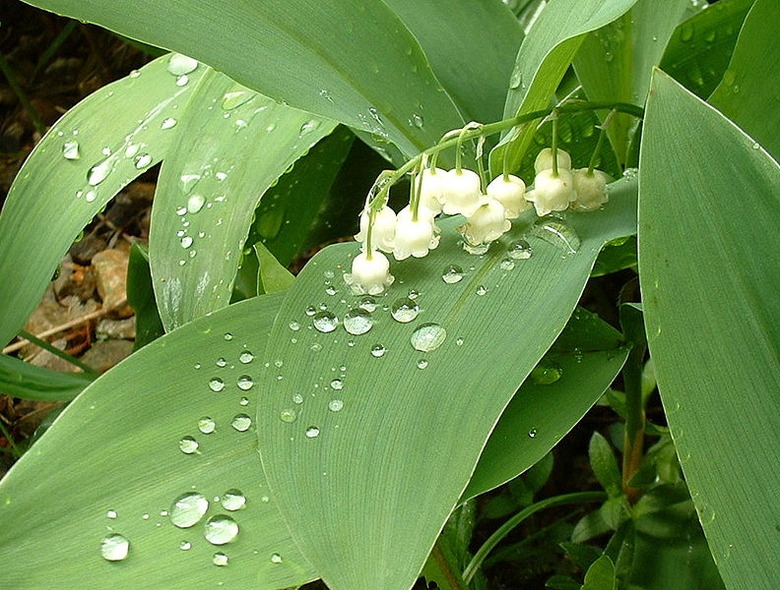
Lily of the valley, known botanically as Convallaria majalis, produces white or pale pink, bell-shaped blossoms in spring from an underground rhizome. Thriving in partial to complete shade and moist soil, lily of the valley rhizomes naturalize quickly to establish a deep green carpet of smooth leaves. They are widely grown in woodland gardens, in beds and borders and as ground cover in semi-shade settings. Lily of the valley is hardy in USDA zones 3 through 9 and require little maintenance or pruning.
Step 1
Deadhead spent blooms after flowering to encourage the production of fresh bloom and to keep the plant looking tidy. Inspect your lily of the valley stand regularly and cut away any damaged, discolored or dying leaves down to ground level when you see them.
Step 2
Dig up and divide lily of the valley rhizomes or pips in the spring or fall when their planting areas become congested or overcrowded. Pull the segmented pieces of rhizome apart and replant in the soil at intervals of 4 inches, 1 1/2 inches deep. Water in the divided rhizomes so that the soil is drenched but there is no standing water.
- Lily of the valley, known botanically as Convallaria majalis, produces white or pale pink, bell-shaped blossoms in spring from an underground rhizome.
- Dig up and divide lily of the valley rhizomes or pips in the spring or fall when their planting areas become congested or overcrowded.
Step 3
Harvest lily of the valley blooms and leaves in spring for household floral arrangements and gifts. Use clean, sharp secateurs or scissors to cut the foliage and stems clean down at the soil. Store in clean, cool water changed daily to prolong vase life.
Kill Lily Of The Valley
Convallaria majalis, more commonly known as the perennial ground cover lily of the valley, originated in Europe. The plant grows in U.S. Department of Agriculture hardiness zones 3 through 8. If you want to make room for other plants by removing lily of the valley, you have make sure all the rhizomes are gone or dead. Rake the area to remove any loose or broken rhizome sections. Bag up the lily of the valley and dispose of it as yard waste. The glyphosate attacks all vegetation in the area and may damage other plants that are within the same root zone. Use caution when using the chemical, and wear a face mask to avoid inhaling the fumes.
- Harvest lily of the valley blooms and leaves in spring for household floral arrangements and gifts.
- If you want to make room for other plants by removing lily of the valley, you have make sure all the rhizomes are gone or dead.
Things Needed
- Garden knife
- Secateurs or scissors
Warning
Though it smells and looks sweet all parts of the lily of the valley plant are toxic to humans and mammals.
References
- Dave's Garden
- Iowa State University Extension: How Can I Kill Lily-of-the-Valley in a Perennial Bed?
- Illinois Wildflowers: Lily-of-the-Valley
- Missouri Botanical Garden: Convallaria Majalis
- Good Oak Ecological Services: Lily of the Valley
- The Journal Times: The Root of It All: Getting Rid of Lily-of-the-Valley