

Plants That Look Like Lavender
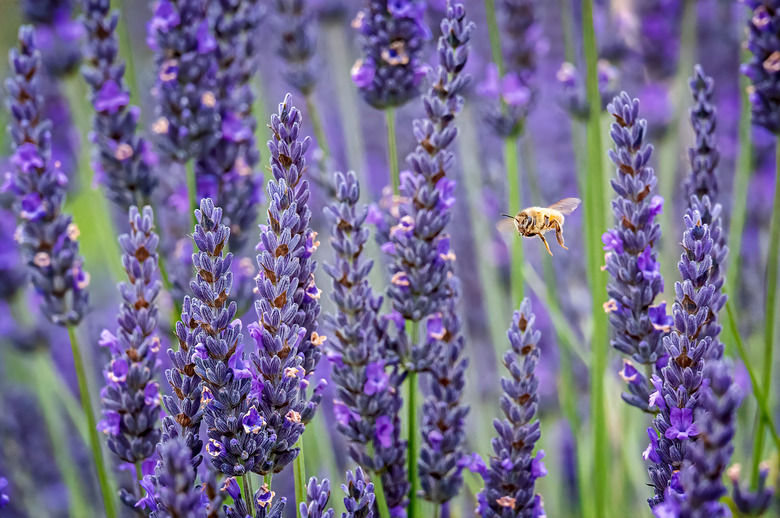
A handful of plants share a similar appearance with lavender (Lavandula spp.). So if lavender is not a desirable option for your garden, there are several options from which to choose, whether you are searching for a lavender alternative for shade or a lavender lookalike that is fragrance free.
Understanding Lavender Plants
True lavender plants belong to the genus Lavandula, which includes 45 different species and more than 450 named varieties of plants. Cultivars of only five lavender species are widely grown in gardens:
- French lavender (Lavandula dentata)
- English lavender (Lavandula angustifolia)
- Spike, or Portuguese, lavender (Lavandula latifolia)
- Spanish lavender (Lavandula stoechas)
- Lavandin (Lavandula x intermedia)
All grow well within U.S. Department of Agriculture plant hardiness zones 5 to 8, although cold tolerance varies between species and types, with heat-loving Spanish lavender growing best in USDA zones 8 to 9 and cold-tolerant English lavender thriving in zones 5 to 9.
Lavandin is a hybrid between English and spike lavender that grows in USDA zones 5 to 8 and tolerates both cold and heat.
Shade-Tolerant Lavender Lookalikes
Lavender does not grow well in shady locations, so finding a shade-tolerant lavender lookalike is a good alternative for less sunny areas of the garden.
 Krzysztof Ziarnek
Ornamental Catmint Cultivars
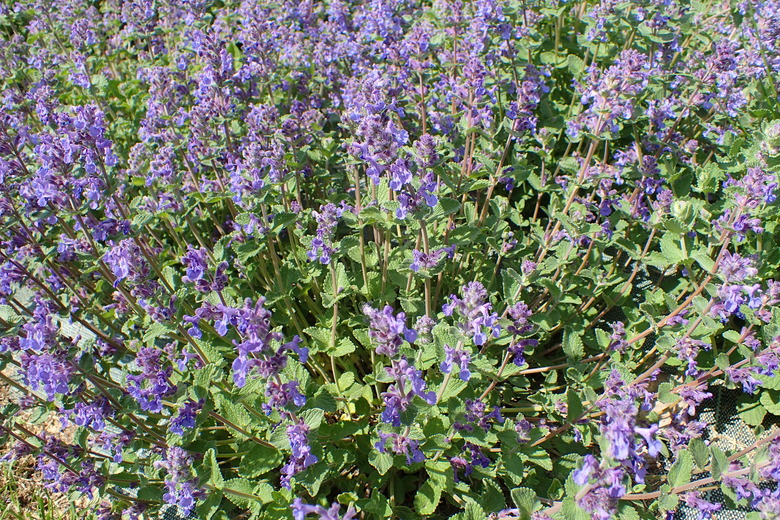
Showy, fragrant catmint (Nepeta x faassenii) tolerates partial shade as long as it is grown in fast-draining soil. It grows best in USDA plant hardiness zones 3 to 8, where it is a low-maintenance plant if it is grown under the right conditions. Catmint offers the same silver-gray foliage color as lavender as well as similar flowers. Cultivars include:
- Blue Wonder (Nepeta x faassenii 'Blue Wonder,' zones 3 to 8) has purplish-blue flowers that closely resemble lavender.
- Porzellen (Nepeta x faassenii 'Porzellen,' zones 3 to 8) has light blue flowers that have an airy, lavender-like appearance.
 DutchlightNetherlands/iStock/GettyImages
Hummingbird Mint or Anise Hyssop
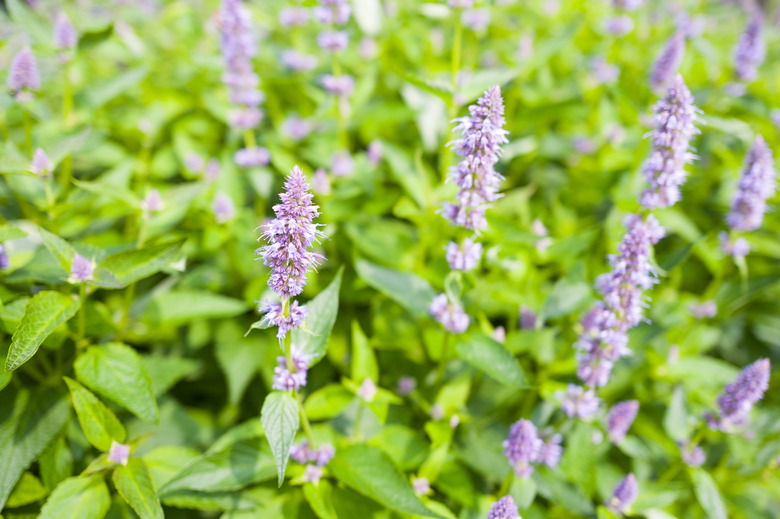
Sometimes called anise hyssop, hummingbird mint (Agastache spp.) cultivars, such as Blue Fortune (Agastache 'Blue Fortune'), make a good alternative to lavender for lightly shaded areas of the garden in zones 5 to 9.
Blue Fortune hummingbird mint sports pale purple flowers that resemble the flowers of spike lavender, although the foliage is bright green rather than the silvery-gray of lavender foliage.
 DigiPub/Moment/GettyImages
Mexican Bush Sage
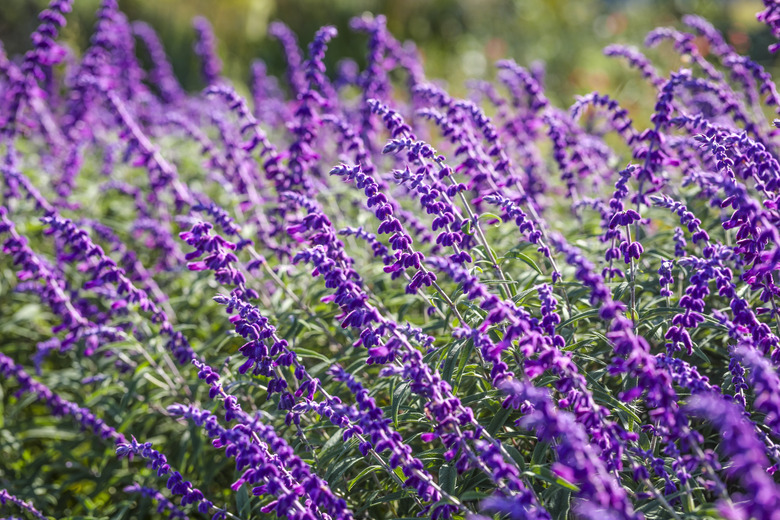
Sometimes called velvet sage, Mexican bush sage (Salvia leucantha) is a shade-tolerant lavender lookalike that grows best in zones 7 to 10.
The cultivar called Midnight (Salvia leucantha 'Midnight') looks most like lavender, because it has soft purple flowers with a similar color to most common lavender varieties. It is a low-maintenance plant when grown in a suitable location.
Tip
Mexican bush sage tolerates light shade only if it is grown in very well-draining soil.
Sun-Loving Lavender Lookalikes
Lavender loves sun, and many of its lookalikes do too. These plants may share a similar appearance and the same growing conditions as lavender, but they also have some differences.
 Tom Meaker /iStock/GettyImages
Russian Sage Cultivars
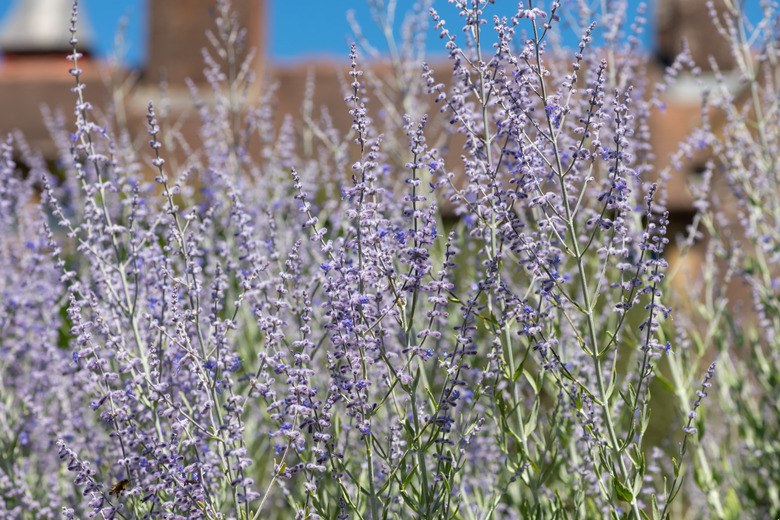
A few cultivars of Russian sage (Salvia atriplicifolia) strongly resemble lavender and also share similar growing requirements. Russian sage grows well in zones 4 to 9, where it thrives in sunny locations with good drainage. Several cultivars are suited to replacing lavender in the garden, including:
- Filigran (Salvia atriplicifolia 'Filigran'), a blue-flower cultivar with lacy foliage.
- Blue Spire (Salvia atriplifolia 'Blue Spire'), which has deep purple flowers with lobed leaves.
- Little Spire (Salvia atriplifolia 'Little Spire'), a purple-flowered variety that reaches 2 feet in height.
Tip
Russian sage was previously known by the scientific name Petrovskia atriplicifolia.
 Karel Bock/iStock/GettyImages
Spiked Speedwell Cultivars
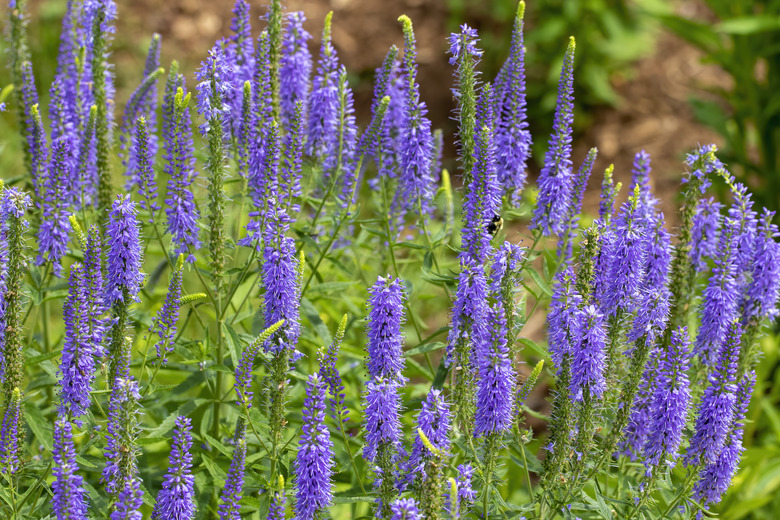
Spiked speedwell (Veronica spicata) shares some traits in common with lavender, such as its flower color and the shape of its elongated flower clusters, but its foliage is bright green unlike the silvery green of lavender leaves. It grows best in USDA zones 3a to 8a, where it thrives in full sun with moist soil.
Several cultivars of spiked speedwell are suitable replacements for lavender, including:
- Purpleicious (Veronica spicata 'Purpleicious'), a tall purple-flowered variety.
- Royal Candles (Veronica spicata 'Royal Candles'), a compact variety with purple flowers.
- Tickled Pink (Veronica spicata 'Tickled Pink'), a variety with pink flowers that look like lavender.
References
- UIC Heritage Garden: Lavender (Lavandula)
- University of Tennessee Gardens: Lavender, the Useful Plant
- University of Wisconsin-Madison Extension: Russian Sage, Perovskia atriplicifolia
- North Carolina State University Extension: Veronica spicata
- Cornell University: Catmint
- North Carolina State University Extension: Agastache 'Blue Fortune'
- North Carolina State University Extension: Salvia leucantha